Water Irrigation Earwax Removal Bristol

Same-Day Appointments Available

Water Irrigation Earwax Removal in Bristol

Gentle & Effective Earwax Removal by Water Irrigation in Bristol

Ear irrigation is a safe, water-based method of removing earwax using controlled, low-pressure warm water. It is a widely used technique and an effective alternative to traditional ear syringing. At Pro Ear Clinic, we provide professional ear irrigation from our clinic at The Hampton Spa (Failand) and through our convenient home visit service across Bristol.

Whether you’re experiencing blocked ears, muffled hearing, or discomfort, ear irrigation can offer quick, effective relief when performed correctly by a trained clinician.

  • Earwax Specialists
  • Safe Water Pressure
  • Clinic & Home Visits Available
Ear Irrigation

Clinic & Home Visits

Available across Bristol & sorrounding areas

About us - Pro Ear Clinic

No Water Used

Cleaner & safer option for most patients

The Technique

What Is Water Irrigation?

Water irrigation is a clinical earwax removal technique that uses warm water, delivered at a controlled, low pressure, to gently flush wax out of the ear canal. It is a modern and much safer alternative to the older NHS “ear syringing” method, which used high-pressure jets and is no longer recommended.

At Pro Ear Clinic, we use professional-grade irrigation devices designed specifically for ear care. The warm water circulates around the ear canal, loosening and lifting wax so it can be removed safely and comfortably.

Microsuction is ideal if you have:

  • Soft or moist wax
  • Widespread wax coating the canal
  • No history of perforations or infections
  • Difficulty hearing due to wax
  • Wax that responds well to drops
  • Wax remaining after microsuction
  • Preference for a water-based method

We always carry out a full ear examination before starting irrigation to confirm it is safe and suitable for your ears.

Benefits of Ear Irrigation

Why experts recommend microsuction as the safest choice for your ear health.

Effective for soft or moist wax

Irrigation removes wax quickly when it has softened and spread along the canal.

Gentle warm water system

The controlled low-pressure flush is much safer than older syringing techniques.

Comfortable for most patients

Many people find irrigation relaxing and soothing.

Fast results

Most patients experience immediate improvement in hearing once wax is removed.

Can reach areas suction sometimes cannot

Water can help lift softer wax from deeper sections of the canal.

Suitable when microsuction is not preferred

Some patients simply prefer a water-based method.

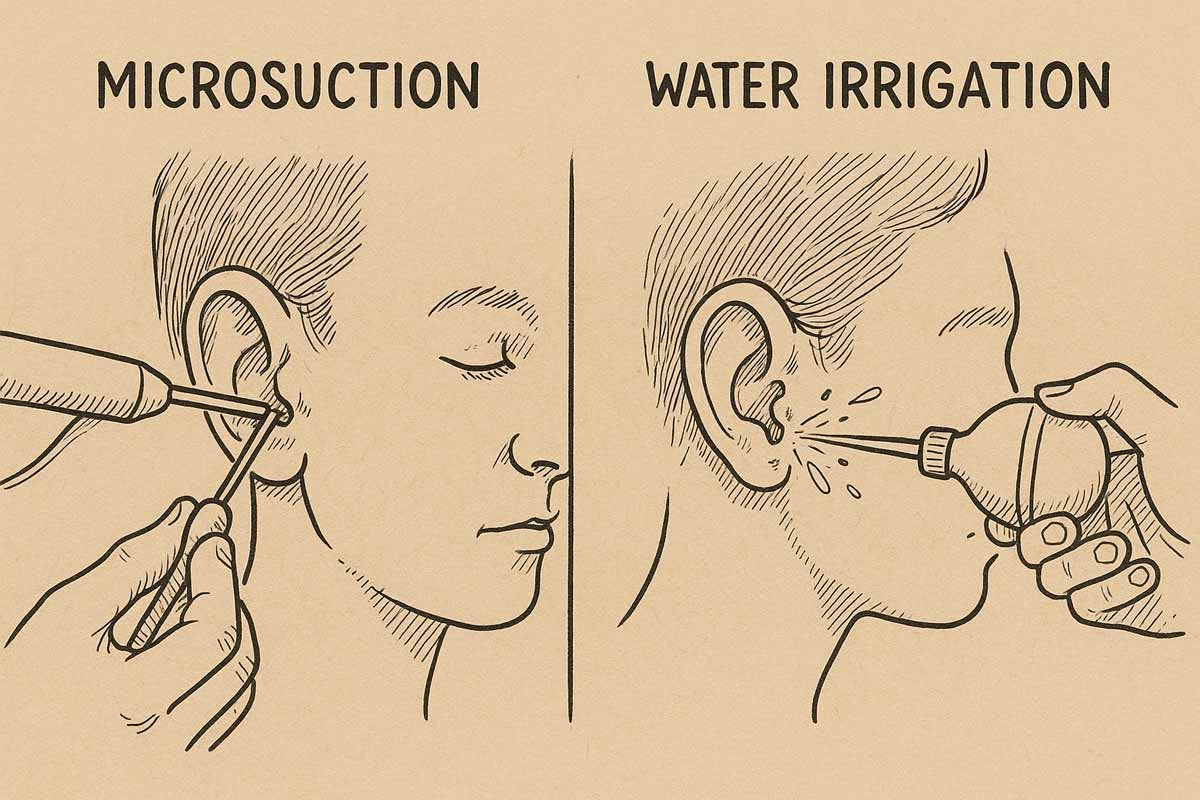
Microsuction vs. Irrigation – Which Is Better?

Both methods are effective, but each patient is different.

Irrigation may be preferred when:

  • Wax is soft, moist or widespread throughout the canal
  • Irrigation can flush out debris quickly and comfortably
  • Microsuction alone cannot reach or loosen deeper wax
  • Warm water helps clear sticky or oily wax more efficiently
  • The patient prefers a gentle, water-based cleaning method

Microsuction is recommended when:

  • Earwax is dry, impacted or very firm
  • Irrigation has failed previously
  • The patient has a perforated eardrum
  • There is a history of infection
  • The patient has vertigo or tinnitus
  • Hearing aids are used
  • Water is not advisable

Your clinician will examine your ears using a video otoscope and recommend the safest, most effective method for you. In many cases, we use a combination of both for best results.

Microsuction Vs Water Irrigation

Your Apointment

What to Expect at Your Appointment

Our professional process ensures your comfort and safety at every step.

1
Ear Examination

We begin with a detailed video-otoscopy so you can see the wax inside your ear canal. This allows us to confirm whether irrigation is suitable and safe.

2
Wax Removal

Warm water is gently introduced into the ear canal using a controlled-pressure device. Most people feel only a light flushing sensation.
If needed, we may alternate with microsuction to remove stubborn areas.

3
Final Check

Once the wax is removed, we re-examine your ears to ensure the canal and eardrum are healthy and clear.

4
Aftercare Advice

We provide guidance to help keep your ears wax-free and reduce future blockages.

Do I Need Ear Drops?

Using olive oil or sodium bicarbonate ear drops for 3–4 days beforehand can help soften wax, but they are not always essential for microsuction.

Recommended

3–4 days of olive oil drops for firm or impacted wax.

No drops

You have a known perforation, infection, ear discharge, pain or sensitivity to oil.

If unsure, contact us before your appointment.

Who Is It For?

Water irrigation is recommended for:

Soft earwaxWidespread waxBlocked earsMuffled hearingItching or discomfortGood with dropsNo perforationsNo infection historyWarm-water preferredSwimmers

If you’re unsure whether microsuction or irrigation is best, we will examine your ears and recommend the safest and most effective method during your appointment.

How Often?

This depends on your ears:

  • Some people produce wax more quickly
  • Hearing aid users often need cleaning every 3–6 months
  • Others need only occasional treatment

We’ll advise based on your individual needs.

Pricing Plans

Affordable Ear Wax Removal Prices

We offer transparent, flat-rate pricing with no hidden fees giving you peace of mind before your appointment.

Clinic Earwax Removal

£85/ flat fee for one or both ears

Ideal for patients who prefer in clinic appointments

  • Includes consultation and ear examination
  • Microsuction or irrigation based on needs
  • Travel included within the Bristol area
  • Ideal for short-term or as-needed therapy.
Book Session

IN CLINIC

Home Visit – Earwax Removal

£95/ flat fee for one or both ears

Ideal for patients who prefer home comfort or have limited mobility.

  • Includes consultation and ear examination
  • Microsuction or irrigation based on needs
  • Travel included within the Bristol area
  • Ideal for short-term or as-needed therapy.
Book Session

HOME VISIT

Ear Examination Only

£45/ per visit

If no earwax needs to be removed after examination.

  • Initial discussion
  • Assessment via Otoscope
  • Digital images if required
  • Clear explanation of findings
Book Session

Video Assessment

Clinic & Home Visit Options

Choose the most convenient option for you.

Clinic Appointments (The Hampton Spa, Failand)

Perfect if you prefer a calm clinical environment. Free on-site parking and easy access from Clifton, Long Ashton, Bedminster, Redland and surrounding areas.

Home Visit Appointments (Across Bristol)

Convenient and ideal for elderly patients, mobility issues, busy schedules, and families. Same high-quality equipment and care at your home.

Areas We Cover

We provide microsuction across:

CliftonRedlandCothamLong AshtonBedminsterSouthvilleWestbury-on-TrymHenleazeBrislingtonKeynshamPortisheadNailsea

Book your Appointment

Your Ears. Our Care.
Wherever You Are in Bristol.

We provide professional ear wax removal in the comfort of your own home across the Bristol area.

Appointments are limited, secure your spot online today.
Need care home visits or something else? Visit our services page for more options.

hot air balloons flying above trees

FAQs

Questions and Answers

Yes. When performed by a trained specialist, water irrigation is a safe and effective medical procedure used to remove softened earwax. We always begin with a thorough ear examination to ensure irrigation is suitable for you. If we detect any issues such as perforation, infection, or inflammation, we will not proceed and will recommend a safer alternative, such as microsuction.

No. Most people find irrigation comfortable. You may feel warm water gently flushing the ear canal and a soft trickling sensation. Some patients experience brief pressure or fullness, but it should never be painful. If you feel discomfort, we adjust the pressure or stop immediately.

A typical water irrigation appointment takes 20–30 minutes, including your ear examination, wax removal, and personalised aftercare advice. The irrigation itself usually lasts only a few minutes per ear.

Yes. For the best results, we recommend using olive oil or almond oil drops for 3–5 days before your appointment. This softens the wax, making it easier and more comfortable to flush out. If you have a perforated eardrum or ongoing infection, do not use drops and let us know beforehand.

Not always. Water irrigation is not suitable for people with perforated eardrums, grommets, mastoid cavities, infections, severe tinnitus, or a history of problematic ear surgery. In these cases, microsuction is usually the safer and preferred option.

Most patients notice an immediate improvement in hearing once the wax is fully removed. Rarely, if the ear canal was irritated or inflamed before treatment, it may take a day or two for hearing to feel completely normal.

You’ll feel warm water gently circulating inside your ear canal. Some patients describe a “shower-like” sensation. You may also hear water sounds more loudly due to the proximity to the eardrum. The feeling is unusual but typically very tolerable.

No. The irrigation system is designed to collect water and wax in a controlled manner. You won’t get wet, and the ear canal is dried afterwards. Any remaining moisture evaporates naturally within a short period.

Complications are rare but can include temporary dizziness, mild discomfort, slight irritation, or in rare cases ear canal infection (otitis externa). We minimise risks through careful pressure control, water temperature checks, and thorough screening before treatment.

Usually very little. We may advise you to keep your ears dry for the rest of the day and avoid inserting cotton buds, ear plugs, or in-ear headphones for 24 hours. If your ear canal was inflamed, we may recommend drops or additional care.

Not always. Extremely hard, dry, or impacted wax may not respond well to irrigation alone. In such cases, we may recommend:

- additional softening drops

- a follow-up irrigation session

- or switching to microsuction, which is more effective for firm, dry wax

Yes, if you do not have any ear conditions that make irrigation unsuitable. Hearing aid wearers often produce wax more quickly, and irrigation can help keep the ears clear. You’ll be asked to remove your hearing aids during treatment and avoid wearing them for a few hours afterwards.

If wax remains after irrigation, we may:

- repeat the procedure

- use manual instruments

- switch to microsuction

- or advise softening drops and a follow-up visit

Our goal is to remove the wax safely, even if it requires a combination of methods.