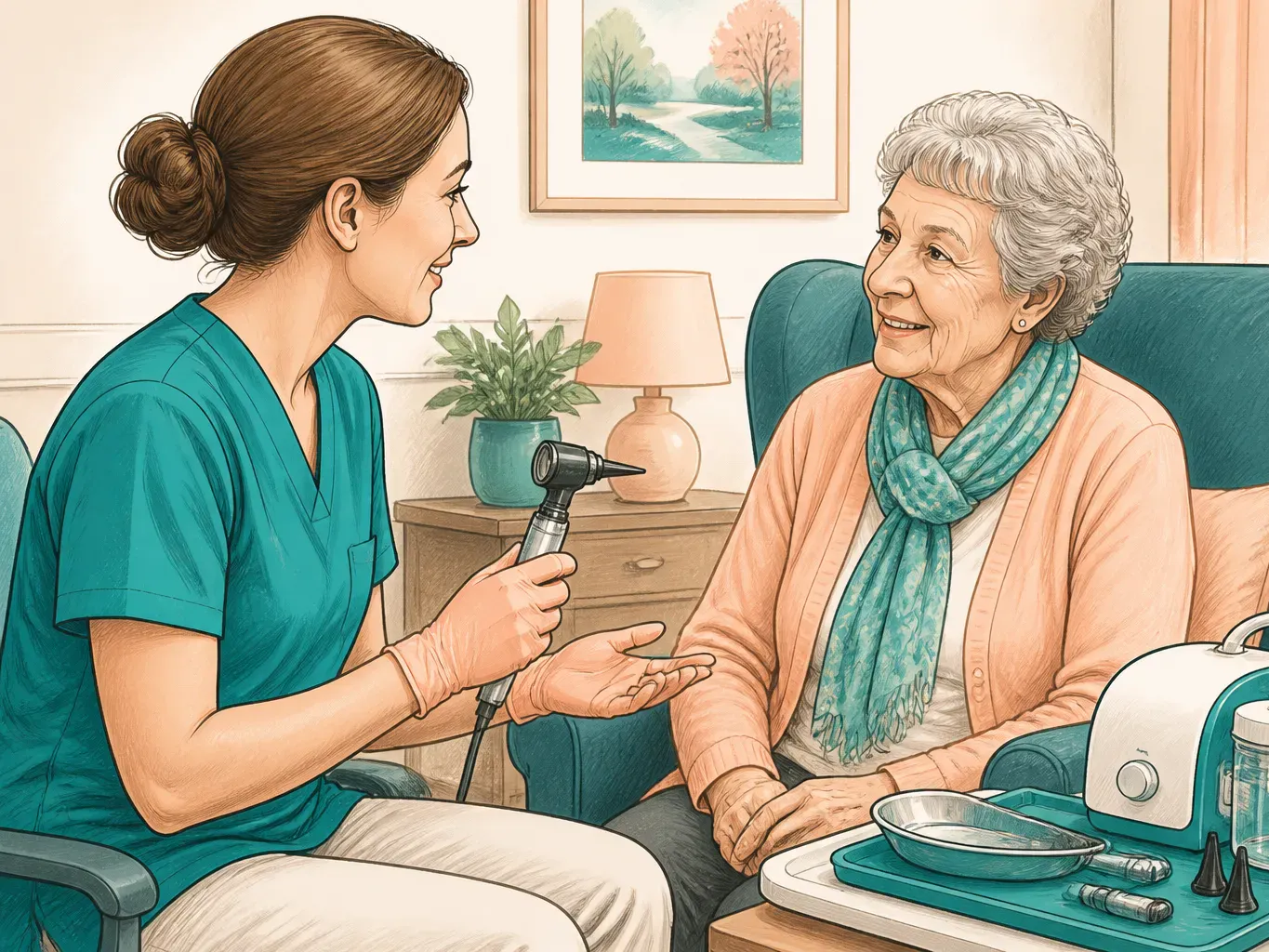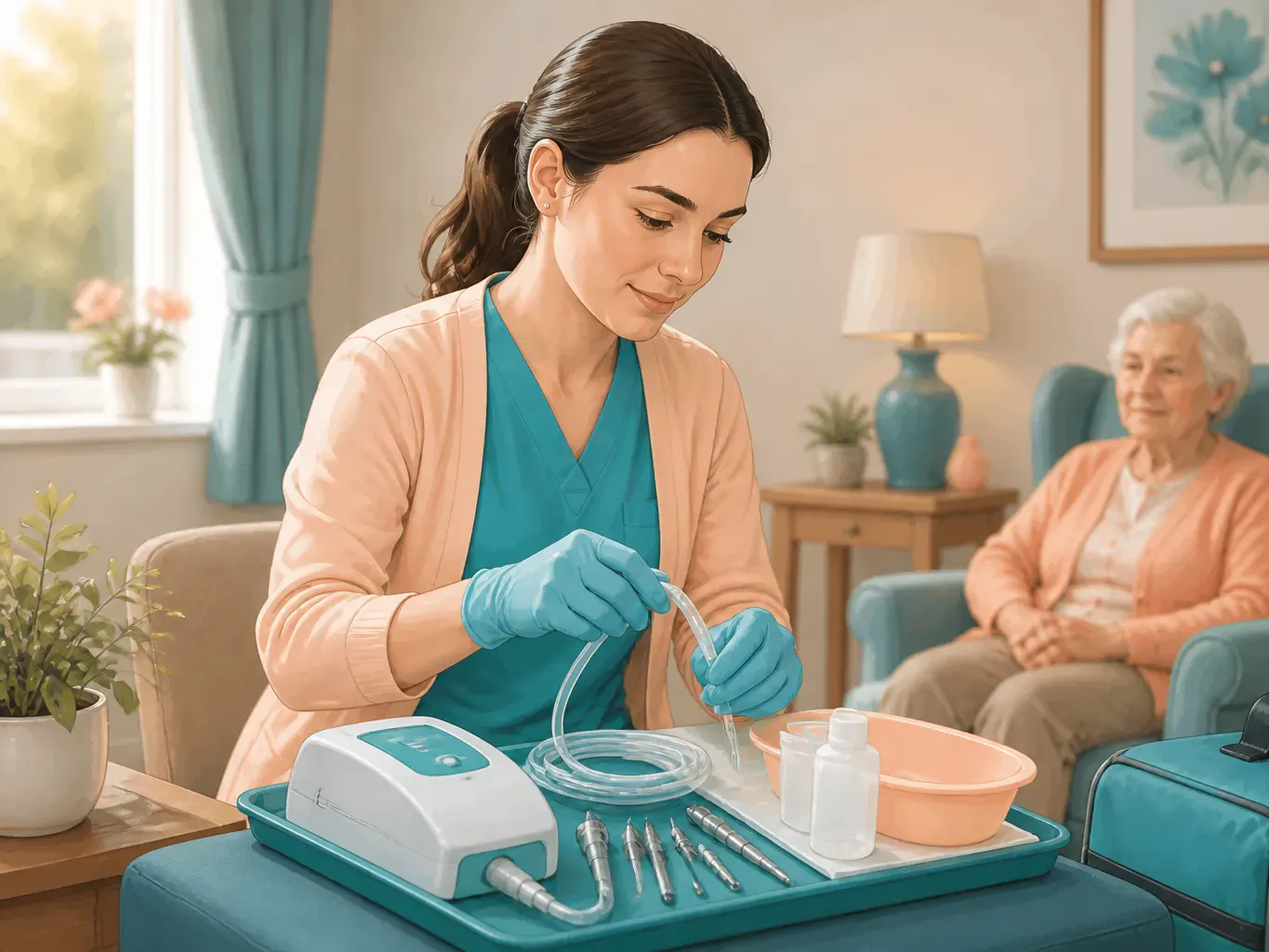

Mobile ear care for care homes brings assessment and earwax removal support directly to the resident, so treatment can happen on site with far less travel, waiting, and disruption. For many care homes, it is a practical way to support people who have limited mobility, dementia, anxiety, hearing difficulties, or difficulty attending an external clinic.
It also helps staff act quickly when blocked ears start affecting communication, comfort, or daily routines. With a calm setup, appropriate consent, and the right clinical approach, on-site ear care can be a straightforward part of resident wellbeing.
What mobile ear care means for care homes
Mobile ear care means a qualified clinician visits the care home to assess the resident’s ears and provide treatment where appropriate. In most cases, the main aim is to check whether earwax is causing a problem and, if it is safe to do so, remove it on site without the resident needing to travel.
For care homes, that matters because even a short journey can be tiring or upsetting for some residents. A familiar environment often makes the appointment easier, especially for people living with cognitive decline, reduced mobility, or communication challenges. It can also be a kinder option for residents who feel worried about clinics, waiting rooms, or unfamiliar surroundings.
The service is designed around convenience, comfort, and continuity of care. Rather than waiting until a resident can be taken out, the home can arrange support when symptoms appear, helping preserve hearing, comfort, and day to day interaction.
Why care homes often need on-site earwax support
Earwax build-up is common, particularly in older adults, and it can create a surprising number of practical problems in a care setting. A resident may seem less responsive, speak more loudly, struggle to follow instructions, or become withdrawn simply because they cannot hear well.
Typical signs that earwax may be affecting a resident include:
- muffled or reduced hearing
- a blocked or full feeling in one or both ears
- discomfort, itchiness, or pressure
- repeated asking for information to be repeated
- difficulty using hearing aids properly
- increased confusion during conversations or care tasks
- reduced engagement with activities or family visits
These symptoms can have knock on effects. If a resident cannot hear staff clearly, they may miss medication explanations, care instructions, reassurance, or social cues. That can make personal care more stressful and can lead to avoidable misunderstandings. For residents who use hearing aids, wax can interfere with fit, sound quality, and comfort, which may mean the device seems to have “stopped working” when the real issue is simply blockage.
Care homes often look for prompt support because unresolved wax can make everyday care harder for everyone. When communication becomes clearer again, residents may feel more settled, families may feel reassured, and staff may find routines smoother.
Issue seen in a care home | How earwax can contribute | Why quick support helps |
|---|---|---|
Resident seems not to hear instructions | Wax blocks sound from reaching the eardrum clearly | Improves communication and cooperation |
Hearing aid user reports poor sound | Wax can block the ear canal or affect device performance | Helps hearing aids work more effectively |
Resident appears unsettled or withdrawn | Reduced hearing can increase frustration and isolation | Supports comfort and social engagement |
Personal care is difficult | Mishearing can create anxiety during routines | Makes daily care easier and calmer |
Quick summary
Mobile ear care can help care homes by reducing travel, improving communication, and addressing earwax problems before they cause bigger difficulties. It is often most useful for residents who cannot easily attend a clinic, need reassurance, or benefit from familiar surroundings. In practice, it can support both wellbeing and smoother day to day care.
How a mobile ear care visit usually works
A good mobile ear care visit follows a simple, predictable process so staff and residents know what to expect. The exact details may vary, but the overall flow is usually similar.
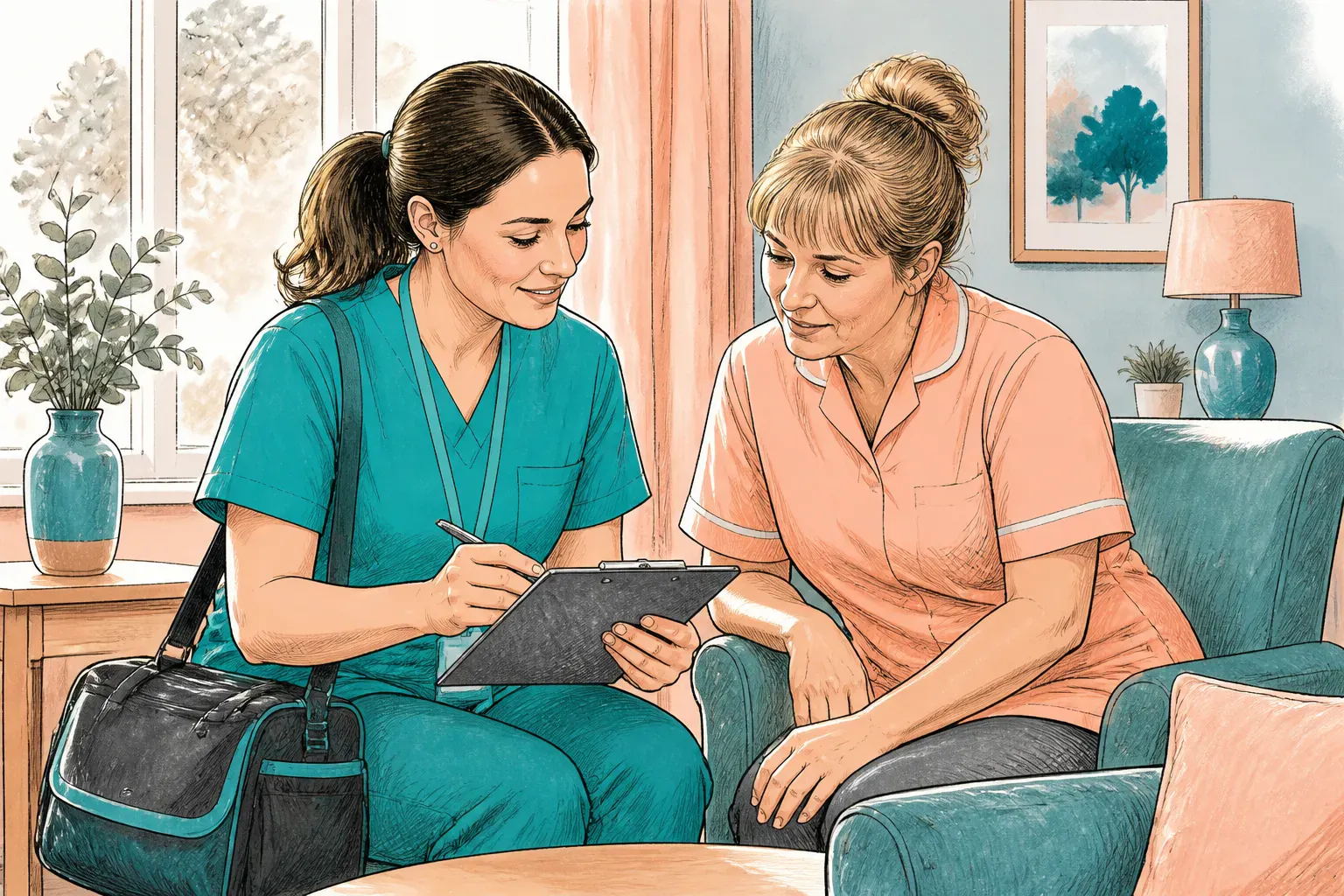
First, the care home or family member makes contact to describe the issue. The clinician may ask about symptoms such as hearing loss, pain, dizziness, discharge, blocked sensation, or hearing aid problems. They may also ask about relevant medical history, such as previous ear surgery, ear infections, perforations, or if the resident has had difficult earwax episodes before.
Before the visit, it helps to gather a few details:
- the resident’s name, age, and room location
- any hearing aids used regularly
- known ear problems or recent symptoms
- medication notes if relevant
- whether the resident can consent for themselves
- any recent infections, pain, or discharge
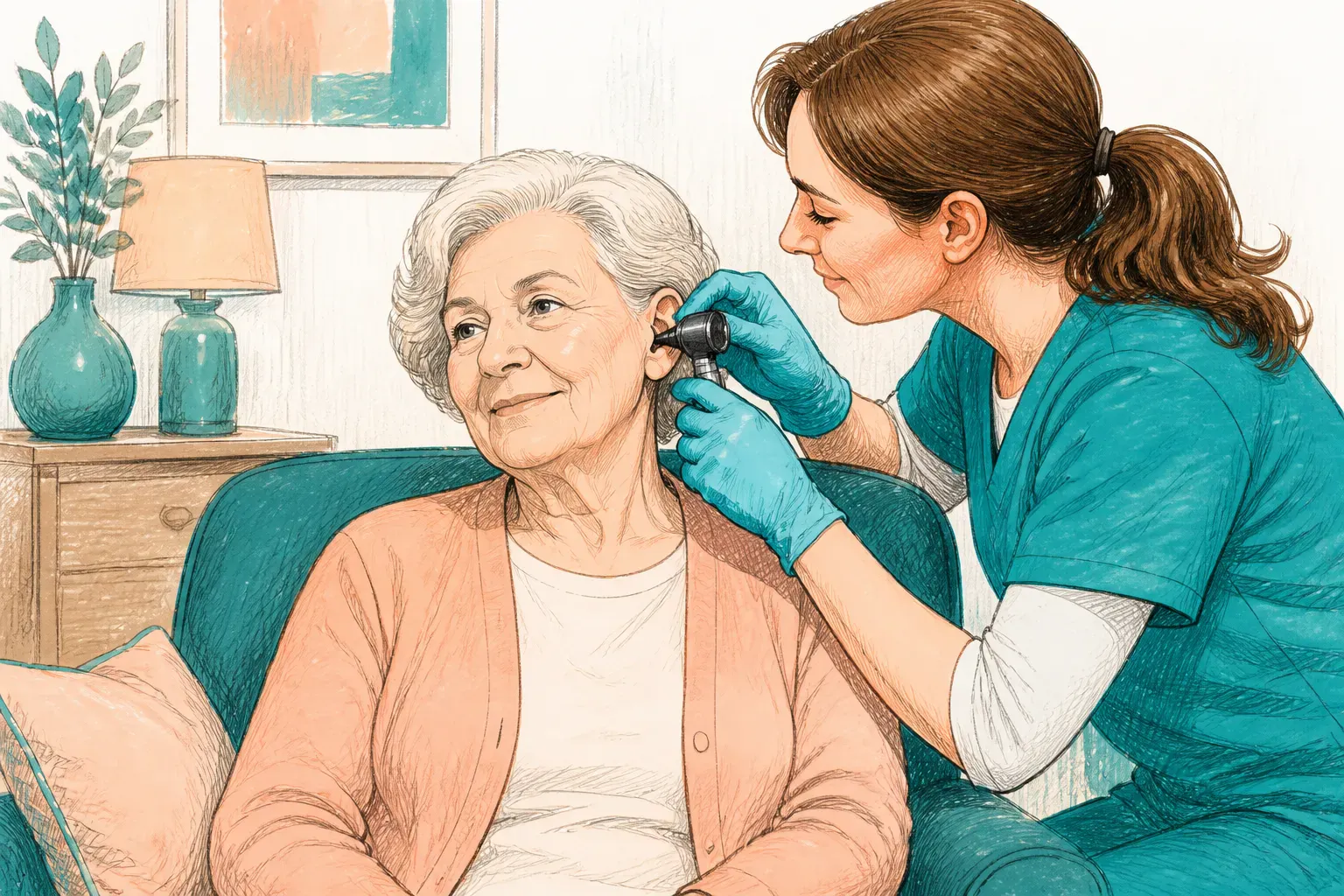
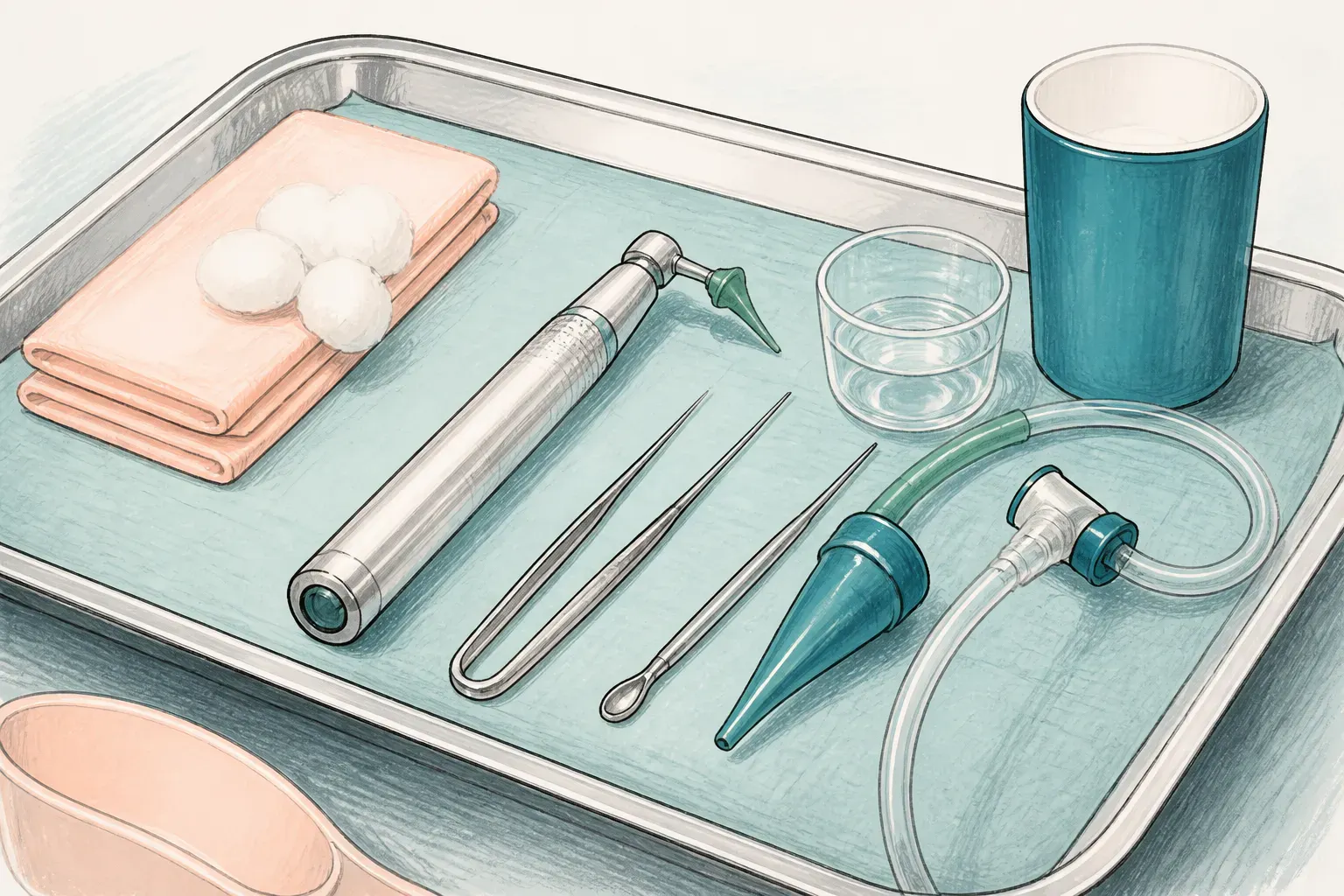
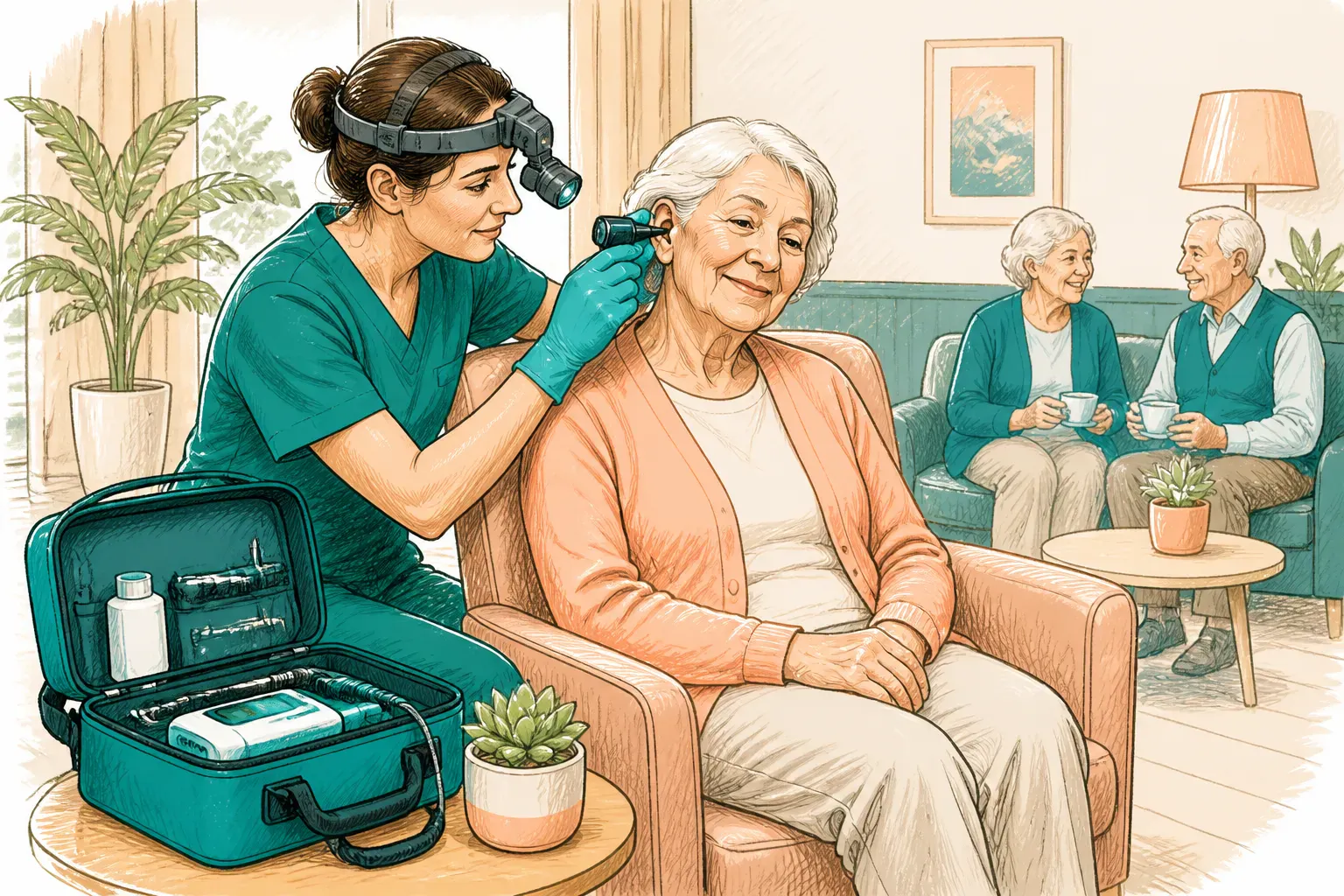
When the clinician arrives, they will usually introduce themselves, explain the plan, and confirm consent before proceeding. They may carry out an ear health assessment first, using a small light and magnification to look into the ear canal. If wax is present and removal seems appropriate, treatment can then be provided, often with microsuction where suitable.
The visit is usually designed to be calm and efficient. A resident may be seated comfortably in a chair, or treated in a position that feels safest and most supportive for them. The clinician will work at a pace that minimises distress, pauses when needed, and explains each step in plain language. This is particularly important for residents who are anxious or live with dementia.
After treatment, the clinician may show staff or the resident what has been found, explain any next steps, and offer aftercare advice. If the ear needs further medical review rather than immediate treatment, the clinician should explain why and advise on the appropriate next action.
For homes wanting to understand the process in more detail, it can help to read about an ear health assessment or the clinic’s microsuction earwax removal service.
What treatments may be suitable on site
Not every ear problem can be treated in a care home, but many common earwax issues can be managed safely if the resident is suitable. The main priority is always to use a method that is appropriate for the person and their ear health.
Microsuction is often the most practical option in an on-site setting because it does not rely on water and can be carried out with the resident seated. It involves using gentle suction under direct view to remove wax from the ear canal. For many older adults, this is a careful and controlled approach that works well when the ears are suitable for treatment.
Sometimes the clinician may also advise wax-softening drops before a visit, depending on the situation. That can help soften hard wax and make removal easier. However, drops are not always the right choice, particularly if there is pain, discharge, a suspected infection, or a history that suggests caution. The clinician should make that judgement after assessing the resident’s circumstances.
Option | What it involves | Best suited to | Key points |
|---|---|---|---|
Microsuction | Removing wax with controlled suction under direct view | Most adults with suitable earwax build-up | Precise, typically tidy, and often well suited to mobile visits |
Wax-softening drops | Softening wax before removal or reassessment | Residents with hard or dry wax, if clinically appropriate | May be helpful before treatment, but not always suitable |
Referral instead of treatment | Further medical assessment before ear care | Residents with red flags, pain, or possible complications | Safety comes first when treatment is not appropriate on site |
It is important to remember that mobile ear care is not a one-size-fits-all service. The clinician must decide whether the ears are suitable for treatment in the home, or whether a different pathway is safer. That judgement protects residents and keeps care evidence based.
Safety, consent, and who may need extra caution
Safety and consent are central to any on-site ear care visit. Before treatment begins, the clinician should confirm that the resident understands what is being offered and agrees to it. If a resident has capacity, they can usually consent for themselves after the procedure has been explained in a way they can understand.
If capacity is uncertain, care should be planned in line with best interests decision making and the home’s usual procedures. Staff and relatives may be involved where appropriate, but the resident’s wishes and comfort should still guide the approach as far as possible.
There are also situations where caution is needed, or where on-site treatment may not be suitable. These can include:
- ear pain that has not been assessed
- discharge from the ear
- suspected infection
- perforation concerns
- recent ear surgery
- severe dizziness or balance symptoms
- unusual anatomy or significant narrowing of the ear canal
- any situation where the clinician feels the view is too limited or the risk is too high
When one of these issues is present, the safest option may be to stop and seek further medical advice rather than proceed. That is not a failure of the service. It is a normal part of responsible clinical decision making.
For carers and relatives, it helps to know that a careful clinician will not force treatment. The aim is to help the resident safely, not to complete a procedure at any cost. If there is any doubt, the resident should be referred onward rather than treated inappropriately.
External guidance can be helpful for background reading, including the NHS advice on earwax build-up and NICE guidance on hearing loss in adults.
Benefits for residents, families, and care teams
The value of mobile ear care goes beyond convenience. For residents, it can mean less stress, less physical effort, and faster relief from blockage. For families, it can provide reassurance that the issue is being handled in the place where their loved one lives, rather than leaving them to cope with transport or repeated appointments.
For care teams, the benefits can be felt in day to day routines. When hearing improves, communication often becomes easier. Residents may respond better to reassurance, understand personal care instructions more clearly, and feel more included in social activities. That can reduce frustration for staff and create a calmer atmosphere in the home.
Some of the most practical benefits include:
- no need to arrange transport for a simple earwax issue
- fewer delays between symptoms appearing and treatment being arranged
- less disruption to the resident’s routine
- better communication during care tasks
- improved comfort for hearing aid users
- more confidence for staff when a hearing problem is addressed promptly
Audience | Main benefit | What it can look like in practice |
|---|---|---|
Residents | More comfort and less travel | Treatment takes place in a familiar setting |
Families | Easier coordination and peace of mind | Less pressure to organise outside appointments |
Care teams | Fewer communication barriers | Better cooperation during daily routines |
Person-centred care matters here too. The Royal College of Nursing guidance on person-centred care reflects the importance of adapting care around the individual, which is especially relevant when supporting older adults in residential settings.
Preparing a care home for a mobile ear care visit
A little preparation helps the visit run smoothly and keeps the resident more relaxed. The best setup is usually simple, quiet, and familiar.
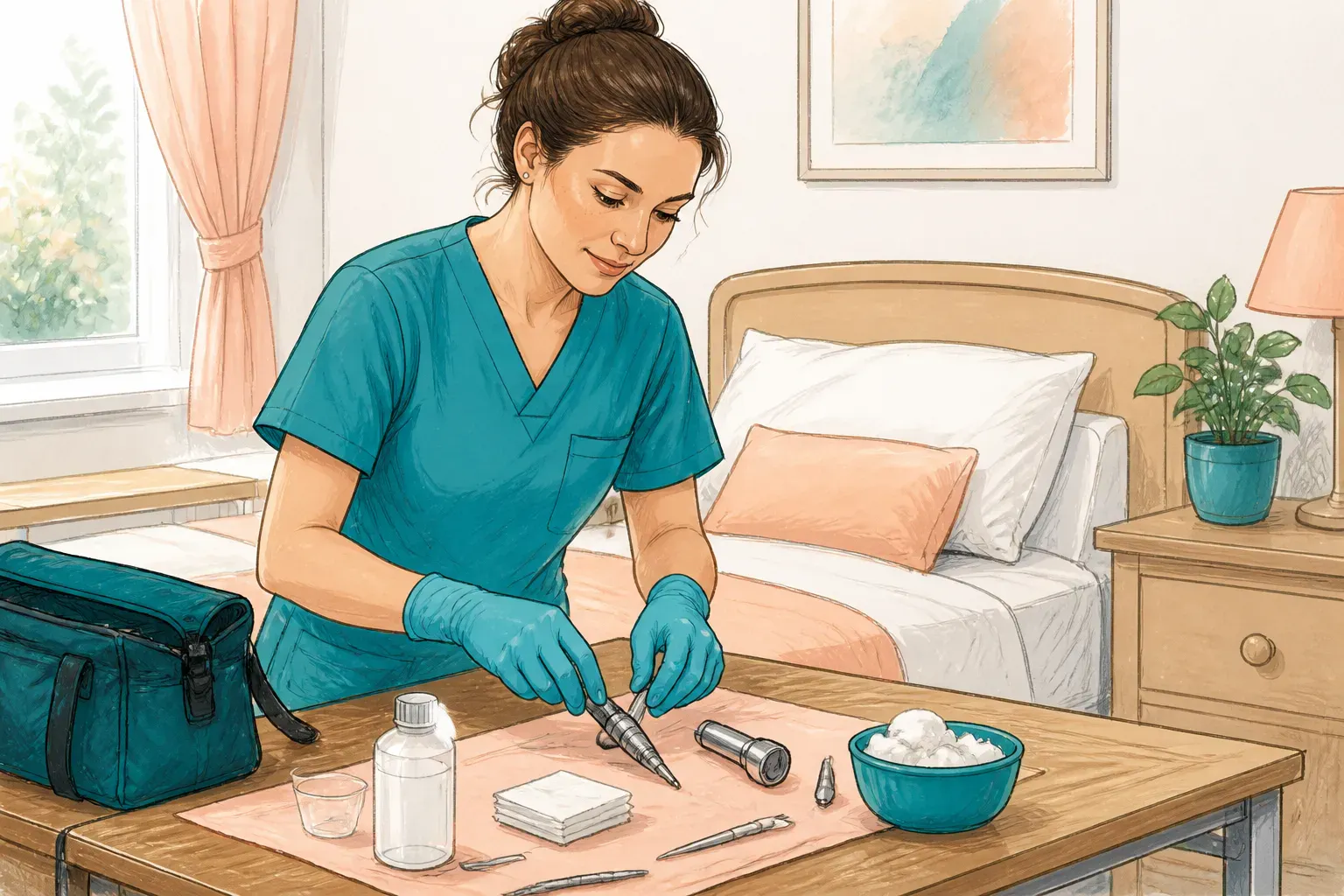
Before the appointment, staff can prepare a space with:
- a comfortable chair with good access for the clinician
- adequate lighting
- minimal background noise and interruptions
- enough room for equipment to be set down safely
- privacy, where possible, while still allowing support if needed
It also helps to have key information ready. That may include the resident’s hearing history, current symptoms, the name of any hearing aids, and details of any recent ear infections or pain. If the resident tends to become anxious, staff can note what helps them settle, such as a familiar carer being present, clear step by step explanations, or a quieter time of day.
Some residents may need extra reassurance before the appointment. In those cases, it can help to explain the visit in simple terms, avoid rushing, and allow them time to ask questions. If the resident has dementia or communication difficulties, a trusted staff member may be able to help interpret their reactions and provide calm support.
Useful items to have nearby include:
- glasses if the resident wears them
- hearing aids and cases
- any recent GP or nursing notes relevant to the ears
- a list of medications if requested by the clinician
- tissues and drinking water, if appropriate
A well organised visit is not about making the home clinical. It is about creating a dignified, calm environment where treatment can happen safely and with as little disruption as possible.
Aftercare, follow-up, and preventing repeat build-up
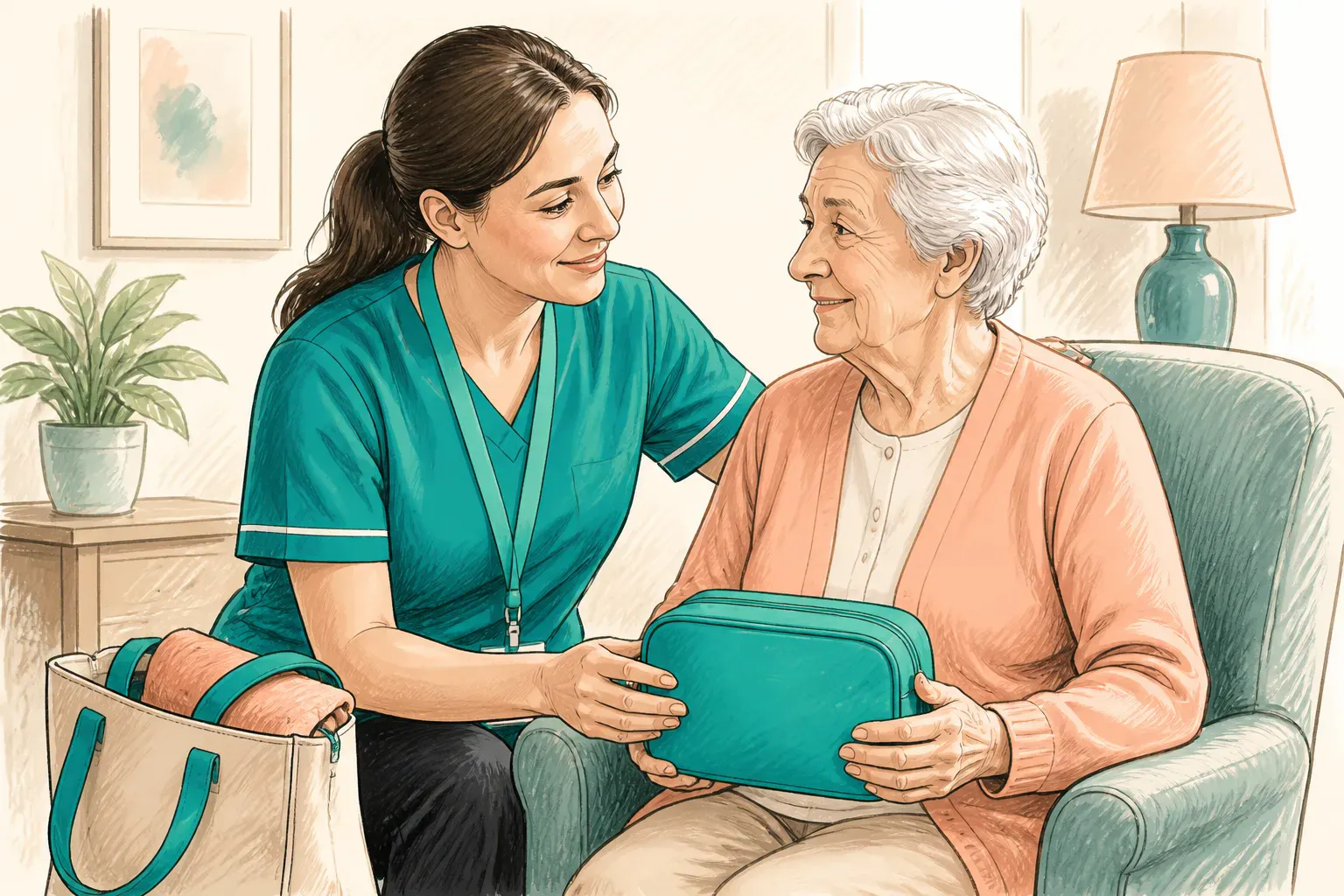
After treatment, the clinician should explain what was done and what the resident or staff should expect next. Most people feel no lasting discomfort after a straightforward earwax removal, although some may notice a brief sensation of fullness or sensitivity. If the clinician gives any specific aftercare advice, the care home should follow it carefully.
Staff should watch for any unexpected changes, especially if the resident becomes more uncomfortable, develops discharge, or reports ongoing hearing problems. If symptoms do not improve as expected, a further assessment may be needed.
Preventing repeated build-up is often about observing patterns and acting early. Some residents are more prone to recurring wax, particularly if they use hearing aids or have narrower ear canals. In those cases, periodic checks may be helpful so that problems are caught before they become severe.
Practical prevention tips for care homes include:
- noticing when a resident starts asking for repetition more often
- monitoring hearing aid performance, especially if sound seems reduced
- avoiding cotton buds or anything inserted into the ear canal
- recording repeated symptoms so patterns are visible over time
- arranging review sooner rather than waiting until communication is heavily affected
If earwax keeps returning, another home visit earwax removal Bristol appointment may be appropriate, depending on the resident’s location and needs. The aim is always to keep hearing support manageable and proactive rather than reactive.
Age related hearing advice can also be helpful for families and carers, including Age UK information on hearing and older people.
When to book mobile ear care and how to arrange it with Pro Ear Clinic
A care home should consider booking mobile ear care when a resident has signs of blockage that are affecting hearing, comfort, or cooperation with daily care. It is especially sensible to act sooner if the resident wears hearing aids, has repeated wax problems, or becomes distressed when communication is unclear.
It is a good idea to arrange an assessment if you notice:
- a sudden or gradual drop in hearing
- repeated requests for information to be repeated
- hearing aid feedback or poor sound quality
- a blocked or uncomfortable ear
- visible wax alongside symptoms
- increasing confusion during conversations that may be linked to poor hearing
To arrange a visit, the care home staff member coordinating the booking can usually provide the resident’s details, the main symptoms, any relevant ear history, and whether consent can be given directly. If the resident has complex needs, it is useful to mention these early so the clinician can plan appropriately.
For homes wanting a straightforward next step, it is sensible to use the clinic’s contact route and share the details as clearly as possible. You can start with Contact ProEarClinic if you want to ask about suitability or timing.
From the ProEarClinic perspective, good ear care should feel calm, respectful, and easy to access. That is especially true in care homes, where small changes in hearing can make a big difference to confidence, communication, and daily wellbeing. A warm, professional service should support the resident without creating more work for the home, which is why on-site ear care is often such a practical solution.
Recommended reads
- Microsuction earwax removal
- Home visit earwax removal Bristol
- Ear health assessment
- Contact ProEarClinic
FAQ
What is mobile ear care for care homes?
Mobile ear care for care homes is an on-site service where a clinician visits the home to assess residents’ ears and remove earwax if appropriate. It is designed to reduce travel, improve comfort, and make treatment easier for people who may struggle to attend a clinic.
Is microsuction safe for older residents?
Microsuction is often suitable for older adults when the ears and medical history make it appropriate. The clinician will assess the resident first, check for any caution signs, and decide whether on-site treatment is safe.
Can a resident with hearing aids still have an on-site ear assessment?
Yes. In fact, hearing aid users often benefit from an ear assessment because wax can affect how well the device works. The clinician may also ask staff to bring the hearing aids or describe any sound problems.
What should care home staff prepare before the appointment?
Staff should prepare a quiet, well-lit space, have basic resident details ready, and note any ear history, hearing aid use, pain, discharge, or recent infections. It also helps to know how the resident best responds to reassurance.
When should a care home book earwax removal for a resident?
A care home should book when blocked ears seem to be affecting hearing, communication, comfort, or hearing aid use. If symptoms are becoming more noticeable or causing distress, it is better to arrange an assessment sooner rather than later.