Ear health checks for care home residents help spot wax build-up, hearing changes, discomfort, and possible infection before they start affecting daily life. They are especially useful because older adults may not always describe symptoms clearly, and staff may notice the first signs through changes in communication, mood, or behaviour. A simple, regular check can make conversations easier, reduce distress, and support better overall wellbeing.
Why ear health checks matter in care homes
Ear health checks for care home residents are important because even a small ear problem can have a big effect on comfort and communication. When hearing becomes muffled, a resident may seem withdrawn, miss instructions, respond slowly, or become unsettled in social situations. That can affect confidence, participation in activities, and day to day interactions with family and care staff.
One of the most common issues is earwax build-up. Wax is a normal part of ear health, but in older adults it can become drier, harder, and more likely to block the ear canal. If a resident wears hearing aids, has limited mobility, or finds personal care difficult, wax can go unnoticed for longer. In care homes, that matters because a resident may not always say, “My ear feels blocked”, especially if they also live with dementia, frailty, speech difficulties, or reduced awareness of subtle changes.
A useful ear check does not need to be complicated. The goal is to notice early signs, record them clearly, and decide whether a routine review or a specialist assessment is needed. That is particularly valuable in a setting where many people rely on the same staff to notice changes over time.
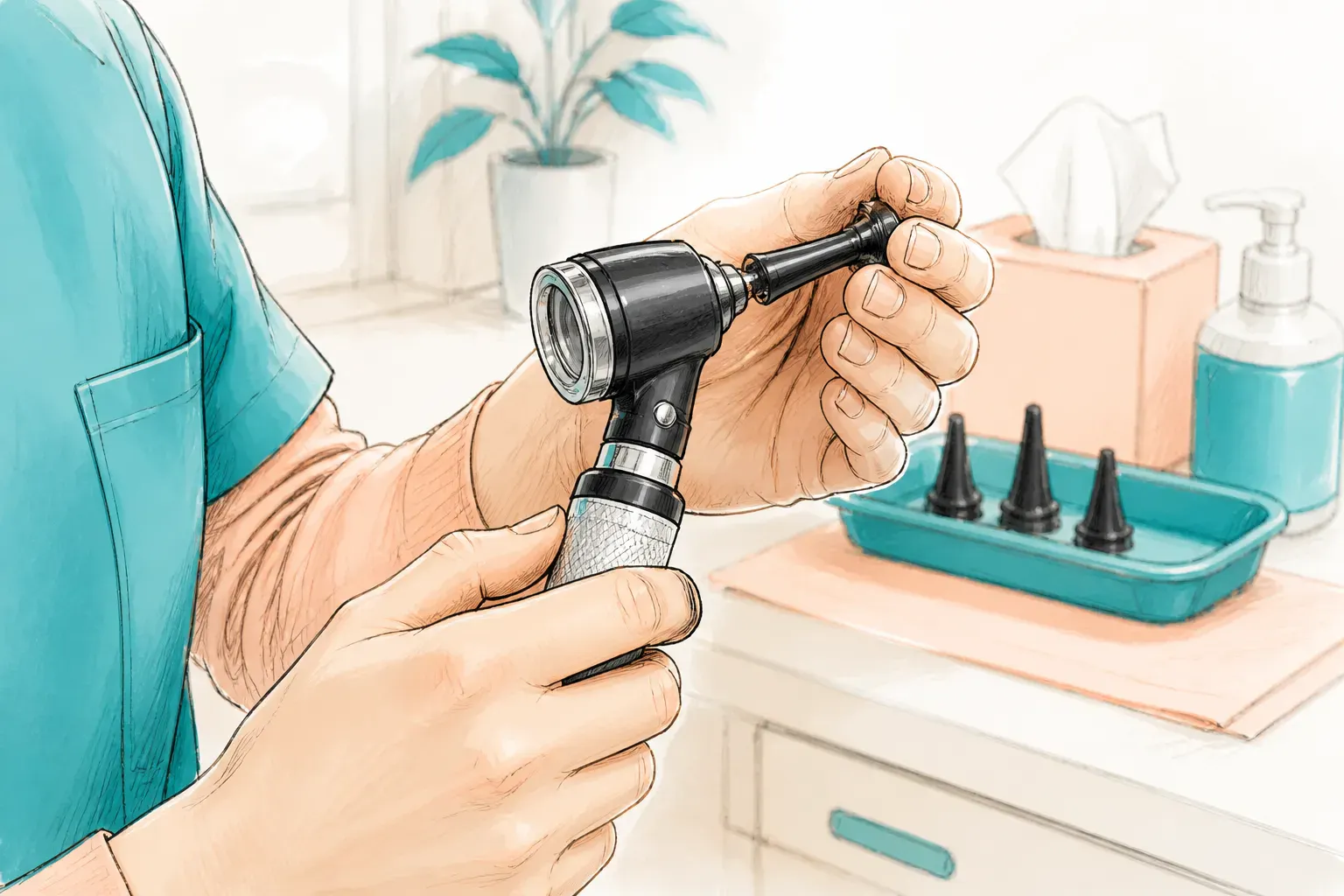
From an author perspective, I have seen that many families assume poor hearing is simply part of ageing. Sometimes that is true, but often the real issue is treatable, such as wax blockage or irritation around the ear canal. A timely check can help avoid unnecessary frustration, repeated misunderstandings, and avoidable anxiety.
What a care home ear health check includes
A basic ear health check should be gentle, respectful, and focused on practical signs rather than invasive cleaning. In most cases, the aim is to gather enough information to decide whether the resident may need clinical assessment.
A check usually includes:
- Looking at the outer ear for redness, swelling, soreness, skin damage, or discharge.
- Checking for visible wax near the opening of the ear canal.
- Asking about discomfort, itchiness, blocked sensation, tinnitus, dizziness, or pain.
- Noting whether hearing seems worse than usual.
- Observing how the resident responds to speech, noise, television, or instructions.
- Reviewing whether the resident wears hearing aids, uses ear drops, or has a history of recurring wax problems.
These observations matter because hearing difficulty is not always reported directly. A resident might say nothing is wrong, yet still keep asking people to repeat themselves, turn the television up very loud, or stop joining conversations. Care staff often spot these everyday changes first.
It is also helpful to think about function, not just the ear itself. For example, if a resident suddenly becomes less engaged in group activities, seems more confused than usual, or looks agitated when spoken to, hearing change may be part of the picture. Of course, other causes are possible too, so the ear check should form part of a wider assessment rather than a one issue assumption.
Common ear problems seen in older care home residents
The most common problem is earwax build-up, often leading to blocked or muffled hearing. Wax can accumulate gradually and may become harder to remove naturally with age. Hearing aids can also make wax management more difficult because they sit in or near the ear canal and can affect airflow and wax movement.
Other factors can include:
- Dry ear canals, which are more common in later life.
- Narrow ear canals, where wax can compact more easily.
- Reduced self-care, especially if a resident needs help with washing or dressing.
- Infrequent ear checks, particularly if no one has noticed a problem yet.
- Previous earwax issues, which often recur.
Not every symptom is caused by wax. Pain, discharge, bad smell, fever, or a sudden drop in hearing can point to another problem, such as infection or injury. That is why a proper ear health check should look beyond the wax itself.
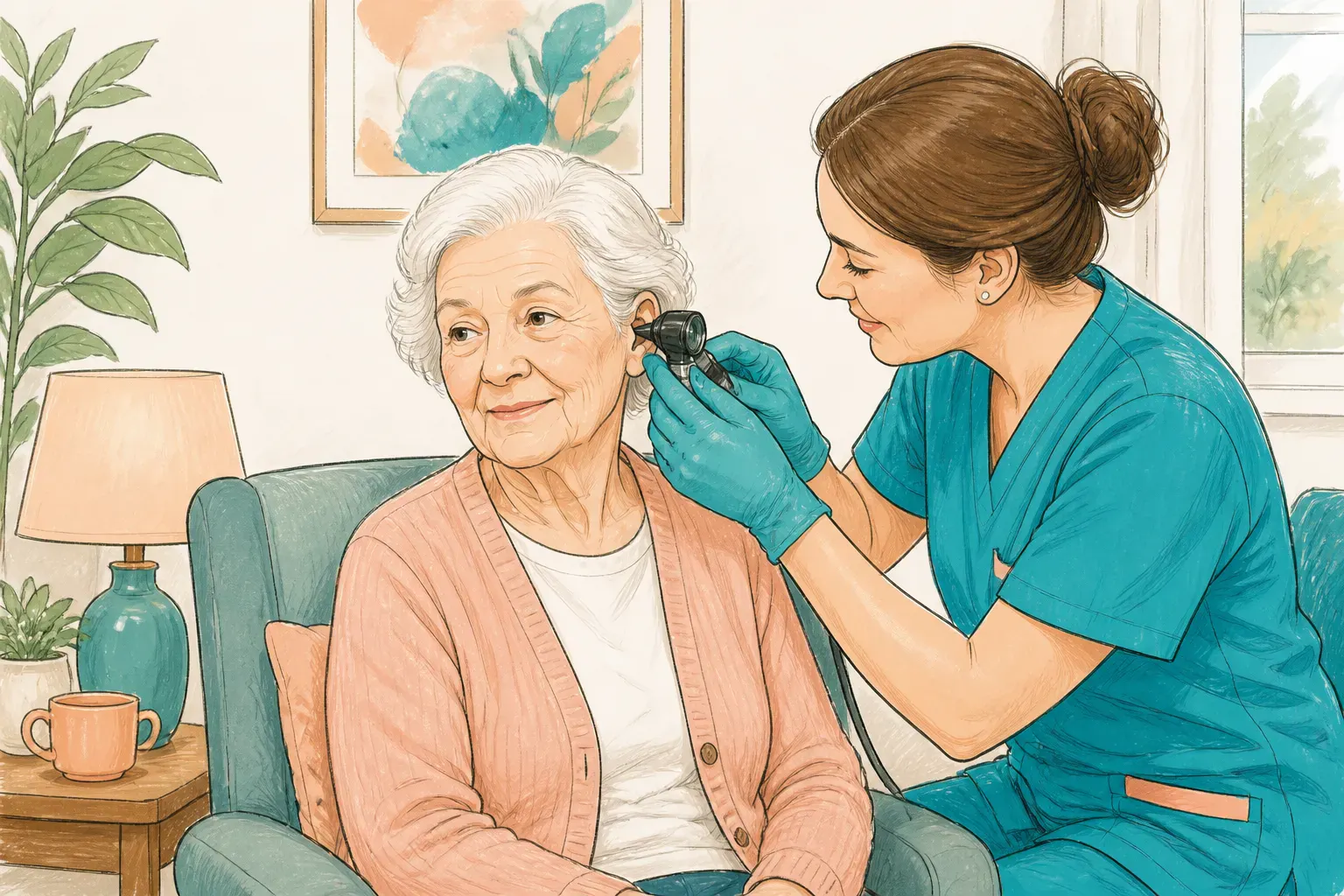
Here are a few common patterns staff may notice:
- The resident keeps saying speech sounds “far away” or “muffled”.
- One ear seems worse than the other.
- Hearing aids do not seem to help as much as usual.
- The resident is more easily startled or less responsive.
- The resident is reluctant to lie on one side because of ear discomfort.
If the change is gradual and there are no red flags, wax is often a likely cause. If the change is sudden, especially in one ear, that needs quicker clinical review.
Trusted UK advice on earwax and hearing can be found in NHS guidance on earwax build-up and treatment, while broader hearing assessment recommendations are outlined in NICE guidance on hearing loss in adults.
Who should carry out the check and when
Care staff play an important role because they are often the first to notice changes. They should not attempt invasive ear cleaning unless they are specifically trained and it is part of their service scope. Instead, staff can observe, record, and refer.
Families can also help by sharing what they notice during visits, such as difficulty hearing on one side, repeated requests for repetition, or discomfort with hearing aids. If a resident already has a pattern of wax build-up, it is sensible to keep a note of previous episodes so that any new change is easier to spot.
A routine check may be sensible when:
- A resident seems to hear less clearly than before.
- Hearing aids are not working as expected.
- The resident has a history of repeated earwax blockage.
- Communication has become noticeably harder.
- A clinician is assessing hearing before an audiology appointment.
Prompt review is needed when:
- The resident has ear pain or discharge.
- Hearing changes suddenly.
- There is dizziness, bleeding, or fever.
- A resident with hearing aids develops repeated feedback or discomfort.
The table below gives a simple overview of who usually does what.
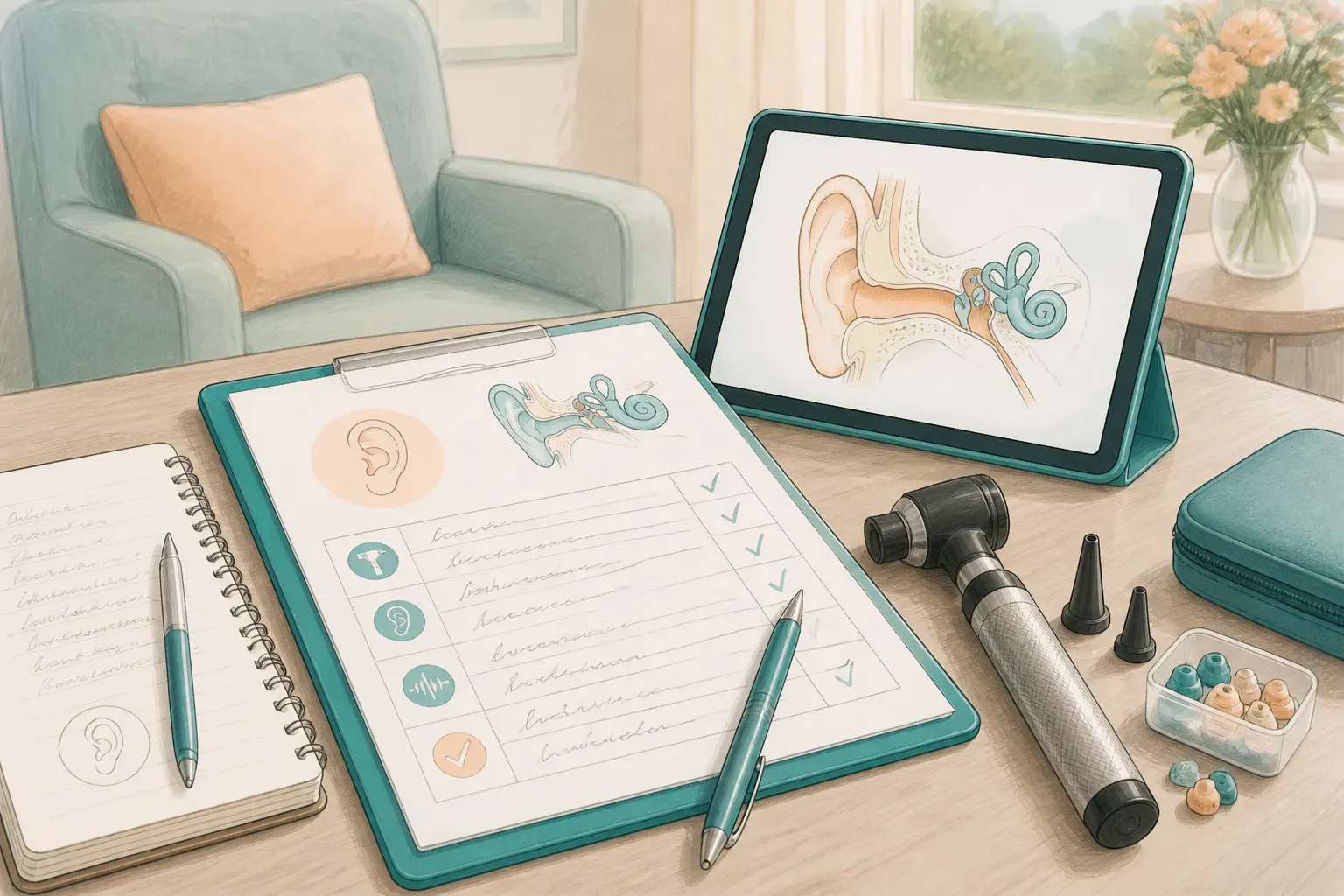
Person or service | Main role | Typical urgency |
|---|---|---|
Care staff | Notice changes, record symptoms, support communication | Routine, unless red flags are present |
GP or primary care team | Assess medical causes, infection, sudden symptoms, or wider health concerns | Routine to urgent, depending on symptoms |
Specialist ear clinician | Examine the ear canal, confirm wax build-up, and remove wax where suitable | Routine or prompt, depending on impact |
For residents who may need specialist support, a clinician-led Ear health assessment can help clarify whether wax, irritation, or another issue is affecting hearing and comfort.
How specialist ear assessments work in a care home setting
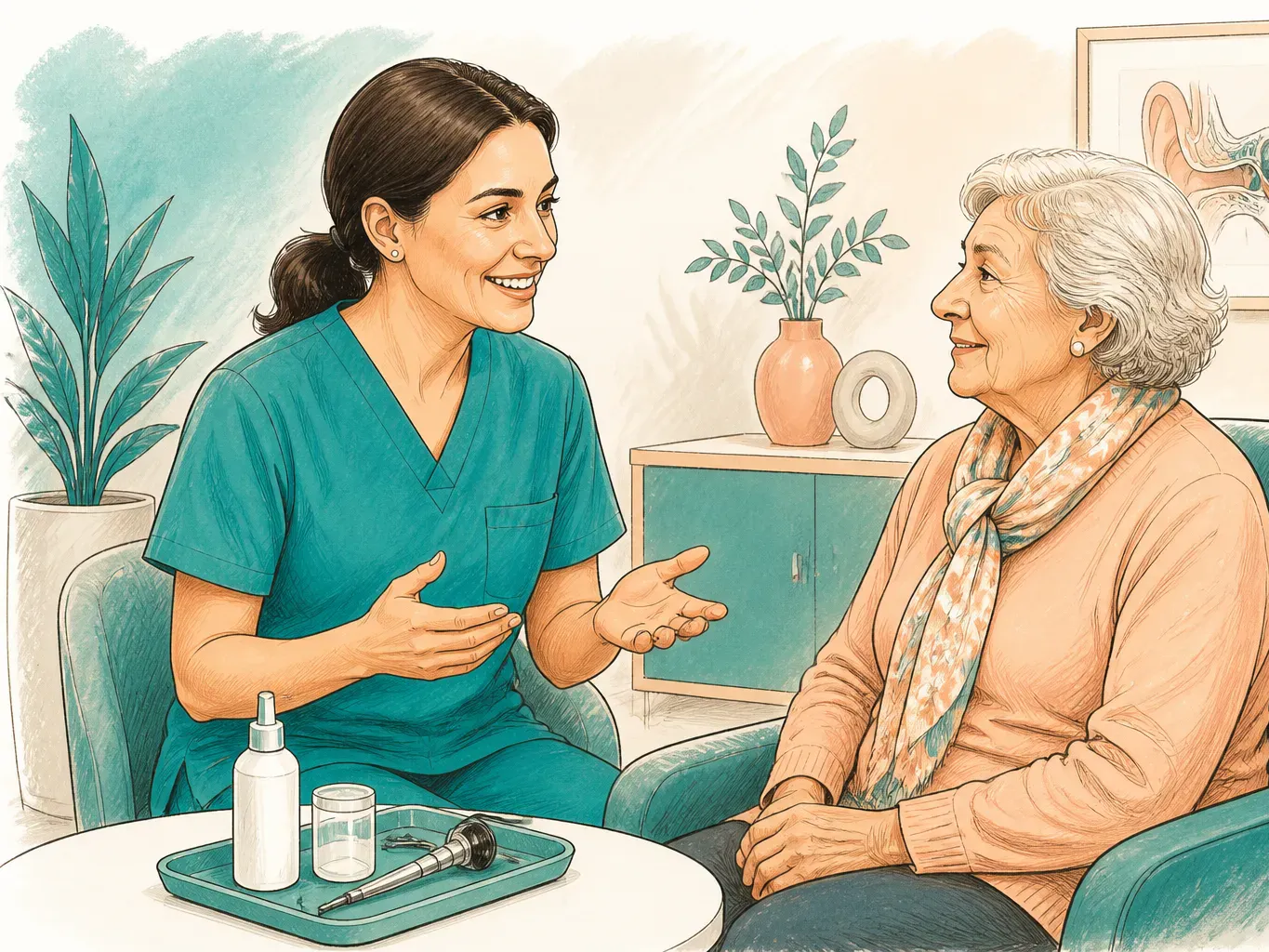
A specialist ear assessment in a care home should feel calm, respectful, and unhurried. Good communication matters, especially for residents who may be anxious, hard of hearing, living with dementia, or uncomfortable with clinical procedures.
A typical visit usually follows a simple sequence:
First, the clinician reviews the resident’s symptoms, history, hearing aid use, and any known earwax problems. Consent is then sought in a way that suits the resident’s communication needs. If the resident has a best interests process or support plan, staff should follow the appropriate care home procedures.
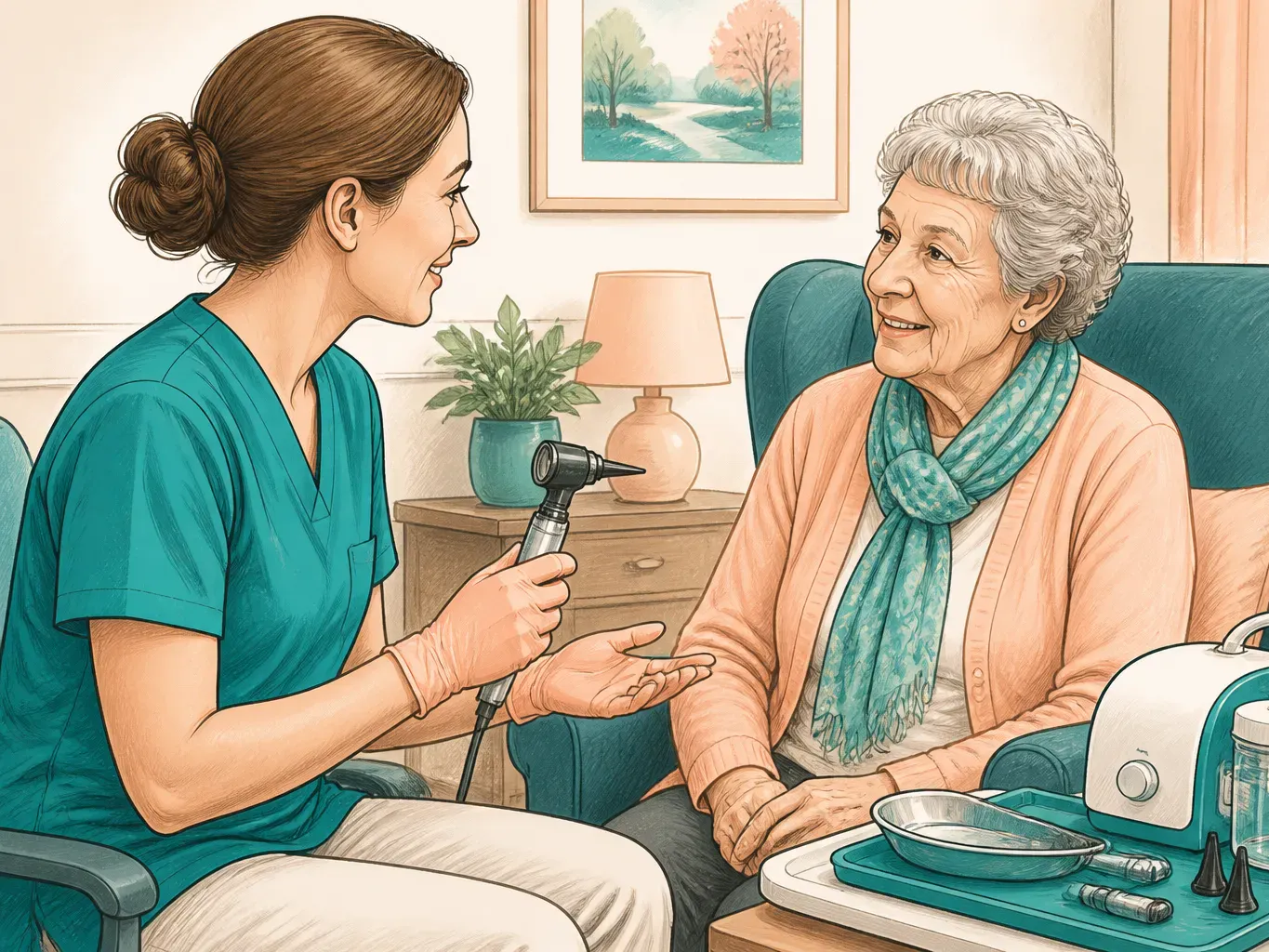
Next, the clinician examines the ears, usually with an otoscope or similar equipment, to look for wax, inflammation, infection signs, or other concerns. The resident may be asked about pain, tinnitus, dizziness, or a blocked feeling. Staff can help by sharing recent observations, such as changes in speech response or sleep disturbance.
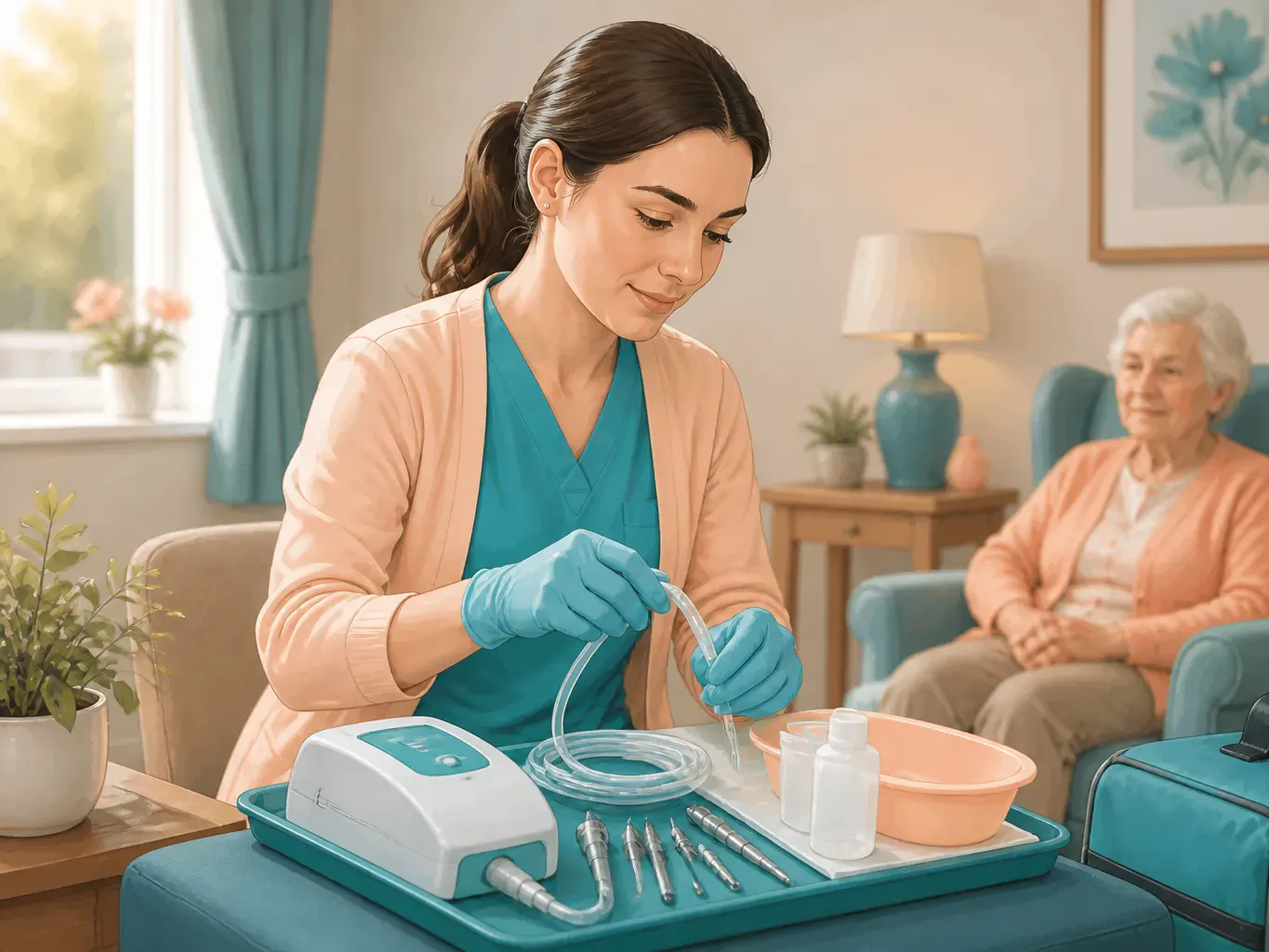
If wax removal is suitable, the clinician will explain the method, expected sensations, and what to do if the resident feels uncomfortable. A gentle approach is especially important for frail residents, people with limited neck movement, or those who become distressed easily.
Good infection control, privacy, and a clear working space all matter too. The resident should be positioned safely and comfortably, and the room should allow enough quiet for communication. After the assessment, the clinician should explain the findings in simple terms and advise whether follow up is needed.

If the assessment suggests something other than wax, the resident may need referral back to a GP, audiology, or another appropriate service. The aim is always to choose the safest next step rather than assuming every blocked ear is only a wax problem.
For families and staff who want a clearer picture of the treatment journey, Pro Ear Clinic also explains Microsuction as a gentle, evidence based approach used when clinically appropriate.
Treatment options after the check
What happens next depends on what the ear check finds. If wax is the issue, a clinician may recommend softening drops first, then removal if needed. If the ear canal is too sensitive, or if there is another concern such as infection, the resident may need different treatment or referral.
At Pro Ear Clinic, the emphasis is on safe, patient friendly care and evidence based earwax removal. The best option depends on the resident’s ear anatomy, symptoms, comfort level, and overall health.
Option | Comfort | Suitability | Speed | Notes |
|---|---|---|---|---|
Microsuction | Usually very good, especially when explained clearly | Often suitable for many adults, including older residents | Can be efficient once the ear is assessed | Preferred when wax is dry, impacted, or when water based methods are not ideal |
Irrigation, only where clinically suitable | Can be comfortable for the right person | Not suitable for everyone, especially if there are ear health concerns | May be available in some settings | Only appropriate when a clinician judges it safe |
Referral | Depends on the underlying issue | Best when symptoms suggest infection, injury, or another condition | May take longer, but is clinically necessary | Used when wax is not the only or main concern |
If a resident has recurring blockage, a structured follow up plan may help. If they live in the Bristol area and need an accessible option, Home visit earwax removal may be a practical route for some patients, subject to suitability and service availability.
It is also important to know when not to rush into removal. Severe pain, suspected perforation, discharge, or sudden hearing loss should be assessed properly before any procedure is attempted.
Signs that need urgent attention
Some ear symptoms should not wait for a routine wax appointment. They need prompt clinical review because they may indicate infection, injury, or another medical problem.
Seek urgent help if a resident has:
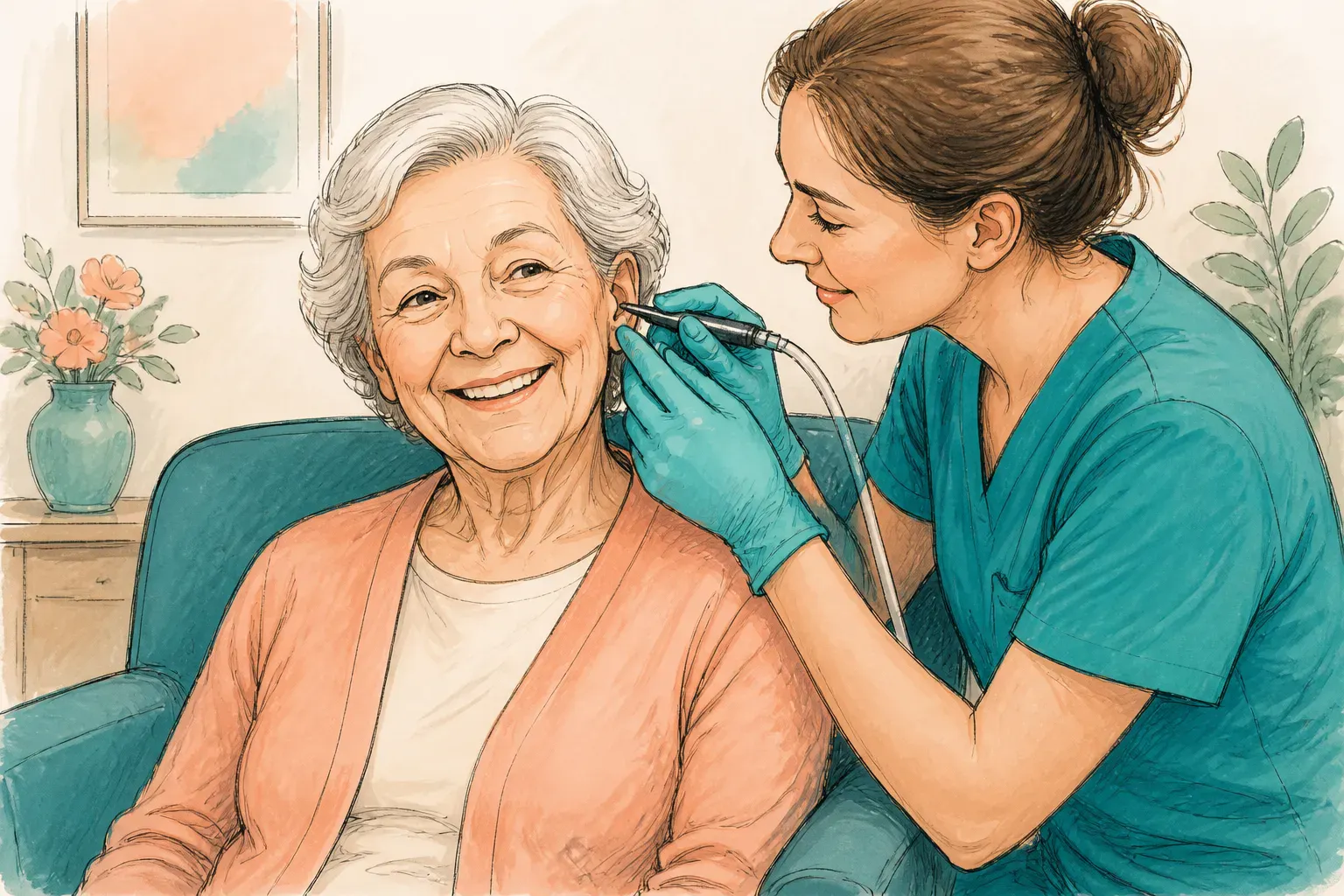
- Sudden hearing loss, especially in one ear.
- Severe ear pain.
- Discharge from the ear.
- Bleeding from the ear.
- Fever or signs of systemic illness.
- Dizziness or balance problems.
- Suspected eardrum perforation.
- Significant swelling around the ear.
The key difference is between a gradual blocked feeling and a sudden change. Wax build-up usually develops over time. Sudden hearing loss is different and should be treated as urgent. The same is true if there is new discharge or marked pain, because those signs are less typical of simple wax alone.
Where staff are unsure, it is safer to escalate than to wait. UK guidance from the NHS and hearing care organisations supports prompt assessment when the presentation is not straightforward. A useful reference point for hearing evaluation and red flag symptoms is the British Society of Audiology information on ear health and hearing assessment.
How care homes can support better ear health day to day
Care homes can make a real difference by building ear awareness into normal routines. The aim is not to examine every ear constantly, but to notice change early and avoid unnecessary discomfort.
A few simple habits help:
- Record hearing changes, ear pain, itchiness, or blocked sensations in care notes.
- Notice if the resident turns the television up, asks for repetition, or stops joining conversation.
- Keep an eye on hearing aid comfort and function.
- Encourage residents and families not to use cotton buds, because these can push wax deeper.
- Follow any advice given about wax softening drops, including how long to use them and when to stop.
- Use clear speech, face the resident, and reduce background noise while they are waiting for assessment.
These steps support both comfort and dignity. They also help staff tell the difference between a short term issue and a longer standing pattern. For residents with reduced hearing, simple communication adjustments can reduce frustration straight away, even before treatment takes place.
If a resident has repeated wax problems, it can be useful to add a note to their care plan so that staff know what to watch for. That may save time later and reduce the risk of the person becoming isolated because they can no longer hear clearly in group settings.
The Royal College of General Practitioners guidance on older adult care is also a helpful reference point for broader person centred care in later life.
When to book Pro Ear Clinic for a resident
If a resident seems to have blocked hearing, wax build-up, or persistent discomfort, it is sensible to arrange a specialist assessment rather than waiting for the problem to settle on its own. That is especially true if the resident is missing conversations, becoming more withdrawn, or struggling with hearing aids.
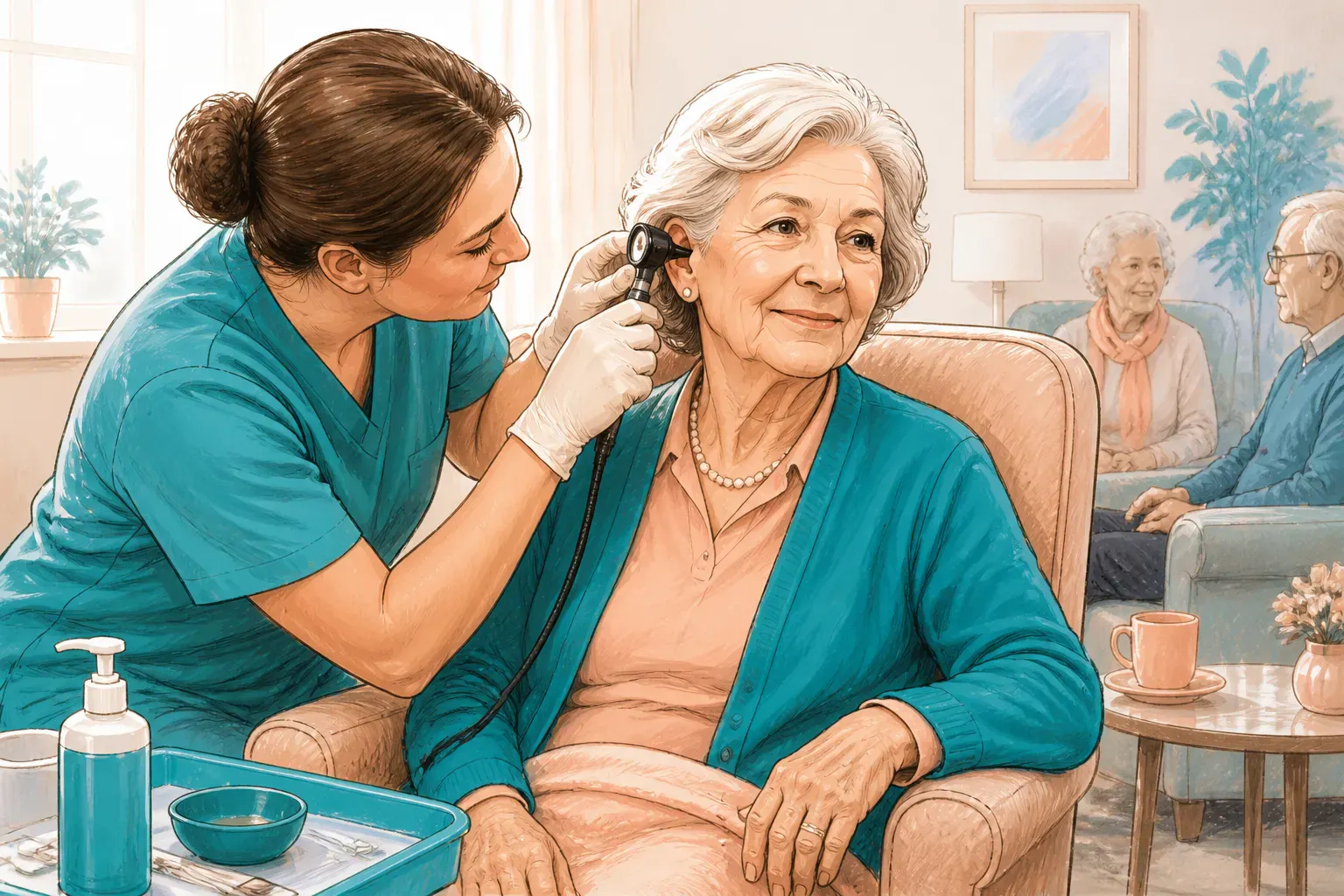
Pro Ear Clinic offers patient friendly support for people who need careful earwax removal and practical advice. The service is designed to be calm, approachable, and evidence based, which is particularly helpful for older adults, anxious patients, and care home residents who benefit from a gentle pace.
Booking is especially worth considering when:
- Symptoms are affecting communication or daily life.
- The resident has a history of recurring wax problems.
- Care staff suspect one ear is blocked.
- Hearing aids are no longer fitting or functioning comfortably.
- A home based or convenient assessment would reduce stress for the resident.
For residents with repeated symptoms, it may also help to read Signs you need earwax removal before deciding on the next step.
Recommended reads
FAQ
How often should care home residents have their ears checked?
There is no one rule that fits everyone. A resident should have ears checked whenever there are signs of hearing change, discomfort, repeated wax issues, or problems with hearing aids. Residents with a history of build-up may benefit from more regular observation as part of their care plan.
What are the signs that a resident may have earwax build-up?
Common signs include muffled hearing, asking people to repeat themselves, turning up the television, discomfort with hearing aids, ear fullness, itching, or seeming less responsive in conversation. Sometimes staff notice the change before the resident does.
Can care home staff check ears themselves?
Staff can observe the outer ear and note symptoms, but they should not attempt invasive cleaning unless it is part of their training and service scope. If wax, pain, discharge, or sudden hearing change is suspected, a clinical assessment is the safer next step.
When should ear symptoms be treated as urgent?
Urgent review is needed for sudden hearing loss, severe pain, discharge, bleeding, dizziness, fever, or suspected perforation. These symptoms should not be treated as routine wax problems.
What happens during a specialist ear assessment in a care home?
The clinician usually reviews symptoms, gains consent, examines the ears, and explains the findings clearly. If wax removal is suitable, it may be carried out during the visit. If another issue is suspected, the resident may need referral.
Is microsuction suitable for older care home residents?
Often, yes, if the resident is suitable for the procedure after assessment. Microsuction can be a good option for impacted wax and is commonly used because it is controlled and can be gentle when performed by a trained clinician. Suitability always depends on the person’s ears and overall health.