
Care home ear wax removal in Bristol can usually be arranged safely as an on-site or home visit service, provided the resident has been properly assessed first. For many older adults, timely treatment can improve hearing, reduce discomfort, and make everyday communication much easier for both residents and care staff.
Quick summary for care home residents and families
If a resident in a Bristol care home is struggling with blocked ears, ear wax removal can often be arranged without the stress of travelling to a clinic. The first step is always a suitability check, because the safest method depends on the condition of the ears, the resident’s medical history, and how comfortable they are during the appointment.
Wax build-up can affect hearing, confidence, and day-to-day wellbeing in ways that are sometimes mistaken for confusion or normal ageing. A gentle assessment and the right removal method can make a noticeable difference quite quickly, especially when communication has become strained.
For care homes, the aim is straightforward: safe treatment, minimal disruption, and clear aftercare so the resident can settle back into their routine with better hearing and less discomfort.
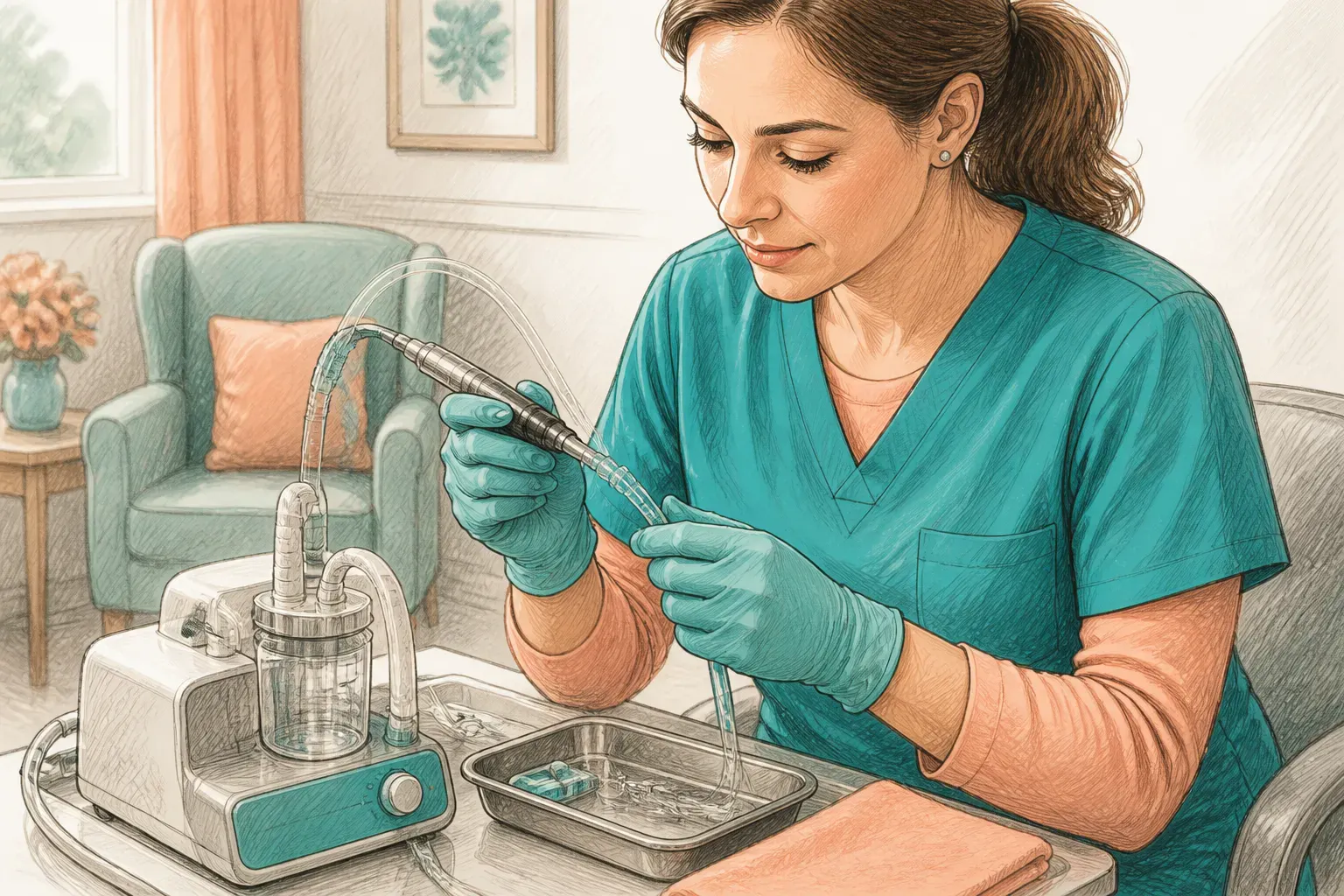
Why ear wax problems are common in older adults
Ear wax is normal and useful. It helps protect the ear canal by trapping dust and debris, and it usually moves out of the ear naturally over time. As we get older, that self-cleaning process can become less efficient, which is one reason wax problems are so common in later life.
Several age-related changes can contribute. Ear wax often becomes drier and harder, making it more likely to stay lodged in place. Ear canals may also become narrower or more sensitive, so a small amount of wax can create a bigger blockage than it would in a younger person. In addition, reduced mobility, arthritis, cognitive changes, and limited self-care can make routine ear cleaning more difficult.
Hearing aids can also play a part. They do not cause wax by themselves, but they can affect airflow and make it harder for wax to move out naturally. In some cases, the presence of a hearing aid can also make build-up more noticeable, because sound quality changes more quickly when the canal is partly blocked.
In a care home setting, staff and relatives may notice practical signs before the resident can explain what is happening. These can include muffled speech, the TV volume being turned up more than usual, repeated requests for people to speak louder, or a general withdrawal from conversation. Sometimes wax problems are first picked up when a hearing aid seems less effective than usual.
Signs a resident may need ear wax removal
Blocked wax does not always cause pain, so it is worth looking for changes in hearing and behaviour as well as physical discomfort. A resident may benefit from an ear health assessment if they are showing one or more of the following:
- Muffled or reduced hearing
- A feeling of fullness or blockage in one or both ears
- Earache or mild discomfort
- Tinnitus, such as ringing, buzzing, or humming
- Dizziness or unsteadiness
- Repeatedly asking for speech to be repeated
- Turning one ear towards speakers more than usual
- Seeming more withdrawn, frustrated, or confused during conversation
- Hearing aid feedback, reduced sound clarity, or a hearing aid that no longer seems to work as well
Some of these symptoms can also happen with other ear or hearing problems, so it is important not to assume wax is always the cause. For example, a sudden hearing change, ongoing dizziness, or a painful ear may point to something that needs medical review rather than routine wax removal.
A prompt assessment is especially sensible if the resident has one ear that seems much worse than the other, if symptoms came on quickly, or if there is any discharge, bleeding, or significant pain. When in doubt, it is better to assess properly than to guess.
Useful background reading can help families and staff recognise the signs more confidently. See the NHS guidance on earwax build-up and RNID advice on earwax and hearing.

How care home ear wax removal in Bristol usually works
The process usually begins with an enquiry from a family member, carer, or care home manager. A clinician will normally ask a few key questions before the appointment is confirmed, because safety comes first. These questions often cover symptoms, hearing aid use, ear infection history, recent surgery, pain, discharge, and any previous problems with ear wax removal.
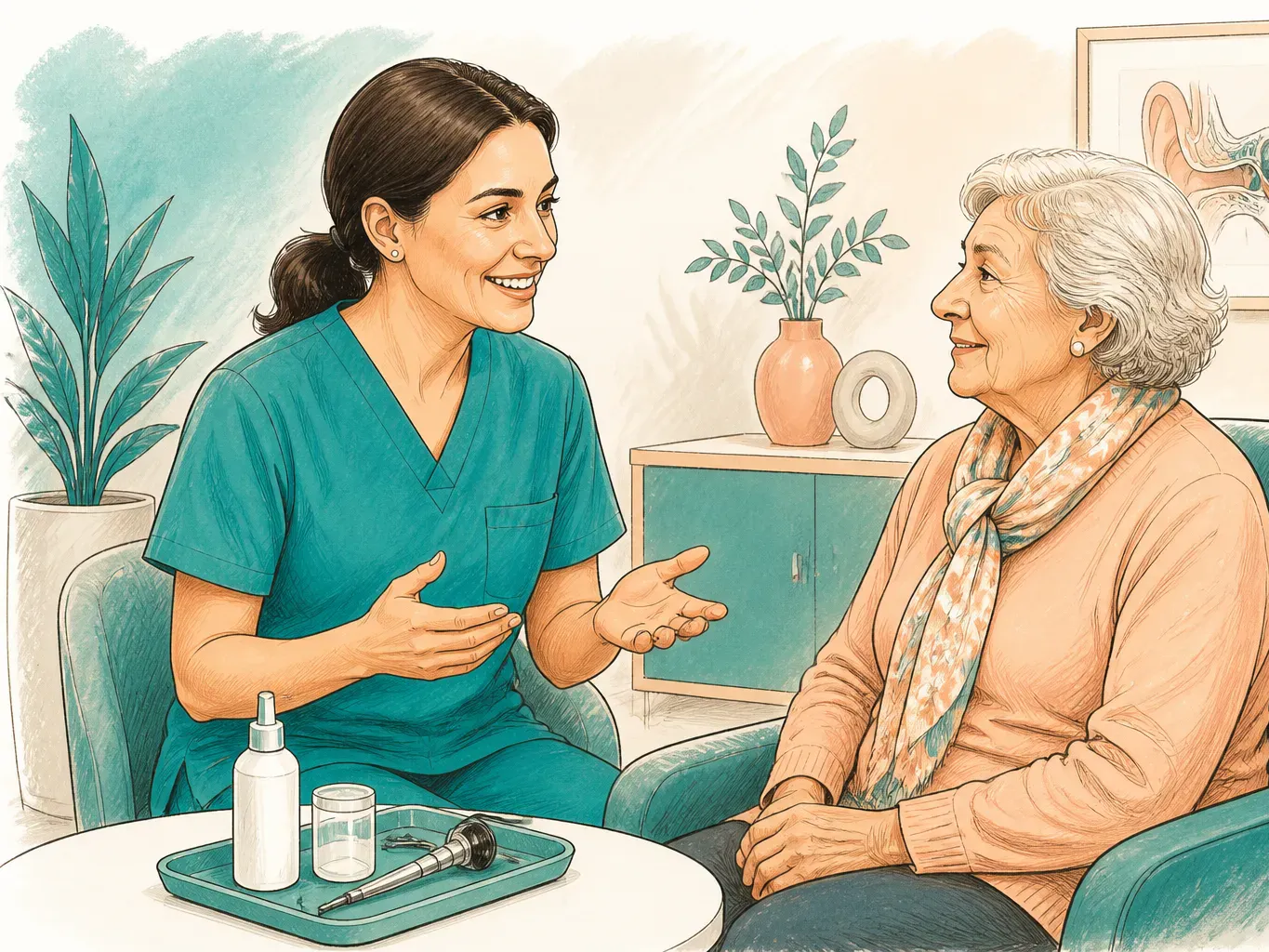
Consent is an important part of the process. If the resident has capacity, they can usually decide for themselves after the procedure has been explained in a way they understand. If capacity is limited, the care team and family may need to follow the resident’s best interests process and local care home procedures.
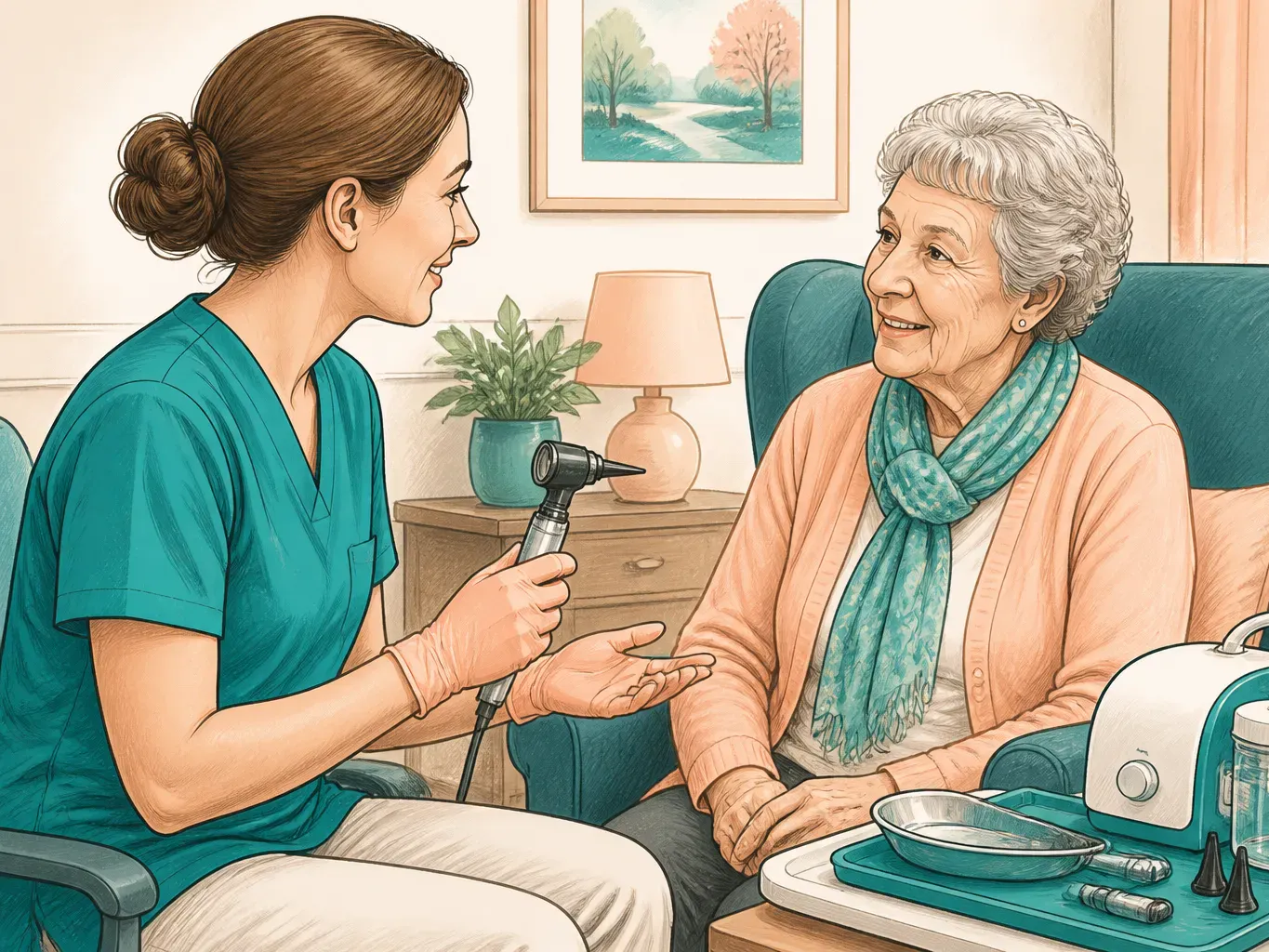
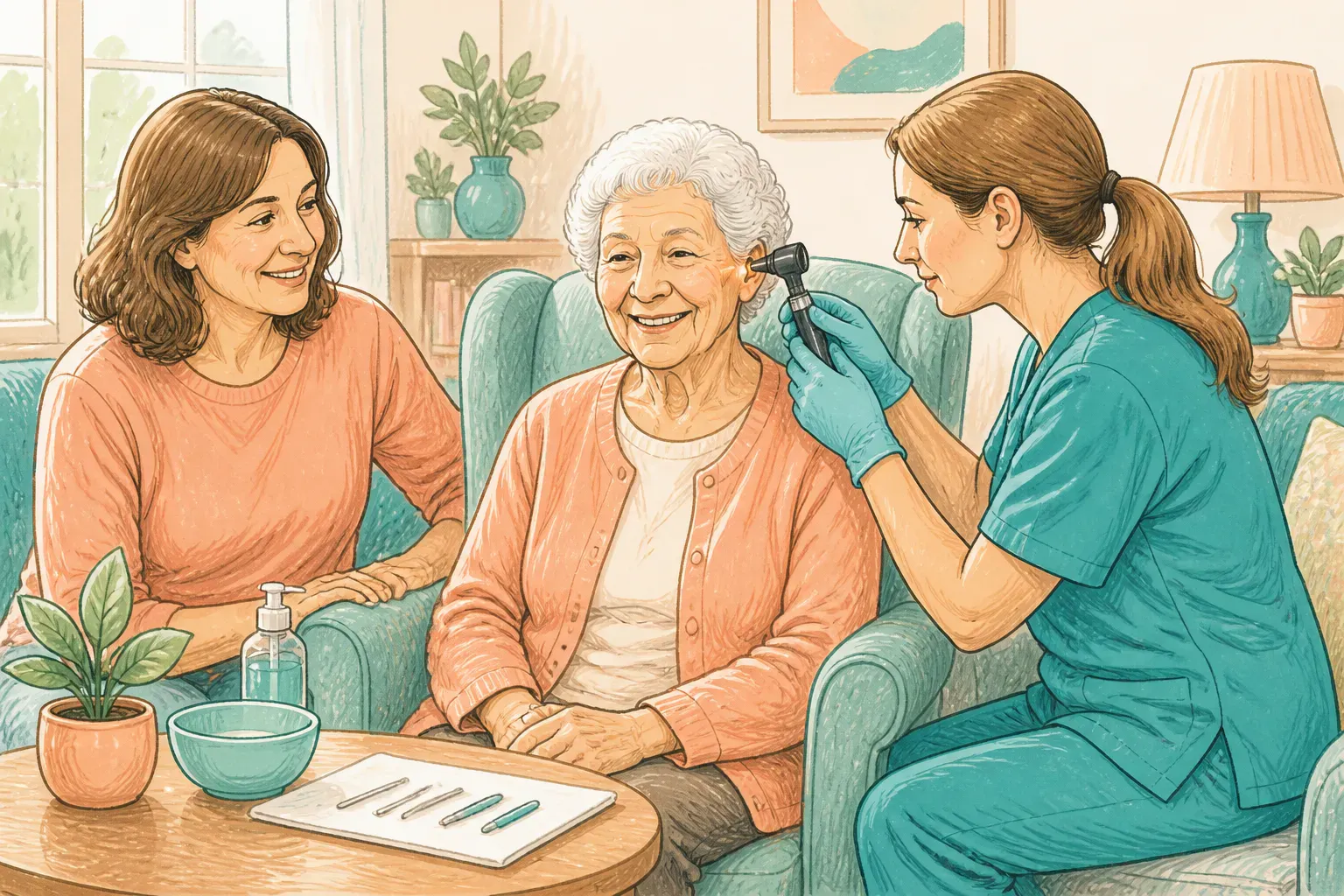
On the day, the clinician will examine the ears and decide whether wax removal is suitable. This is usually done with an otoscope or microscope so the ear canal and eardrum can be seen clearly. If wax is the issue and treatment is appropriate, the clinician will choose the safest method for that resident.
After removal, the clinician will explain what was found, whether both ears were fully cleared, and whether any follow-up is needed. In many cases the resident notices improved hearing immediately, although some people feel mild temporary sensitivity after treatment. Staff and relatives may also be given straightforward aftercare advice, such as watching for ongoing discomfort or reporting any unexpected symptoms.
If a resident is more suited to a dedicated appointment rather than an on-site visit, ProEarClinic also provides information about home visit ear wax removal in Bristol and ear health assessment options, which can help families understand the likely pathway before booking.
Comparing the main removal options and why method choice matters
There are a few ways ear wax may be managed, but the right option depends on the ear’s condition, the resident’s comfort, and any clinical risks. Convenience matters, but it should never outweigh safety.
Method | How it works | Benefits | Limitations | Common suitability notes |
|---|---|---|---|---|
Microsuction | A clinician uses gentle suction under direct visualisation to remove wax | Precise, usually quick, no water used, often well suited to older adults and complex ears | Can feel a little noisy, may be unsuitable if the ear canal is very sensitive or if there is excessive debris obstructing visibility | Often preferred when safety and control are priorities |
Irrigation | Warm water is used to flush out wax | Can be effective for softer wax in selected cases | Not suitable for everyone, may be less appropriate with some ear histories or where water should be avoided | Only used when the ear is suitable for it |
Softening drops | Drops are used to soften wax before removal or sometimes to help it clear naturally | Simple, can make removal easier, may help with stubborn wax | Does not always clear the blockage on its own, may take time, not appropriate in every case | Often used before an appointment if clinically advised |
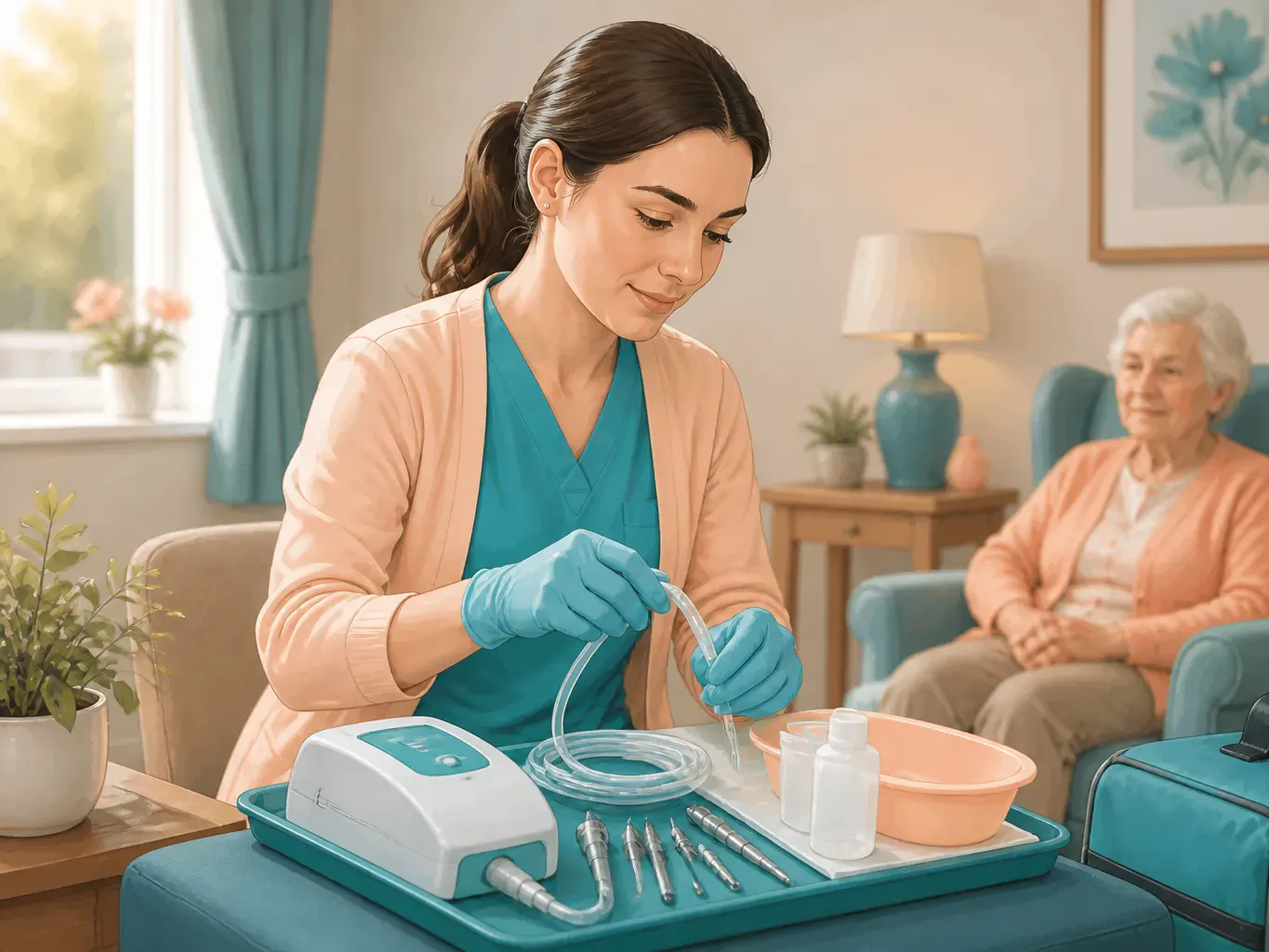
Microsuction is often chosen because it offers a high level of control. The clinician can see exactly what is happening and remove wax in a targeted way, which is reassuring for many older adults and carers. It is also helpful when the ear canal needs to stay dry, or when a resident has a history that makes water-based methods less suitable.
That said, no single method is right for every person. A professional ear assessment should determine what is safe, what is comfortable, and what is most likely to work well in that specific situation. For more detail on the method itself, see Microsuction ear wax removal.
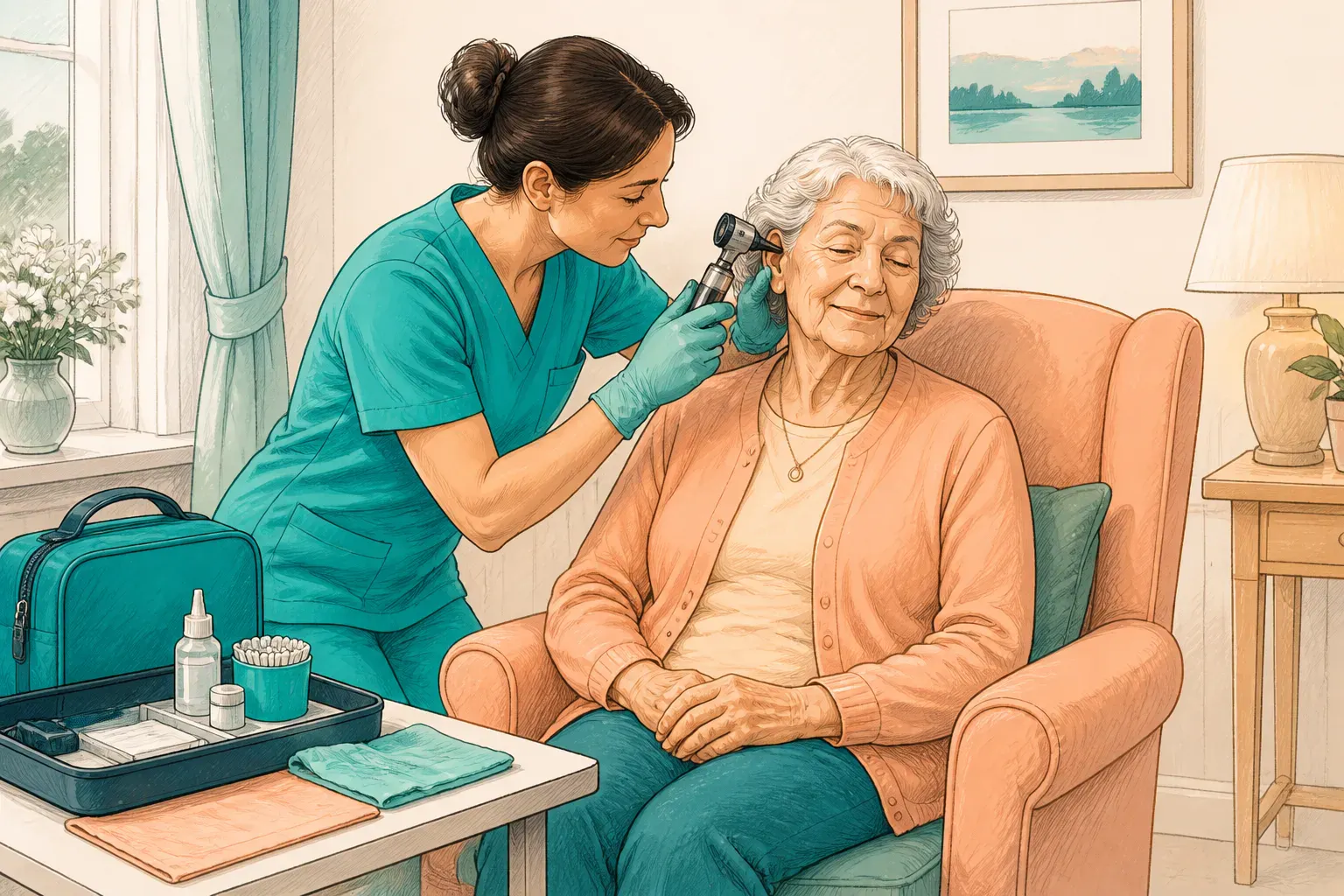
The British approach to ear wax care is generally conservative and safety-led, which is reflected in guidance such as the NICE guidance on earwax management and the NHS information linked above.
Safety, contraindications, and when treatment may be delayed
Older adults may have more complex ear health histories, so safety screening matters. Ear wax removal may be postponed or avoided if the resident has signs of ear infection, active pain, a recent ear procedure, a known perforated eardrum, or other factors that make direct removal unsafe.
A careful clinician will also consider whether the resident can comfortably tolerate the procedure, whether they can remain still enough for safe treatment, and whether the ear canal can be examined clearly. If the wax is very hard, the canal is inflamed, or there is significant debris, the safest choice may be to delay treatment, soften the wax first, or refer onwards.
Infection control is especially important in care home settings. Equipment should be clean and appropriate for clinical use, and the appointment should be carried out in a way that respects both hygiene and the resident’s dignity. Privacy, consent, and clear communication all support a safer experience.
Some residents will need a more cautious plan because of frailty, cognitive impairment, anticoagulant use, chronic ear problems, or a history of difficult ear procedures. That does not necessarily mean treatment cannot happen, but it does mean the assessment should be more detailed and the method choice more careful.
If the clinician feels that wax removal is not the right answer, the resident may need to be referred to a GP, audiology service, or ENT team instead. That is not a failure of care, it is part of making sure the resident receives the right treatment at the right time.
What carers and care home managers should prepare in advance
A little preparation can make the appointment smoother, calmer, and more effective. Care staff do not need to do anything complicated, but they can help by creating a good environment and sharing useful background information.
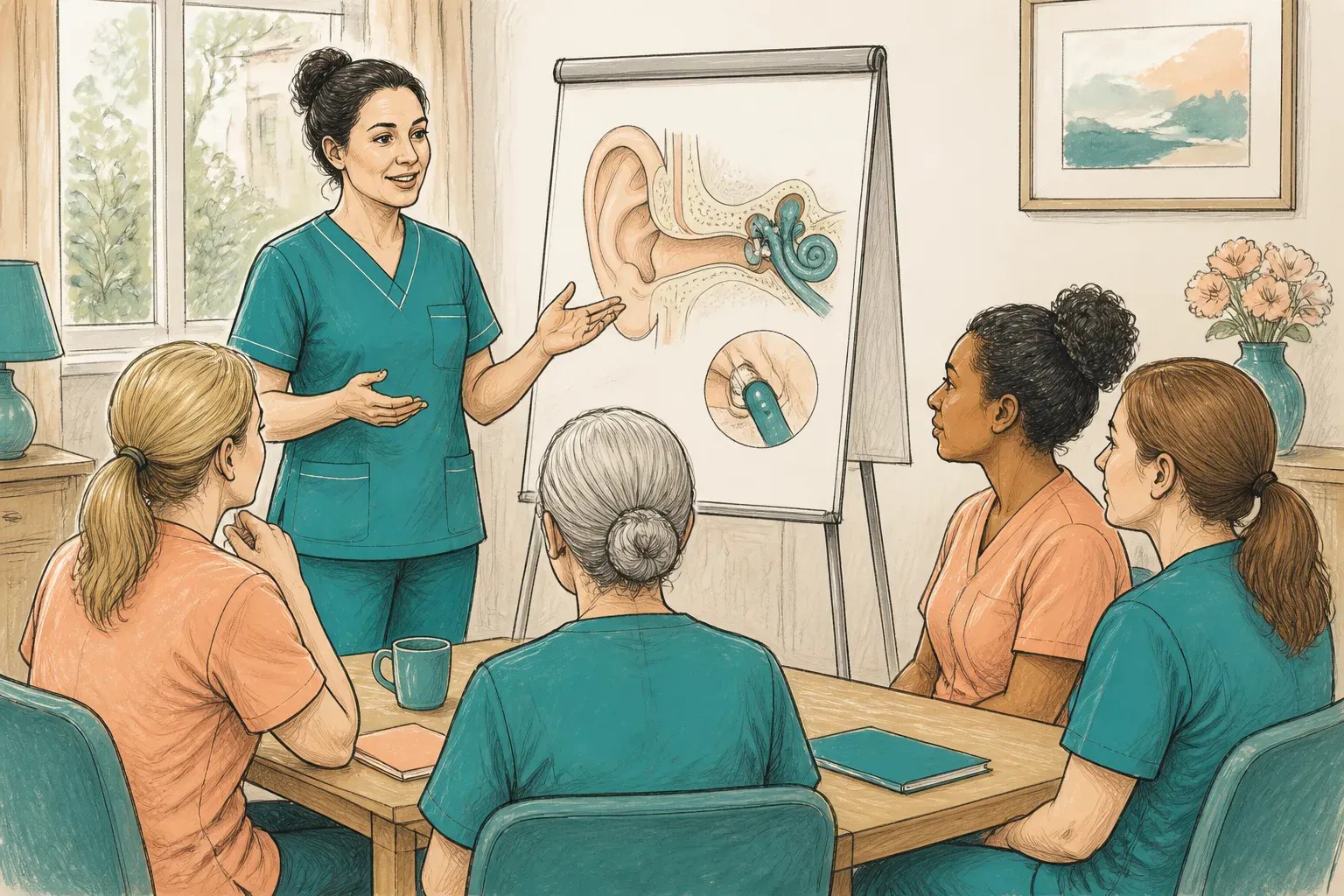
A practical preparation checklist includes:
- A quiet room with enough privacy for the resident to relax
- Good lighting so the clinician can work safely
- A chair that is stable and comfortable, or a suitable bed space if that is more appropriate
- Easy access to handwashing facilities if needed
- Details of whether the resident wears one or two hearing aids
- Notes on any ear symptoms, recent infections, falls, dizziness, or hearing changes
- Communication preferences, such as whether the resident lip-reads or needs questions repeated slowly
- Consent arrangements and any family liaison needed before or after the visit
It also helps if staff avoid cotton buds or other objects in the ears before the appointment. These can push wax deeper and make removal more difficult. If a clinician has recommended softening drops in advance, those should be used exactly as directed, but it is sensible not to start any new ear drops without professional advice.
Residents may feel anxious, especially if they have had uncomfortable ear treatment in the past. A calm explanation can help. It is often useful to tell the resident what will happen in simple terms, that the clinician will stop if they are uncomfortable, and that they can ask questions at any point.
Costs, convenience, and choosing between clinic and on-site care
Families and care homes often want to know whether it is better to bring the resident to a clinic or arrange on-site care. The best choice depends on mobility, hearing needs, overall health, and how disruptive travel would be.
Option | Advantages | Possible drawbacks | Best suited to |
|---|---|---|---|
Clinic appointment | Full clinical setup, easy access to specialist equipment, clear follow-up pathways | Travel needed, can be tiring for frail residents, may require transport coordination | Residents who can travel comfortably and want a dedicated clinic setting |
On-site care home appointment | Less disruption, familiar environment, easier for residents with mobility or anxiety concerns | Requires suitable room and coordination with staff, may not suit every clinical situation | Residents who find travel difficult or benefit from treatment where they live |
In practice, convenience is only one part of the decision. Urgency matters too. If a resident is struggling to communicate, missing out on social interaction, or becoming distressed because they cannot hear properly, a prompt appointment may be more important than waiting for the most convenient date.
Cost can vary based on the type of assessment needed, the complexity of the ear wax, whether one or both ears require treatment, and whether the appointment is in a clinic or delivered on-site. Rather than relying on general price assumptions, it is best to ask about the booking process, what is included, and whether a follow-up visit may sometimes be needed.
If you are comparing service types, it can also help to read about the wider approach to care on the clinic site and then decide what fits the resident’s needs. A good starting point is often a proper assessment rather than assuming wax removal will be straightforward.
Aftercare and preventing wax build-up returning
After successful ear wax removal, many residents notice clearer hearing, less pressure, and easier conversation almost straight away. Some people experience a brief period of mild sensitivity, especially if the ears were very blocked beforehand, but this usually settles quickly.
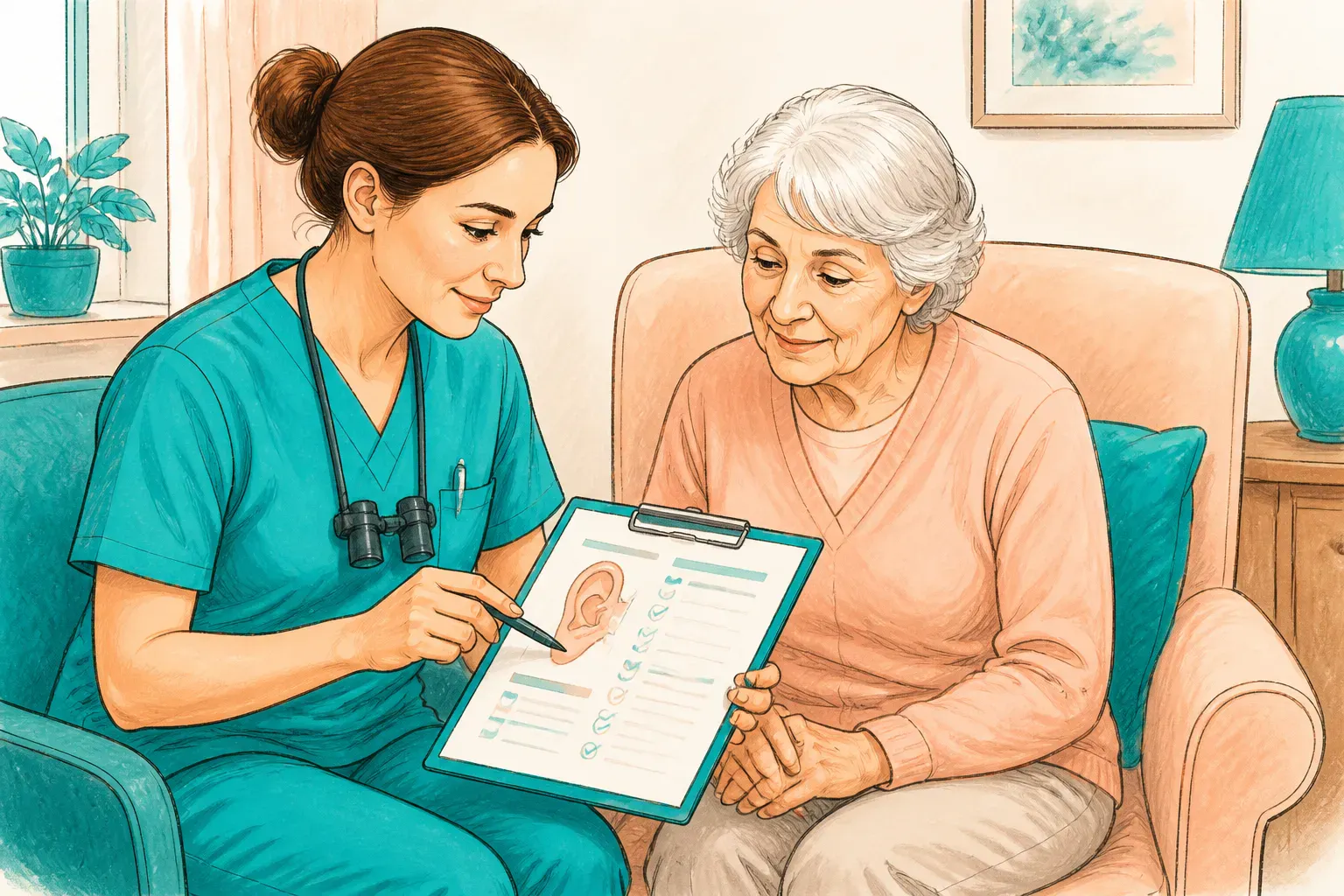
Good aftercare is simple. Staff should encourage the resident to mention any unexpected discomfort, ongoing dizziness, or persistent hearing changes. If the clinician gives specific advice, it should be followed carefully, particularly if any drops or follow-up checks are recommended.
To help reduce wax build-up returning, the safest habits are often the simplest:
- Do not use cotton buds or hairpins in the ears
- Avoid putting random oils or drops into the ear unless a clinician has advised it
- Keep hearing aids clean and properly fitted
- Let staff know if hearing seems to worsen again
- Arrange periodic ear checks if the resident has a history of repeated build-up
Residents who wear hearing aids may need more regular monitoring, because wax can affect sound quality and reduce the benefit of the device. A hearing aid that seems weak or distorted is not always broken, sometimes the ear canal just needs a careful check.
A sensible long-term approach is to think of ear care as part of routine wellbeing, especially in later life. Small changes in hearing can affect confidence, social engagement, and even appetite or mood if the resident becomes less involved in conversation. Catching wax problems early can prevent that gradual slide.
When to seek urgent help or a clinical review
Not every ear problem is wax, and some symptoms need prompt medical attention. If a resident has sudden hearing loss, severe ear pain, bleeding, discharge, fever, or significant balance problems, they should be assessed urgently by a doctor or appropriate urgent care service.
A clinical review is also important if symptoms do not fit a simple wax pattern. For example, one-sided hearing loss with no visible wax, severe ongoing tinnitus, facial weakness, or a recent head injury all need proper assessment. In those cases, it is safer to rule out other causes first.
If the resident has pain with fever, swelling around the ear, or appears generally unwell, do not assume that wax removal is enough. Likewise, if there is a long-standing ear problem that has suddenly changed, a GP or ENT opinion may be more appropriate than a routine wax appointment.
When in doubt, seek assessment rather than trying to manage the problem with home remedies. Gentle, timely ear care is usually the best path, but only when it is the right care for that resident.
FAQ
Can ear wax removal be carried out in a care home in Bristol?
Yes, in many cases it can. A suitable clinician can often assess the resident on site and, where appropriate, provide treatment in the care home itself. Suitability depends on the resident’s ear health, medical history, consent, and whether the environment is appropriate for a safe procedure.
Is microsuction safe for older care home residents?
Microsuction is commonly used because it is precise and does not involve water, which can be helpful for older adults. It is still important that the ears are checked first, because safety depends on the individual resident’s ear condition and overall health.
How do I know whether blocked ears are caused by wax or something else?
Wax often causes muffled hearing, a blocked feeling, and sometimes tinnitus or mild discomfort. However, infection, sudden hearing loss, and other ear conditions can cause similar symptoms. A proper ear assessment is the safest way to tell the difference.
What should care staff do before an ear wax appointment?
Staff should prepare a quiet, private space, share relevant medical and hearing aid information, and make sure consent arrangements are clear. It also helps to avoid cotton buds or other objects in the ear before the appointment.
Can residents with hearing aids still have ear wax removal?
Yes. In fact, hearing aid users often need regular checks because wax can reduce sound quality and make the device seem less effective. The clinician will usually ask about the hearing aids as part of the assessment.
When should a resident see a doctor instead of booking wax removal?
A doctor should be contacted if there is sudden hearing loss, severe pain, bleeding, discharge, fever, major dizziness, or other worrying symptoms. Those signs may point to a problem that needs medical assessment before wax treatment is considered.
Recommended reads
If you would like to learn more about safe ear care and the treatment process, these pages may help:
- Home visit ear wax removal in Bristol
- Microsuction ear wax removal
- Ear health assessment
- Contact ProEarClinic
For impartial reference material, you may also find these useful:
- NHS guidance on earwax build-up
- NICE guidance on earwax management
- RNID advice on earwax and hearing
- NHS page on hearing loss and when to seek help
For Bristol care homes, families, and residents, the main message is simple: if hearing seems blocked or communication has changed, get the ears assessed properly. With the right approach, ear wax removal can be a calm, effective part of maintaining comfort, confidence, and day-to-day quality of life.