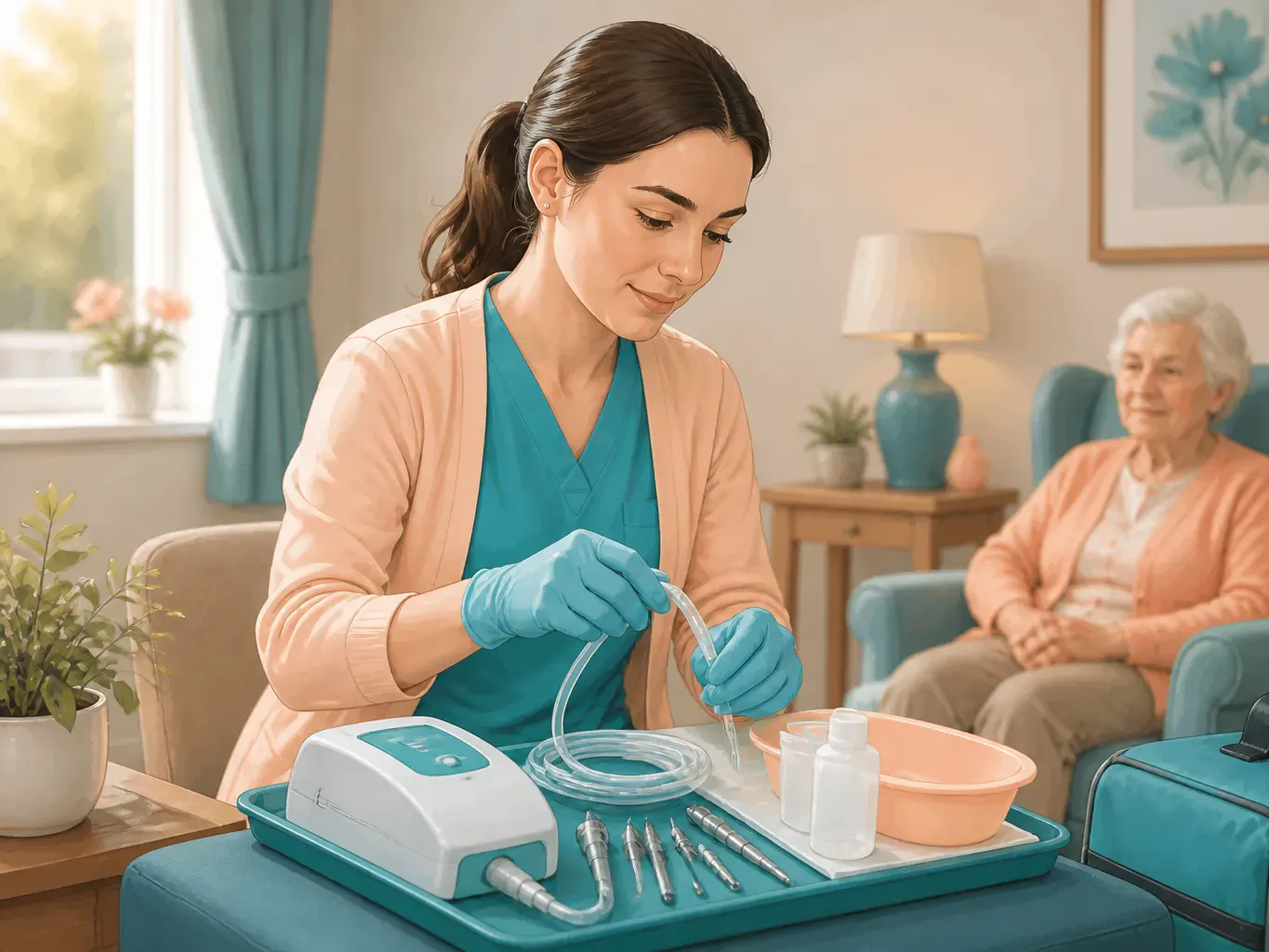

Ear irrigation is a clinician-led way of removing troublesome earwax using controlled warm water to flush the ear canal. In Bristol, it can be a useful option for people with blocked ears, muffled hearing, or discomfort, but only after a proper ear assessment confirms it is safe. For some ears, a gentler dry method such as microsuction is the better choice.
Quick summary
Ear irrigation uses warm water to loosen and remove earwax that has built up and is causing symptoms. It can help many people, but it should only be done after a clinician checks that the ear is suitable. If you are searching for ear irrigation Bristol options, the safest first step is an assessment, because the right treatment depends on the condition of your ears rather than convenience alone.
What ear irrigation is and how it works
Ear irrigation is a form of earwax removal that uses water to soften and dislodge wax so it can leave the ear canal more easily. A clinician carries it out with purpose-built equipment that allows the water to be delivered in a controlled way. The aim is not to force wax out, but to help it move gently when the wax and ear anatomy are suitable.
Before treatment, the ear should be examined with an otoscope or similar instrument. This is important because earwax is not the only cause of a blocked feeling, and a proper view of the ear can reveal whether irrigation is appropriate. If the wax is extremely hard, the canal is narrow, or there are signs of infection or damage, another method may be safer.
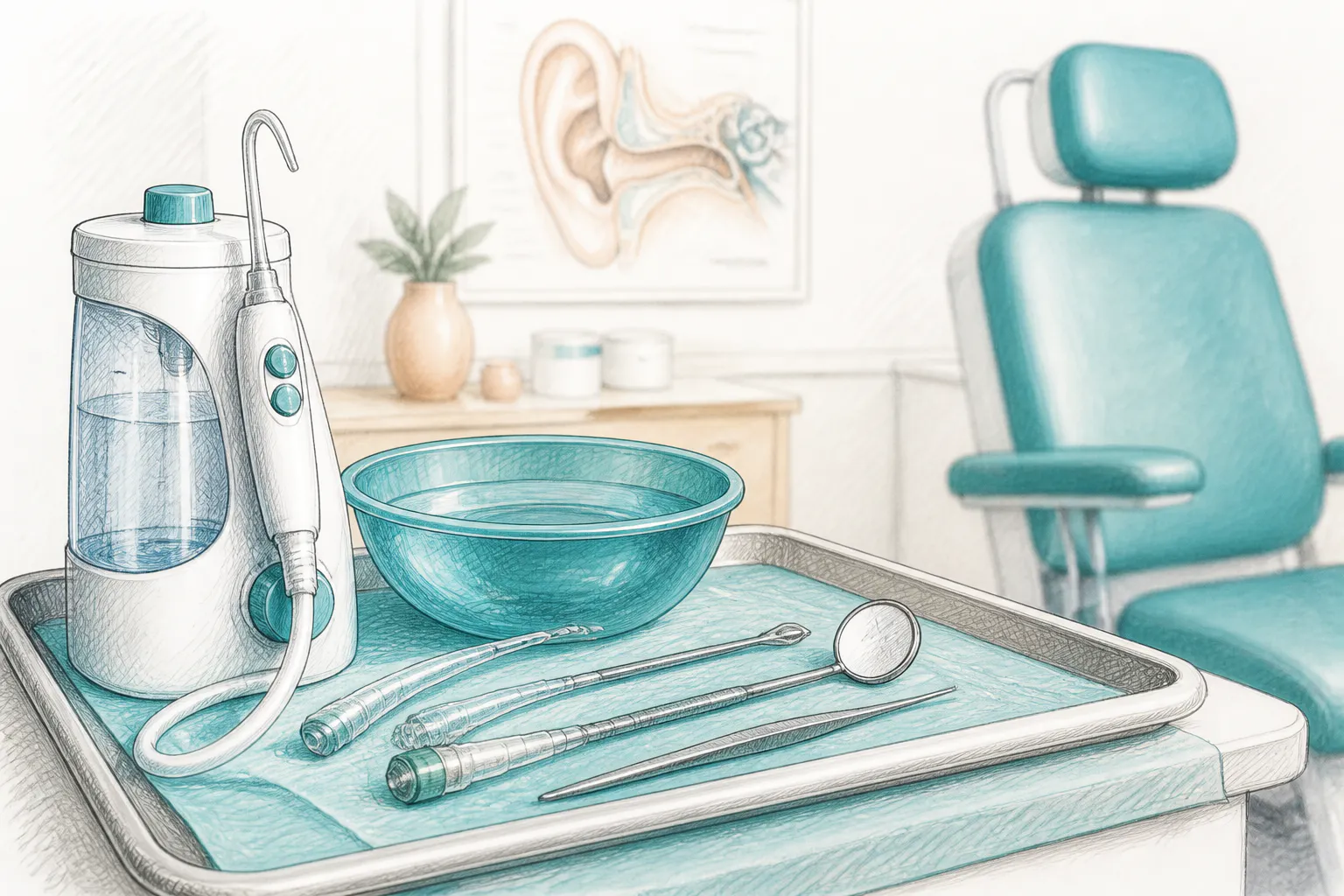
A typical appointment starts with a short discussion about symptoms and medical history. The clinician may ask about ear pain, hearing changes, dizziness, surgery, infections, perforations, or previous wax removal. If irrigation is suitable, warm water is introduced carefully into the canal and the loosened wax is allowed to come away. Many people describe the sensation as unusual rather than painful, though some notice mild pressure or a brief wet feeling.
It helps to compare irrigation with other removal methods. Microsuction uses a fine suction device rather than water, while manual removal uses specialist instruments to take wax out directly. Those alternatives can be better when the ear needs to stay dry, when the canal is sensitive, or when the clinician wants very precise control. If you want to explore the wider range of treatment choices, see Earwax removal services.
Method | Comfort | Suitability | Speed | Typical use cases |
|---|---|---|---|---|
Ear irrigation | Usually comfortable, though some people notice pressure or water sensation | Suitable for selected patients after assessment | Often fairly quick once the ear is prepared | Soft or manageable wax, uncomplicated ears |
Microsuction | Often well tolerated, especially by people who want to avoid water | Suitable for many ear types, including some complex cases | Usually quick and precise | Blocked ears, ears needing a dry method, many anxious patients |
Manual removal | Can be very effective when performed by trained clinicians | Suitable in selected cases where direct removal is the best choice | May take a little longer depending on wax position | Wax near the outer canal, cases where instrumentation is preferred |
For a broader overview of earwax treatment, you may also find the NHS guidance on earwax build-up useful.
When ear irrigation may be suitable
Ear irrigation may help when earwax is causing a feeling of fullness, muffled hearing, reduced sound clarity, itchiness, or mild discomfort. Some people also notice that a hearing aid works less well when wax is present, or that one ear seems more blocked than the other. If wax is the cause, irrigation can sometimes bring relief quite quickly.
The key point is that suitability depends on assessment. A person may be sure they have wax, but only an examination can confirm that the canal is clear enough, that the wax is positioned in a way that can be irrigated safely, and that the eardrum looks intact. If those conditions are met, irrigation can be a practical option.
It can be appealing for people who want a straightforward treatment and do not want to manage repeated home remedies. Busy families often like the fact that it can be arranged efficiently, and many older adults appreciate a treatment that is clearly explained and professionally carried out. For anxious patients, the reassurance matters too. A calm appointment, a step-by-step explanation, and a clinician who checks comfort throughout can make the experience much easier.
That said, irrigation is not always the first or best answer. Earwax can be soft, dry, impacted, or mixed with debris. Some ears tolerate water well, while others are sensitive or medically unsuitable. That is why good ear care starts with assessment, not assumption.
If you are comparing options for a blocked ear, it may also help to look at Microsuction ear wax removal, especially if you prefer to avoid water.
When ear irrigation is not recommended
Ear irrigation is not suitable for everyone. A clinician will usually avoid it if there is a perforated eardrum, an active ear infection, a recent ear operation, or a history of ear disease that makes water risky. In some cases, the canal itself may be too narrow, too inflamed, or too sensitive for irrigation to be the right approach.
Other reasons a clinician may recommend against irrigation include:
- a known or suspected hole in the eardrum
- discharge from the ear
- pain that suggests infection or inflammation
- recent ear surgery or a healing surgical site
- a history of severe dizziness with ear procedures
- previous problems with irrigation or water entry into the ear
- certain chronic ear conditions that need a different approach
These are important safety considerations. Water introduced into an ear with a damaged eardrum can cause complications, and infection or inflammation may worsen if the wrong method is used. That is why a professional assessment is more than a formality, it is the safeguard that helps determine the safest treatment.
In some cases, microsuction is a better alternative because it does not rely on water. For people with medical complexity or ear sensitivity, a dry method is often preferred. If you are unsure, a clinician should guide you rather than letting you guess at home. Professional guidance, including NICE guidance on earwax management, supports using proper assessment before choosing a removal method. The British Society of Audiology earwax removal information is also a useful source of best practice.
What to expect during an ear irrigation appointment
Knowing what happens can make the appointment feel much less daunting. A standard ear irrigation appointment usually follows a clear sequence: history, examination, treatment, and a final check.
First, the clinician asks about symptoms and relevant medical history. This may include questions about pain, hearing loss, dizziness, infections, surgery, previous wax removal, and whether you have tried anything already. If you wear hearing aids, that is also relevant.
Next, the ear is examined. The clinician looks at the canal and the visible part of the eardrum to confirm whether wax is the likely cause of the blockage and whether irrigation appears safe. If it does not, they may discuss a different option instead.
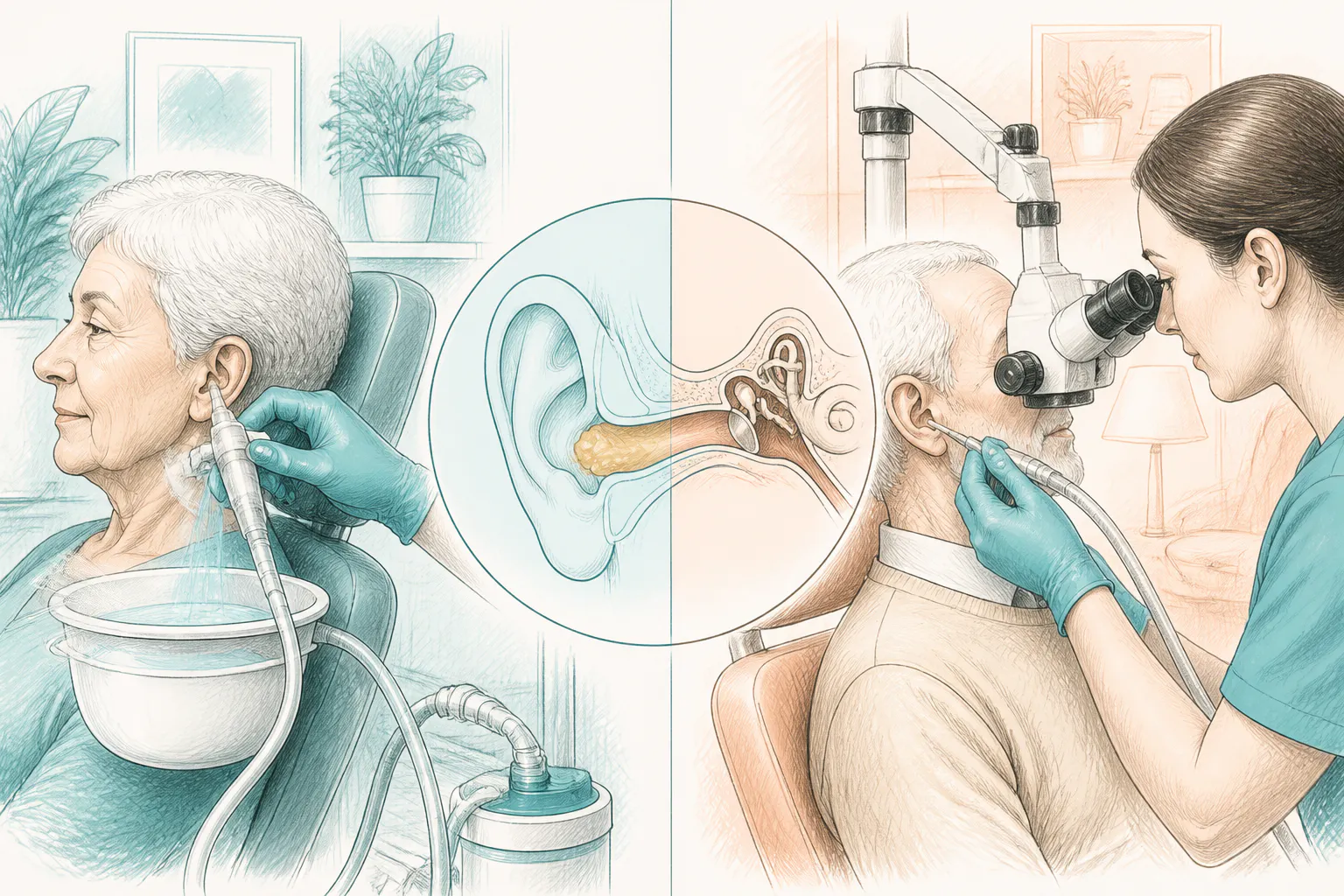
If irrigation is suitable, the treatment itself is usually quite short, although the full appointment may take longer because of assessment and aftercare advice. The clinician uses warm water and controlled pressure so the wax softens and comes away gradually. Some people hear splashing or notice pressure, and others feel the wax move. If you feel pain, you should say so immediately. Good clinicians will pause, check, and stop if needed.
After treatment, the ear is checked again to see whether the wax has been removed and whether the canal looks healthy. If there is still wax left, the clinician may recommend another method or further softening before a return visit.
Good hygiene and infection control are essential throughout. Reputable clinics use clean equipment, safe procedures, and careful handling of any reusable items. If you want to see how this fits within a wider service, the page on Water irrigation treatment explains the appointment model in more detail.
For many first-time patients, the worry is greater than the procedure itself. A helpful clinician will explain what is happening, invite questions, and check that you feel comfortable enough to continue.
Ear irrigation versus microsuction
People often search for ear irrigation Bristol because they want relief quickly, but the right method is not always the one that sounds simplest. Microsuction is commonly compared with irrigation because both remove earwax in a clinic setting, yet they work differently and suit different ears.
Feature | Ear irrigation | Microsuction |
|---|---|---|
Uses water | Yes | No |
Ear stays dry | Not usually | Yes |
Comfort | Many people tolerate it well, but some dislike the water sensation | Often preferred by people who want a dry, precise method |
Suitability | Best for selected patients with uncomplicated ears | Suitable for many ears, including some where water is not advised |
Speed | Usually quick after assessment | Usually quick and very targeted |
Common advantages | Simple, familiar, can be effective for suitable wax | Precise, dry, often preferred for anxious patients or complex ears |
Common limitations | Not suitable for all ear conditions | May be less suitable if a patient cannot tolerate suction noise or needs another method |
Microsuction is often preferred when the ear needs to stay dry, when there is a history of ear problems, or when the clinician wants a very controlled way of removing wax. Some patients also find it reassuring because the clinician can see the wax directly during the procedure.
Irrigation can still be a strong choice where the wax is suitable and the ear is uncomplicated. The important point is not to treat one method as universally better. The best option depends on your ears, your medical history, and the clinician’s judgement. A careful clinician will explain why one approach is more appropriate than another.
If you are leaning towards a dry method, see Microsuction ear wax removal. If you are trying to decide between methods, a professional assessment will usually settle the question faster than research alone.

Aftercare, recovery, and self-care tips
After ear irrigation, many people notice immediate improvement in hearing and a lighter feeling in the ear. Some people, however, may experience mild temporary sensitivity, a little fullness, or a slightly wet sensation for a short time afterwards. These sensations usually settle quickly.
A clinician should tell you what to expect and whether anything specific applies to your ears. In general, you should seek advice if you experience persistent pain, dizziness, discharge, worsening hearing, or any feeling that something is not right. Those signs are not expected and should not be ignored.
Aftercare is also about reducing the chance of future blockage. The most useful everyday tips include:
- avoid cotton buds, which can push wax deeper into the canal
- do not probe the ear with fingers, hairpins, or other objects
- use ear drops or wax-softening products only if recommended for you
- let a clinician know if you wear hearing aids, as they can affect wax build-up
- book a review if symptoms return rather than trying to remove wax yourself
Some people benefit from occasional wax softening before a planned appointment, especially if they are prone to build-up. Olive oil drops are often discussed, but they are not suitable for everyone, particularly if there has been ear surgery, infection, pain, or a suspected perforation. If you are unsure whether softening is right for you, ask before using anything in the ear.
The NHS advises against using cotton buds inside the ear and recommends getting professional help for troublesome wax rather than trying to remove it yourself. You can also review HSE guidance on ear health and infection control for general principles that support safe clinical practice.
If your ears still feel blocked after treatment, do not assume wax is the only issue. Sometimes swelling, fluid, infection, or an unrelated hearing problem may be involved. A follow-up assessment can help identify the cause.
Ear irrigation in Bristol: why local access matters
When your hearing is reduced or your ears feel blocked, convenience matters. Local access to ear care can mean faster relief, fewer delays, and a simpler route to treatment, especially if you are balancing work, family life, or mobility issues. For people in Bristol, being able to find a nearby service can make the difference between putting off care and getting it sorted promptly.

This is especially relevant for elderly clients and care home residents, who may find travel difficult or uncomfortable. It also matters for busy families who need appointments that fit around school, work, or caring responsibilities. A local service can reduce the practical burden, and in some cases home-based care is the more realistic option.
If leaving home is difficult, Home visit earwax removal in Bristol may be worth exploring. Home visits can be especially helpful for people with reduced mobility, those living in care settings, or anyone who feels more relaxed in familiar surroundings. While not every treatment is suitable in every environment, home-based assessment and removal can make ear care more accessible.
Local care also helps when symptoms feel urgent. A blocked ear can affect speech clarity, balance confidence, and daily comfort. Access to a Bristol-based clinician means you may not need to wait long or travel far to get a proper assessment. That can make a real difference when you want the problem dealt with efficiently and safely.
Why choose ProEarClinic
ProEarClinic focuses on specialist earwax removal and comprehensive ear care, with an emphasis on safe, patient-friendly treatment. For people who feel anxious about ear procedures, that combination matters. Calm explanations, evidence-based assessment, and a gentle approach can turn a worry into a manageable appointment.
From a clinician’s point of view, the best earwax removal is not simply the fastest one, it is the one that matches the patient’s ear health, comfort, and medical history. That is why a careful ear examination comes first at ProEarClinic, whether the best option turns out to be irrigation, microsuction, or another method. A rushed treatment plan is rarely the safest one.
The clinic’s modern, reassuring style is matched by a practical focus on hearing wellness. Patients often want one of three things: immediate relief, a method that feels gentle, or guidance they can trust. ProEarClinic aims to provide all three. That is especially helpful for first-time patients who want clear answers, as well as for older adults or families arranging care for someone else.
The brand’s approach is warm and professional, which is exactly what ear health care should feel like. You should never feel pushed into a treatment that is not appropriate. Instead, you should be helped to understand your options, the risks, and the likely outcome before any procedure begins.
If you are looking for a first step, the most sensible one is an assessment and a conversation about your symptoms. That allows the clinician to decide whether ear irrigation is suitable, or whether a dry, more targeted method would be better.

Recommended reads and next steps
If you want to understand your options before booking, these pages may help:
- Earwax removal services for an overview of available treatments
- Microsuction ear wax removal if you want a dry and precise alternative
- Water irrigation treatment for more detail on how irrigation is carried out
- Home visit earwax removal in Bristol if travel is difficult or you are arranging care for someone else
If you are still unsure which treatment is right, book an assessment and describe your symptoms clearly. Mention whether you have had ear surgery, ear infections, dizziness, a perforated eardrum, or hearing aid use, as these details may affect the safest choice. If you already know you want a gentle, clinician-led approach, ask about the options best suited to your ears rather than assuming irrigation is always the answer.
For general background, these external resources are useful:
- NHS guidance on earwax build-up
- NICE guidance on earwax management
- British Society of Audiology earwax removal information
- HSE guidance on ear health and infection control
FAQ
Is ear irrigation safe for everyone?
No. Ear irrigation is only suitable for some people after a proper ear examination. It is usually not recommended if there is a perforated eardrum, an active infection, recent ear surgery, or other ear conditions that make water unsafe.
How does ear irrigation differ from microsuction?
Ear irrigation uses controlled warm water to loosen and remove wax. Microsuction uses suction rather than water, which means the ear stays dry and the clinician can remove wax very precisely.
How long does an ear irrigation appointment take?
The treatment itself may be quite quick, but the full appointment often includes a history, ear examination, the procedure, and a final check. The total visit can therefore take longer than the removal step alone.
Can I use olive oil before ear irrigation?
Sometimes ear softening is recommended, but it is not suitable for everyone. If you have ear pain, discharge, recent surgery, or any history that may affect safety, ask a clinician before using olive oil or any other drops.
What should I do if my ears still feel blocked after treatment?
If the blockage does not clear, or if you develop pain, dizziness, discharge, or worsening hearing, you should seek further advice. The cause may not be wax alone, and a reassessment can help identify the problem.
Is ear irrigation available in Bristol for home visits?
Some services do offer home visit earwax removal in Bristol, which can be helpful for people with limited mobility, care home residents, or anyone who finds clinic travel difficult. Availability depends on the provider and whether the treatment is suitable outside a clinic setting.