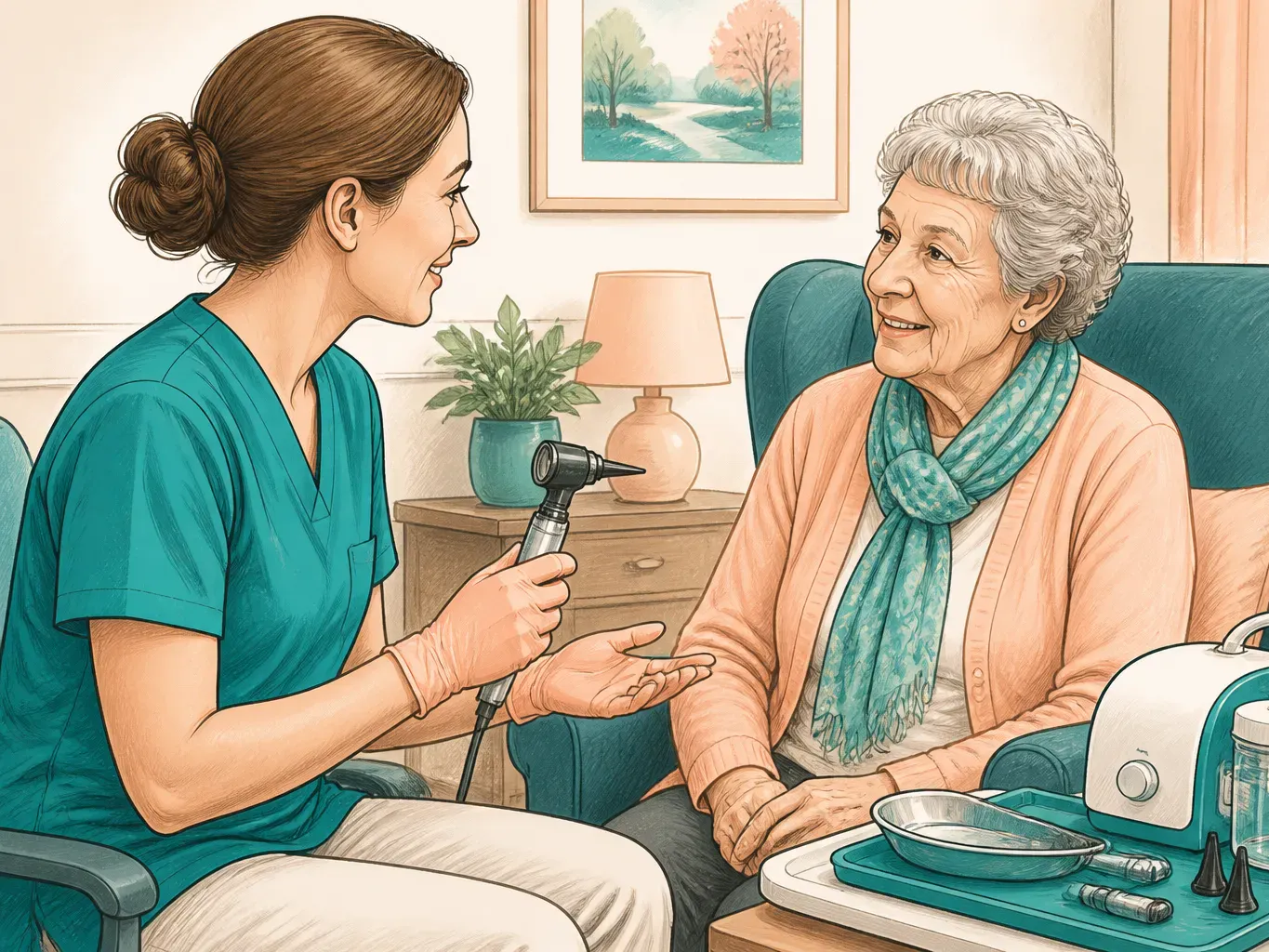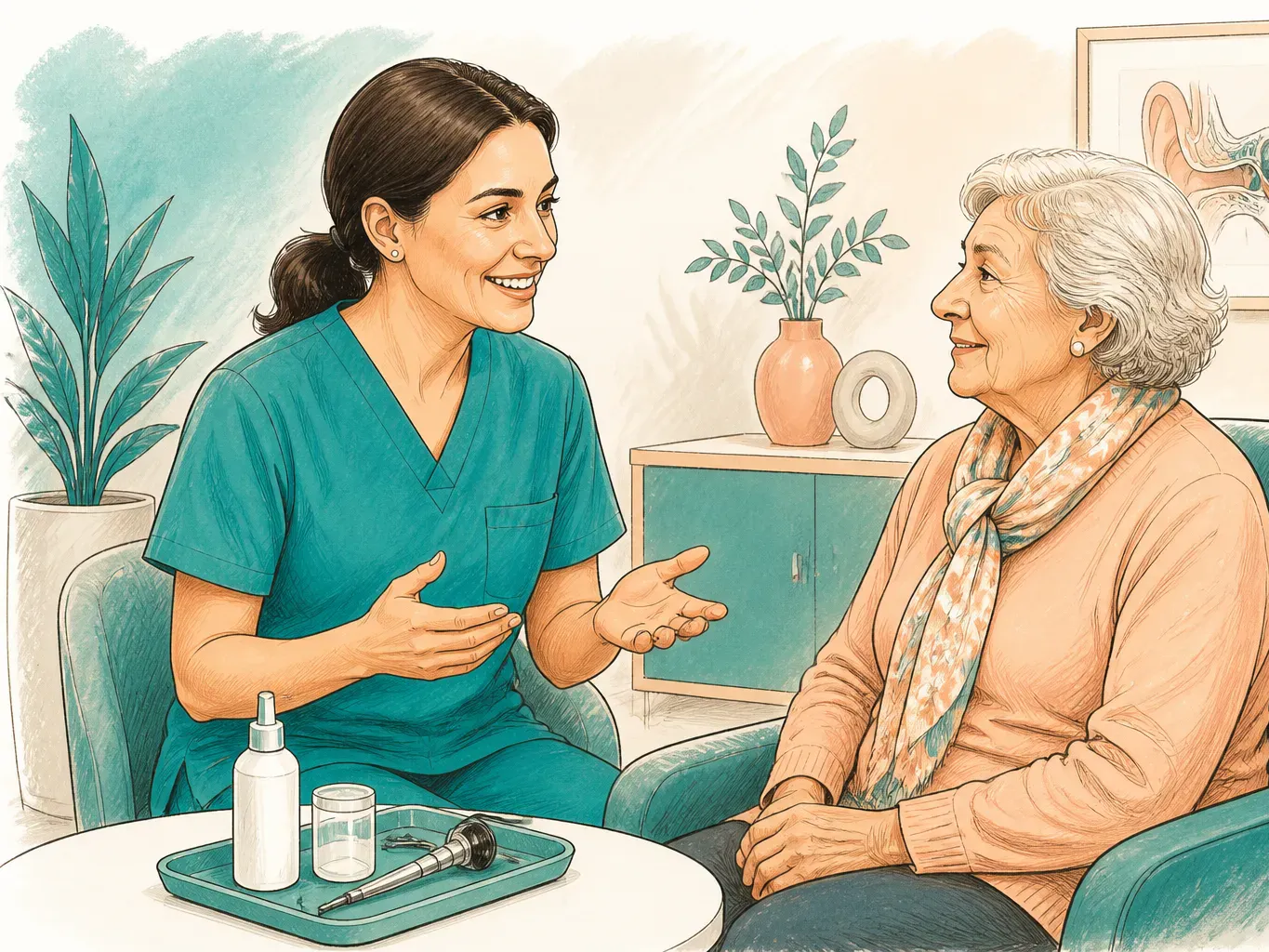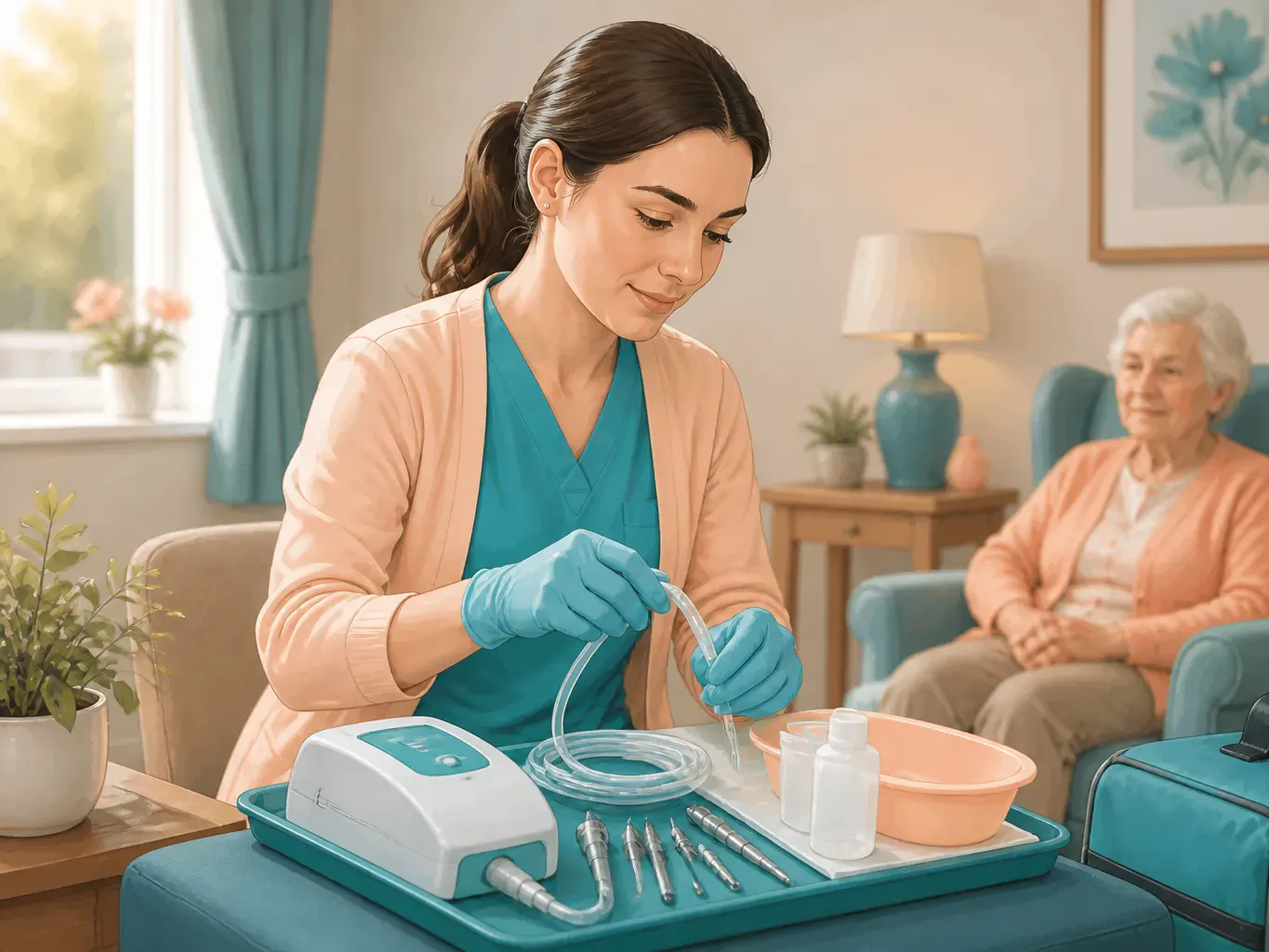
Home earwax removal can be safe when it means gently softening wax and letting the ear clear naturally, but it should not mean probing, scraping, or forcing anything out of the canal. If your ear is painful, leaking, very blocked, dizzy, or the hearing change is sudden, home care is not the right next step and a professional assessment is safer.
Quick answer and safe home options
The safest home earwax removal approach is usually softening, not extraction. For many people, a short course of olive oil drops or a pharmacy earwax softening product can help wax loosen and move out on its own, especially when symptoms are mild and there are no warning signs.
What home care cannot safely do is remove deeply impacted wax with tools or forceful flushing. If the ear remains blocked after several days of softening, or if there is pain, discharge, dizziness, fever, or a history of ear surgery, it is better to stop home treatment and seek professional help.
From a clinical perspective, earwax care works best when it is gentle and patient. That is especially true for older adults, hearing aid users, and anyone who feels anxious about ear procedures. A calm approach reduces the risk of irritation and often gets better results than trying to rush the process.
Quick summary
- Home earwax removal should focus on softening wax, not digging it out.
- Olive oil drops or a pharmacy earwax product may help over several days.
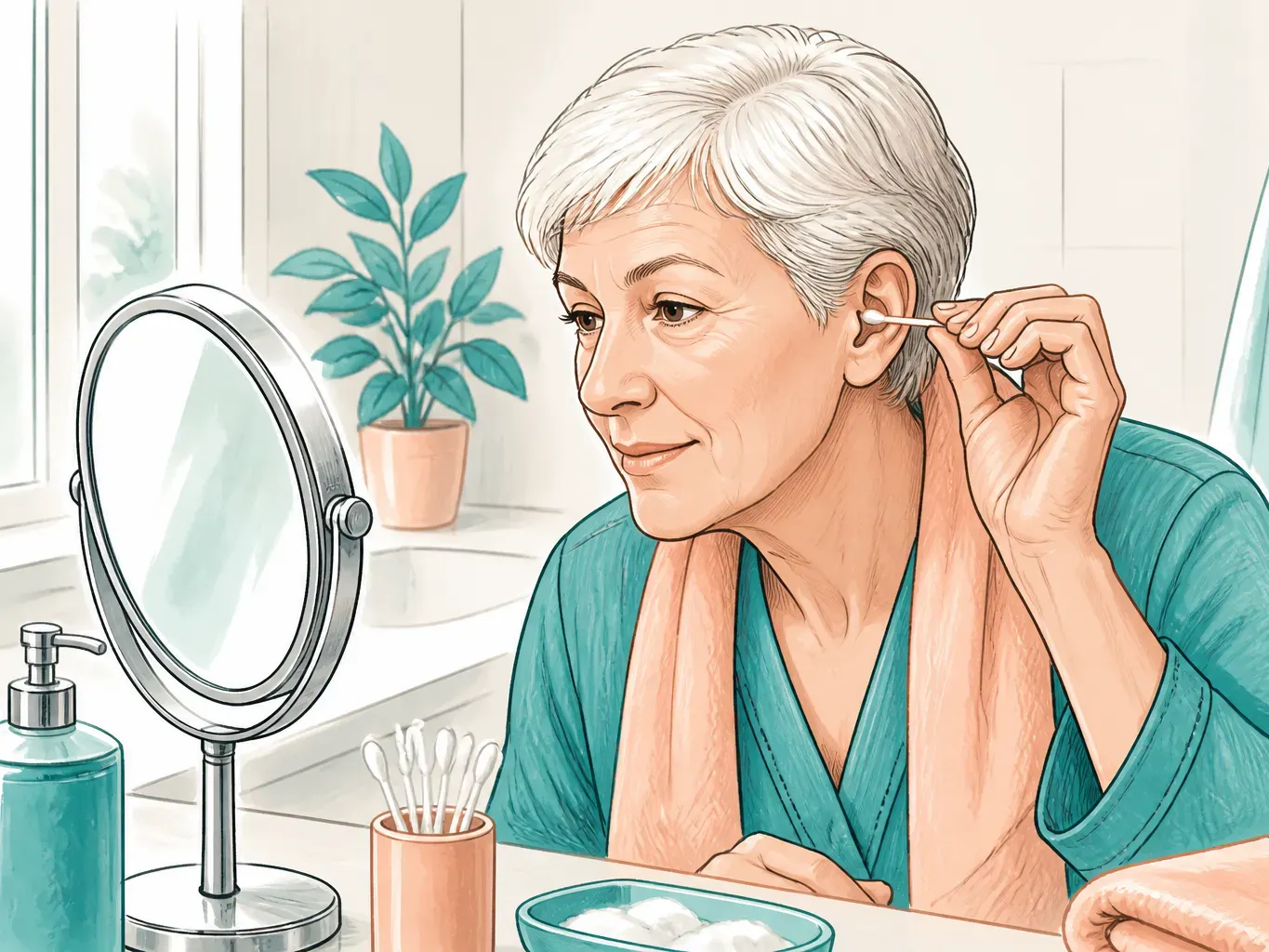
- Cotton buds, pins, and ear candles can make blockage worse and can injure the ear.
- If symptoms are painful, one sided, severe, or persistent, arrange professional ear care.
Useful resources from trusted UK bodies include the NHS guidance on earwax build-up, NHS advice on olive oil drops for earwax, NICE guidance on earwax management, and the British Society of Audiology ear care guidance.
What earwax does, and why it builds up
Earwax, also called cerumen, is a natural substance made by the ear canal. It helps protect the ear by trapping dust and debris, slowing bacterial growth, and keeping the skin in the canal from drying out too much. In most people, wax gradually moves out of the ear by itself as the jaw moves during talking and chewing.
Problems begin when wax builds up faster than it can clear. This can happen for several ordinary reasons. Some people naturally make more wax than others. Some have narrower or hairier ear canals, which makes it harder for wax to move out. Age can also play a part, because the ear canal may become drier and wax may become harder. Hearing aids, earplugs, and regular cotton bud use can all push wax deeper and stop it from migrating out naturally.
Older adults are more likely to notice earwax blockage because the wax may become drier and more compact, and because hearing changes can make even modest blockage feel significant. Hearing aid users also commonly experience repeated build-up, as the device sits in the ear canal and can obstruct the wax’s natural path.
It helps to think of earwax as something the ear usually manages on its own. In many cases, the aim is not to remove every trace of wax, but to keep the ear comfortable, open, and free from blockage.
Why wax becomes impacted
Common cause | What it does | Why it matters |
|---|---|---|
Cotton bud use | Pushes wax deeper | Can create a solid plug and irritate the canal |
Hearing aids | Blocks wax migration | Wax can accumulate behind the device |
Narrow ear canals | Limits natural movement | Wax has less space to travel out |
Dry skin or age-related change | Makes wax harder | Hardened wax is more likely to get stuck |
Excessive cleaning | Removes natural lubrication | Can cause the ear to produce more wax |
Safe home earwax removal methods that may help
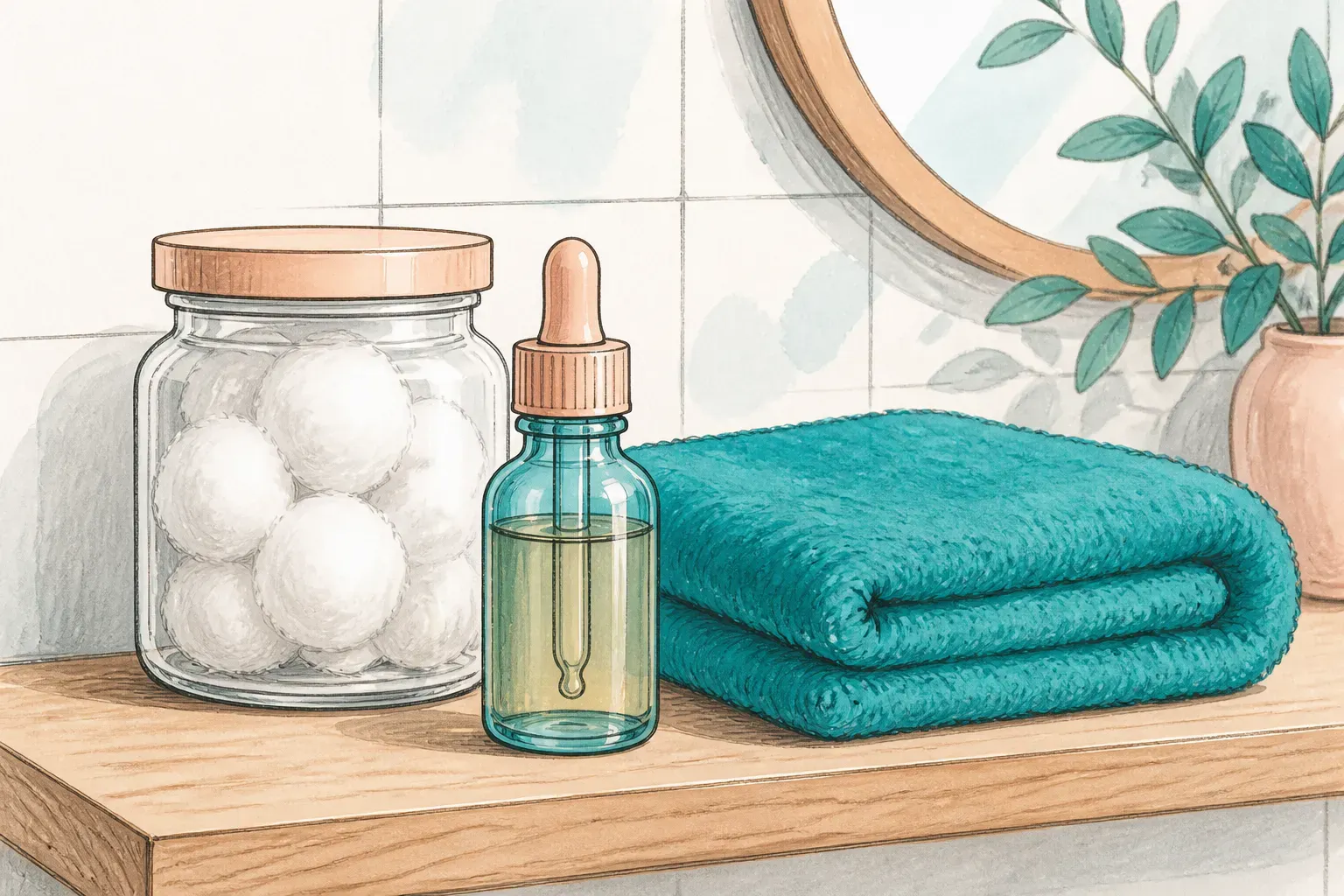
The main safe home option is softening the wax so the body can clear it more easily. Olive oil is a common choice, and some pharmacies sell dedicated earwax softening drops. These products are intended to loosen compacted wax, not wash the ear aggressively.

If you use olive oil or another softening product, always follow the packet instructions. Typically, you lie with the affected ear facing upwards, place the recommended number of drops in the ear, and keep the head still for a few minutes so the drops can settle into the wax. Many people need to continue this for several days before noticing the wax break up or move.
Patience matters. Earwax that has been compacted for a long time will not usually disappear after one application. A softening routine is more about gradual improvement than instant relief. It is also important to know when not to use drops. If you suspect a perforated eardrum, if you have ear discharge, or if the ear is very painful, seek advice before putting anything into the canal.
Gentle hygiene around the ear is fine. You can clean the outer ear with a soft cloth and dry around the opening after bathing or showering. Warm water that runs over the outside of the ear is usually not a problem, but do not probe into the canal with fingers, towels, or cotton buds.
A note on products and technique
- Use the product exactly as directed.
- Warm the bottle in your hand for a minute if the instructions allow it, because cold drops can feel uncomfortable.
- Lie on your side for a few minutes after applying drops.
- Stop if the ear becomes more painful, itchy, or blocked in a way that feels worse.
What not to do at home
Some common home methods are risky and can make the problem worse. Cotton buds are the most frequent culprit. Instead of removing wax, they often push it deeper into the canal, compressing it into a tighter plug. Hairpins, matchsticks, tweezers, and other improvised tools can scratch the ear canal and create infection risk.
Ear candles are also unsafe. They have not been shown to remove wax reliably, and they can leave burns, ear injury, or candle debris behind. Strong water irrigation at home can also be problematic if it is done without proper guidance, particularly if the ear drum might not be intact or if there is a history of surgery.
A simple rule helps here: if the method depends on inserting something into the ear canal, it is usually not a gentle home option.
Method | Safety | Likely benefit | Main risk |
|---|---|---|---|
Olive oil drops | Generally safe for many adults | Softens wax over time | Not suitable if eardrum may be perforated |
Pharmacy earwax drops | Generally safe when used as directed | Helps loosen wax | Can irritate if the ear is already inflamed |
Cotton buds | Unsafe for wax removal | Very limited | Pushes wax deeper, scratches canal |
Hairpins or sharp tools | Unsafe | None worth the risk | Injury, infection, eardrum damage |
Ear candles | Unsafe | Not recommended | Burns, debris, false sense of clearing |
Home syringing without advice | Not advised | Unpredictable | Water trapping, infection, eardrum injury |
If you are trying to decide between home treatment and a more direct approach, it may help to read Earwax removal at home vs clinic in Bristol. That comparison can be useful when symptoms are bothering you but you are unsure how far self-care should go.
Step-by-step gentle home ear care routine
If symptoms are mild and there are no warning signs, a short softening routine can be a sensible first step. This is the kind of plan many people can follow safely at home.
Day 1 to Day 3, or longer if advised
- Wash your hands before touching the area.
- Lie down with the affected ear facing upwards.
- Place the recommended number of olive oil drops or pharmacy earwax drops into the ear.
- Stay in that position for a few minutes so the drops can reach the wax.
- Wipe away any excess from the outer ear with a clean tissue.
- Repeat according to the product instructions, usually once or twice a day.
Some people notice a slight feeling of fullness after drops, which is normal. What is not normal is increasing pain, worsening discharge, or strong dizziness. If any of those occur, stop the treatment and get advice.
After bathing or showering
Keep the ear dry on the outside. Gently pat the area with a soft towel, but do not insert anything into the canal. If your ears tend to feel wet inside after showering, tilt your head to let water drain naturally and avoid vigorous shaking.
What improvement looks like
As the wax softens, hearing may gradually improve, the blocked feeling may ease, and the ear may feel less pressured. Sometimes wax comes out in small pieces without any dramatic moment. That is fine. If nothing changes after a few days, or the ear becomes more blocked, the wax may be too impacted for home care alone.
When to pause the routine
Stop home treatment and seek advice if:
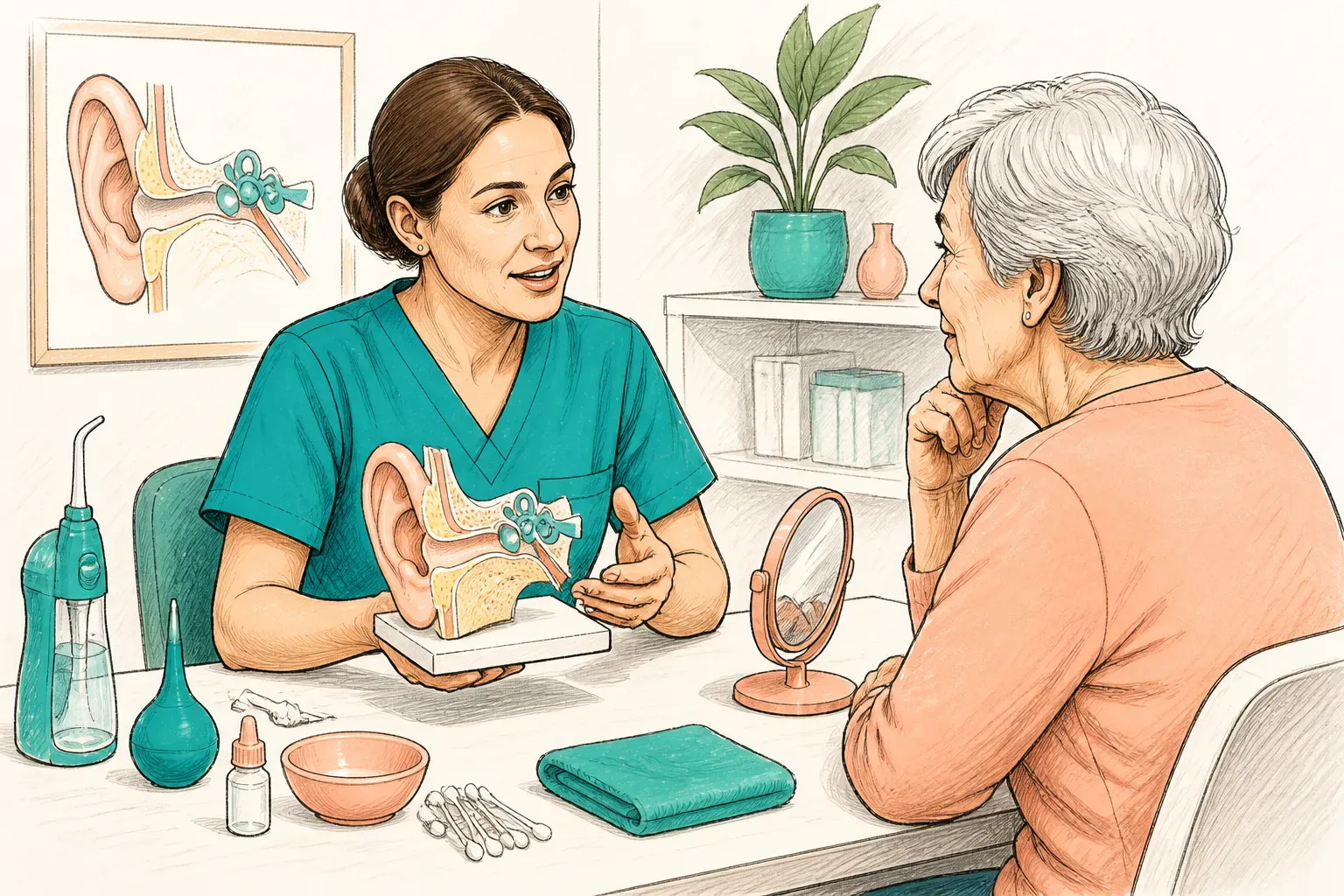
- pain increases,
- the ear starts to discharge,
- you feel dizzy or unsteady,
- hearing drops suddenly,
- the ear becomes swollen or hot,
- you have any concern about infection or a hole in the eardrum.
When home treatment is not enough
Home earwax removal has clear limits. If the ear remains blocked after softening, professional removal is usually the safer and faster option. This is especially important when the wax is hard, deep, or repeatedly recurring.
You should seek professional advice sooner if you have any of the following:
- ear pain,
- fluid or pus coming from the ear,
- a sudden change in hearing,
- dizziness or vertigo,
- ringing that started with the blockage,
- fever,
- a history of ear surgery,
- a known or suspected perforated eardrum,
- active ear infection,
- diabetes or another condition that makes infection more concerning.
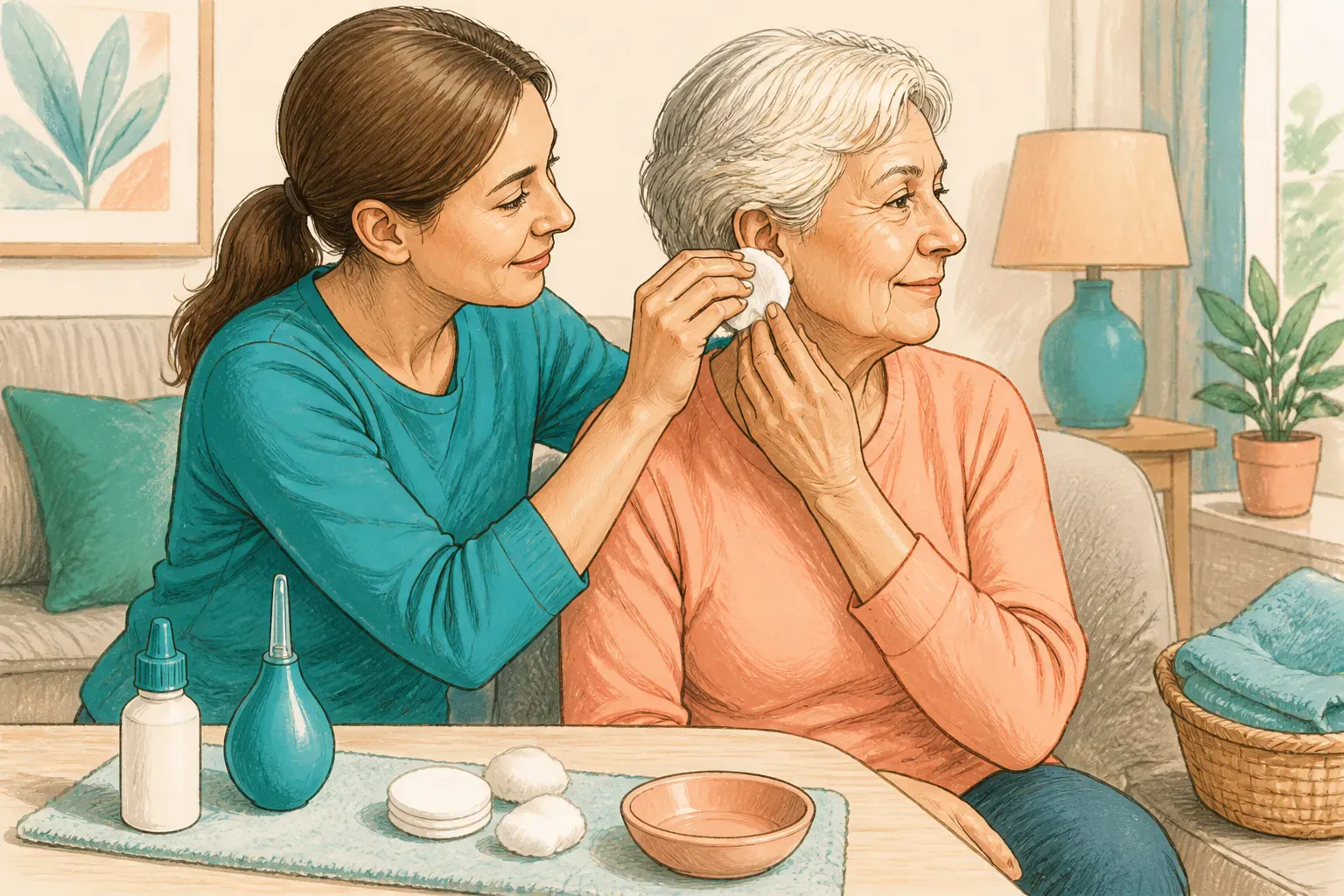
Older adults may also need support earlier, particularly if the blockage affects balance, communication, or hearing aid use. Care home residents can benefit from a calm supported approach because repeated self-care may be uncomfortable or impractical. Anxious patients often do better when someone explains the process clearly and removes the uncertainty around what will happen next.
If you are looking for a gentle professional assessment rather than guessing at home, an Ear health assessment can help clarify whether wax is the main issue and whether home softening is still appropriate.
Home care versus professional removal
Home care and professional removal serve different purposes. Home care is best for softening wax in uncomplicated cases. Professional removal is better when the wax is firmly impacted, symptoms are more severe, or the ear is not suitable for self-treatment.
Factor | Home care | Professional removal |
|---|---|---|
Convenience | Easy to start at home | Requires an appointment |
Speed of relief | Often gradual | Usually quicker |
Safety | Good only when symptoms are mild and uncomplicated | Better for complex or fragile ears |
Best for | Softening wax | Impacted wax, recurrent blockage, vulnerable ears |
Risk level | Low if done carefully, higher if tools are used | Controlled and supervised |
Typical outcome | May reduce wax over several days | Often more immediate and complete |
Professional options such as microsuction are often preferred for impacted wax because they allow the clinician to see what they are doing and remove wax carefully without introducing water into the ear canal. That can be particularly helpful for people with sensitive ears, a history of infection, hearing aids, or a perforated eardrum.
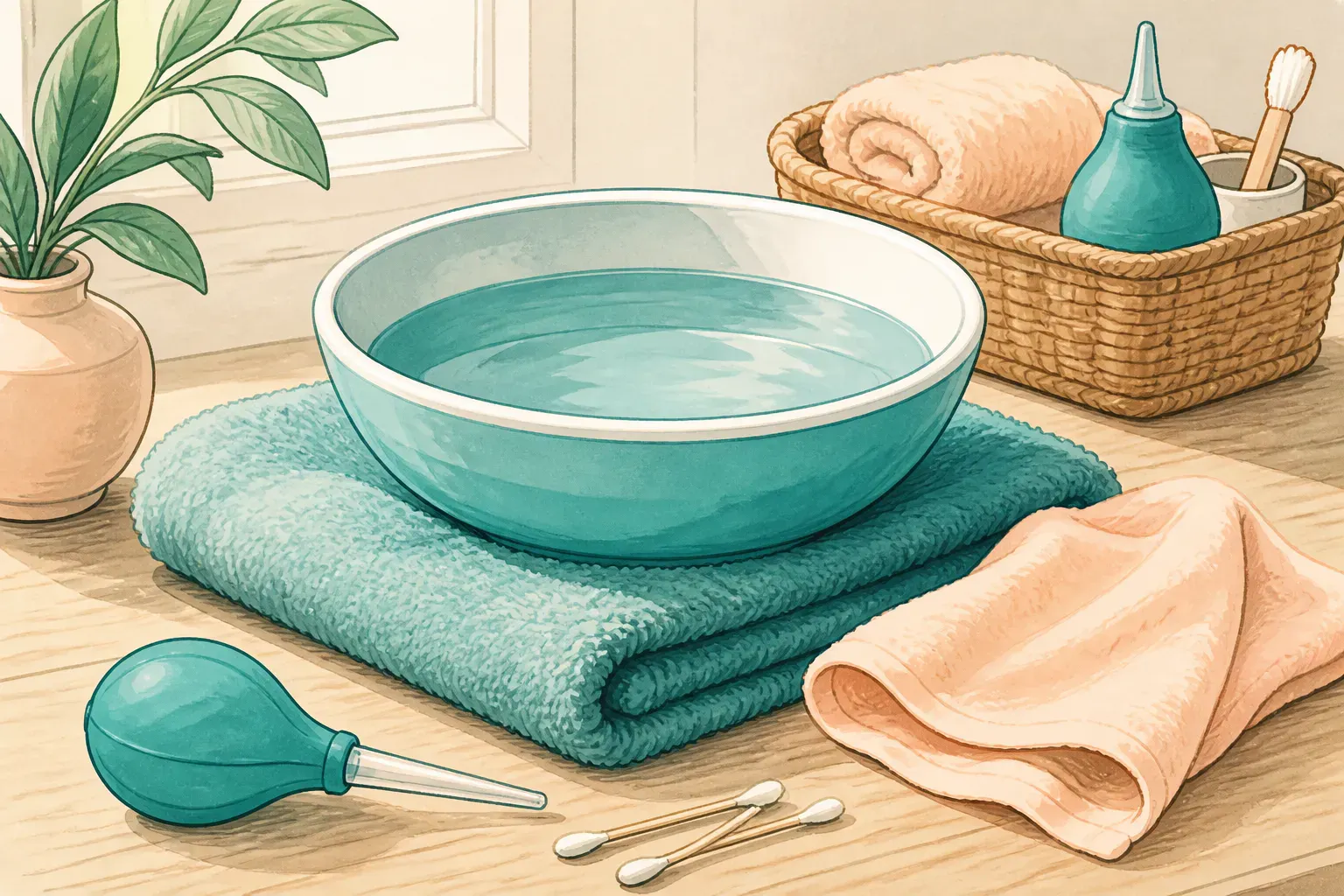
For readers wanting a more detailed explanation of the procedure, see Microsuction earwax removal. If travelling is difficult, Home visit earwax removal Bristol may be a helpful option to explore where appropriate.
How ProEarClinic supports gentle ear care
ProEarClinic focuses on safe, patient-friendly earwax removal and ear health support. For many people, the first step is a calm assessment to understand whether the blockage is likely to respond to softening or whether a more direct treatment is needed. That approach is especially helpful if you are nervous about ear procedures or have had a bad experience before.
The clinic offers specialist earwax removal, including microsuction, which is a commonly used method for removing wax under visual guidance. It is often suitable for people who need prompt relief, older adults who want a careful approach, and anyone whose ears are not ideal for home treatment or irrigation.
For some people, especially those who cannot easily travel, home visiting support can make ear care more accessible. The advantage is not just convenience, but reassurance. Having an experienced clinician assess the ears in a familiar setting can make the process feel calmer and more manageable.
If you want to learn how the technique works before booking, the Pro Ear Clinic blog also includes educational guidance such as How Microsuction Works, which can help first-time patients feel more prepared.
Quick recap and recommended next steps
The safest form of home earwax removal is gentle softening, usually with olive oil or a pharmacy product used exactly as directed. The goal is to help wax loosen naturally, not to dig, scrape, or force it out. Cotton buds and other tools should stay out of the ear canal.
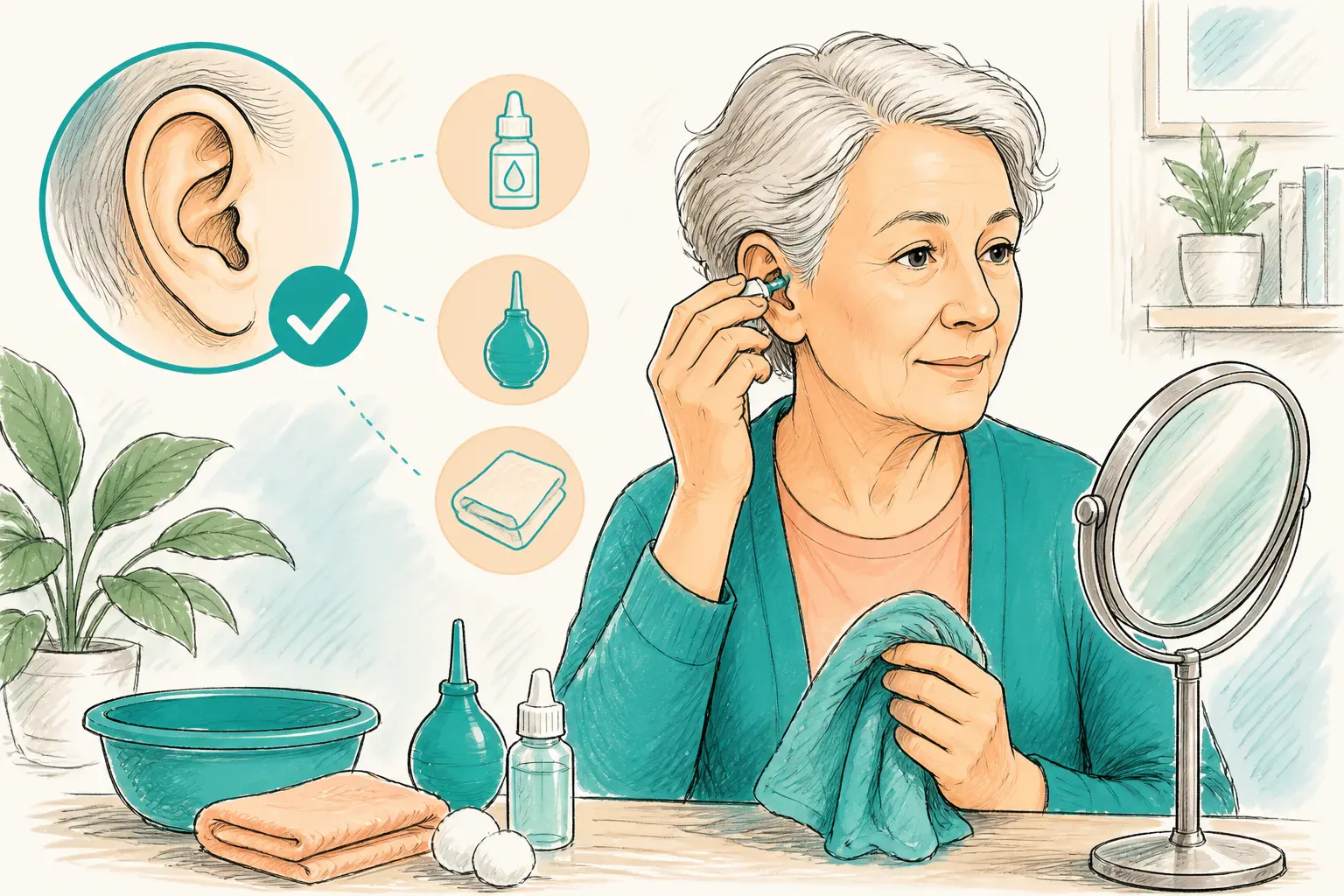
If the ear is painful, leaking, dizzy, severely blocked, or still blocked after a few days of softening, stop home treatment and arrange professional advice. That is especially important for older adults, hearing aid users, people with diabetes, and anyone with a history of ear surgery or a perforated eardrum.
A good next step is to decide which of these best describes your situation:
- Mild blockage, no red flags: try a short softening routine.
- Persistent blockage, uncertain symptoms, or repeated problems: book an assessment.
- Pain, discharge, sudden hearing change, or dizziness: seek professional help promptly.
Recommended reads
- Microsuction earwax removal
- Home visit earwax removal Bristol
- Earwax removal at home vs clinic in Bristol
- Ear health assessment
FAQ
What is the safest way to remove earwax at home?
For most people, the safest home approach is to soften the wax with olive oil or a pharmacy earwax product, then let the ear clear naturally. Avoid putting tools into the canal, and stop if the ear becomes painful or more blocked.
How long should I use olive oil before earwax comes out?
It often takes several days of regular use for wax to soften enough to move. Some people notice improvement sooner, while others need a little longer. If there is no progress after a few days, or symptoms get worse, professional help may be needed.
Can cotton buds remove earwax safely?
No. Cotton buds usually push wax deeper into the ear and can scratch the canal. They are one of the most common reasons earwax becomes impacted.
When should I stop home treatment and see a professional?
Stop if you have pain, discharge, dizziness, fever, sudden hearing loss, or if the blockage does not improve after softening. You should also seek advice sooner if you have had ear surgery, a perforated eardrum, diabetes, or recurring ear problems.
Is home earwax removal suitable for older adults?
Sometimes, yes, if the symptoms are mild and there are no warning signs. However, older adults are more likely to have hard wax, recurrent blockage, or other ear health issues, so a professional assessment is often the safer choice if the problem keeps coming back.
Can I use home ear drops if I wear hearing aids?
Often, yes, but hearing aid users should be careful because the ear may be more prone to build-up and irritation. Remove the hearing aid when applying drops, follow the product instructions, and seek advice if the blockage persists or the ear feels sore.