
Ear wax is normal, and for most older adults the safest approach is gentle softening followed by professional removal when needed. Seniors should avoid digging into the ear, since fragile ear canals, hearing aid use, and existing health conditions can make rough self-treatment more likely to cause harm than relief.
Quick summary
If your ears feel blocked, waxy, or muffled, the first step is usually to soften the wax gently rather than try to remove it yourself. For many seniors, especially those who wear hearing aids or have a history of ear problems, professional ear wax removal is the safest and most comfortable option.
The main things to remember are simple: do not use cotton buds or household tools, use softening drops only if they are suitable for you, and seek expert help if symptoms do not improve or if you have pain, discharge, or sudden hearing changes.
What causes ear wax to become a problem in older adults?
Ear wax, also called cerumen, protects the ear by trapping dust, slowing bacterial growth, and helping the ear canal stay healthy. The trouble begins when wax builds up faster than the ear can clear it, or when it becomes compacted and hard to move out naturally.
In older adults, this happens more easily for a few common reasons. Ear wax often becomes drier with age, which means it can be more stubborn and less likely to migrate out of the ear canal on its own. The ear canal itself may also become more sensitive, and the tiny self-cleaning movement of the skin in the ear may work less efficiently than it once did.
Hearing aids are another major factor. They can gently push wax deeper into the canal, alter airflow, and make wax more noticeable because it affects sound quality. Frequent earphone use can have a similar effect. Add reduced dexterity, arthritis, tremor, or limited mobility, and self-care becomes harder, especially if someone is trying to reach into the ear with a cotton bud or other tool.
Common signs of wax build-up include:
- muffled or reduced hearing
- a feeling of fullness or blockage
- ringing or buzzing in the ear, also called tinnitus
- itchiness
- mild discomfort
- dizziness or imbalance
- sound distortion, particularly when using hearing aids
Not every blocked ear is caused by wax, but wax is a very common and very treatable reason for hearing to seem suddenly worse. If a senior notices a change in hearing, it is sensible to consider wax early rather than waiting for the problem to become more uncomfortable.
When is ear wax safe to manage at home?
Some mild wax build-up can be managed at home if there is no pain, no discharge, no history of eardrum perforation, and no recent ear surgery or active infection. In those cases, the safest home approach is to soften the wax gently and let it come away naturally, or follow a clinician’s advice on over-the-counter ear drops.
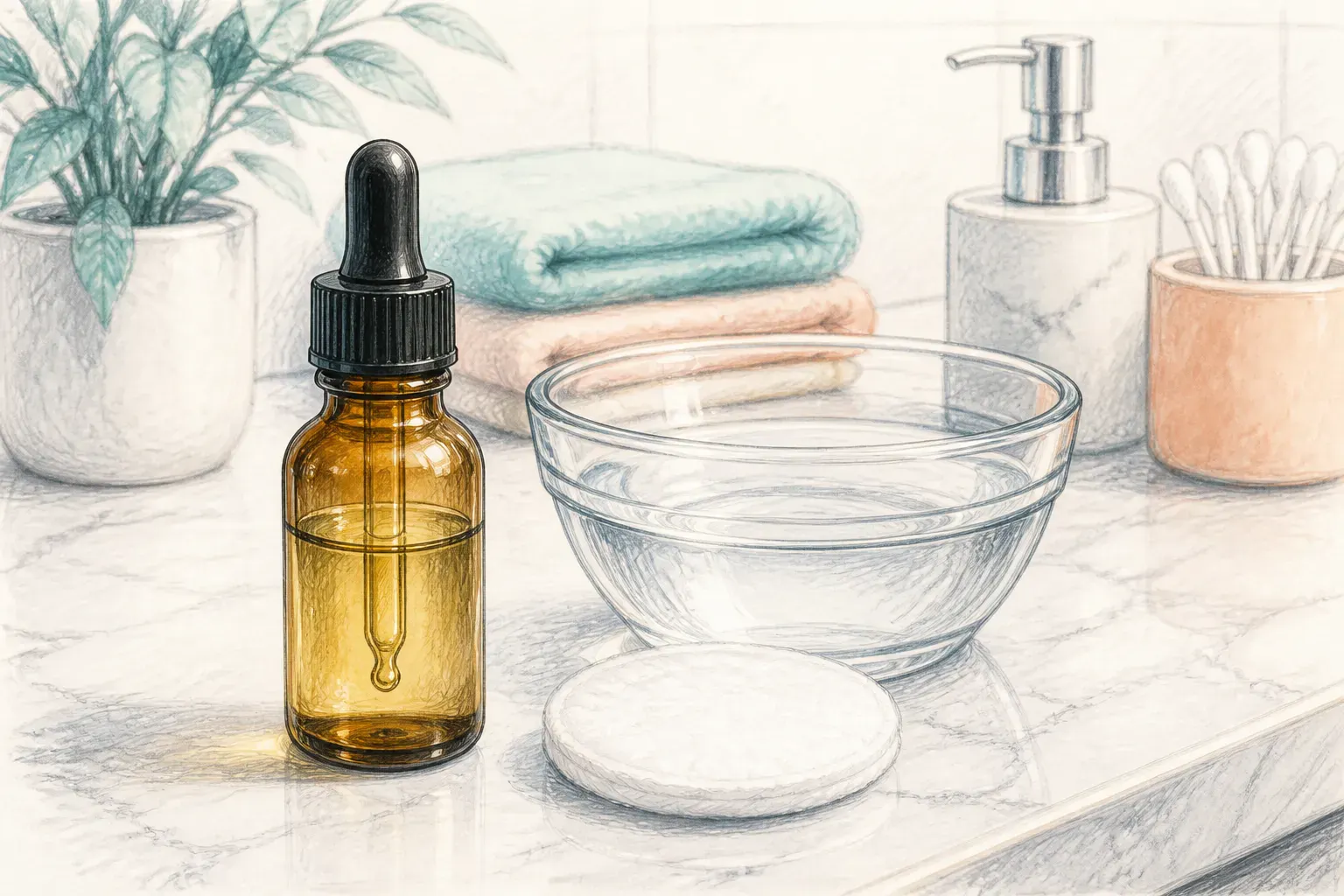
Where suitable, olive oil drops or medical wax-softening drops may help loosen dry wax over a few days. The aim is not to flush the ear out forcefully, but to make the wax easier for the ear to clear or for a professional to remove later if needed.
Some methods are not safe. Avoid the following:
- cotton buds
- hairpins, tweezers, or other household tools
- ear candles
- hard or repeated attempts to rinse the ear yourself
- any method that causes pain or bleeding
These can push wax deeper, scratch the ear canal, or damage the eardrum. That risk is particularly important for older adults, whose skin can be more delicate and who may already have sensitive ears.
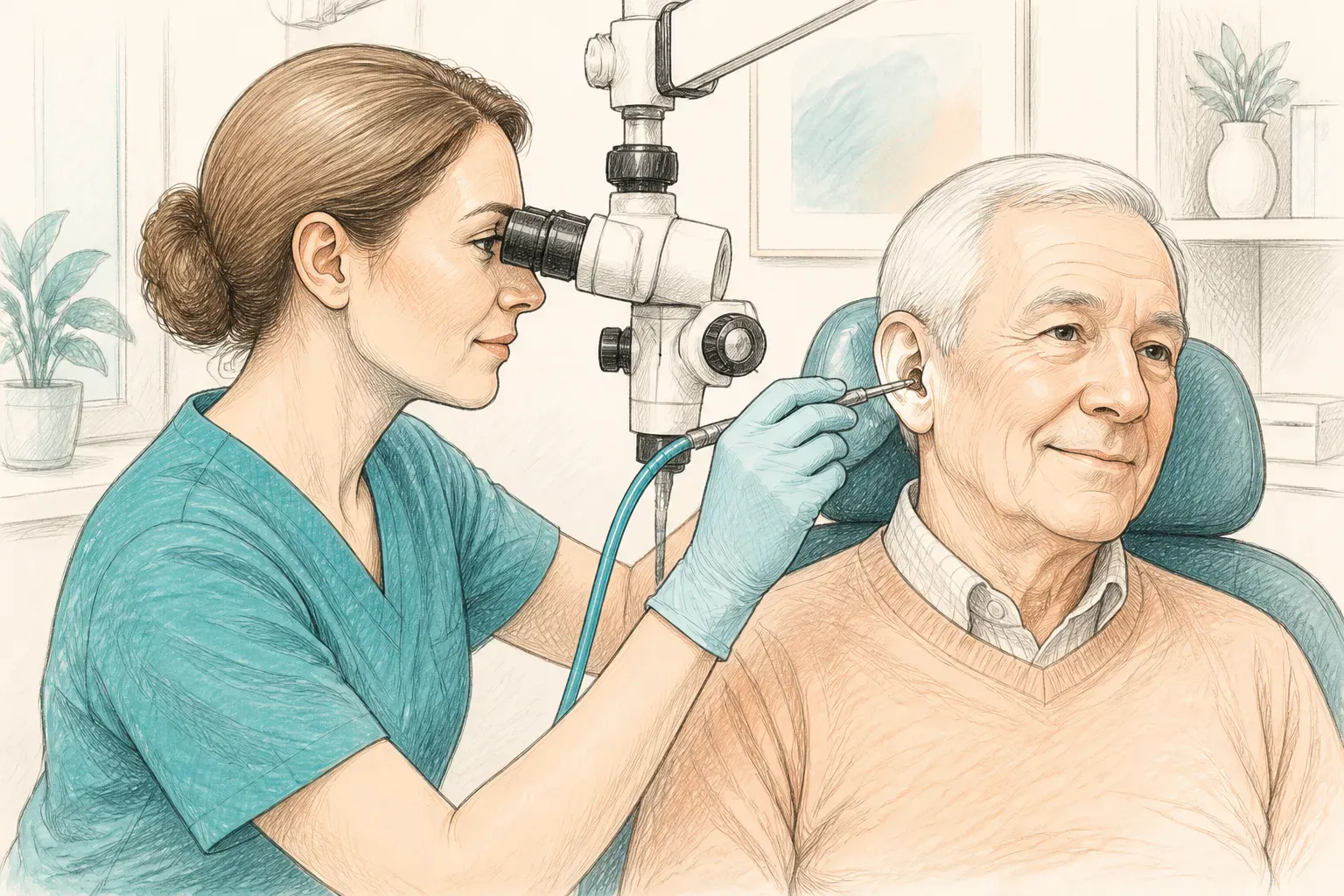
You should not try to manage wax at home if any of the following apply:
- you have ear pain
- there is discharge, blood, or a bad smell from the ear
- hearing loss came on suddenly
- you have a perforated eardrum or think you may have one
- you have had ear surgery in the past
- you have repeated ear infections
- you feel dizzy, unwell, or off balance
If you are unsure, it is usually better to have the ear examined first. A quick assessment can save a lot of discomfort and prevents unsafe guesswork.
Gentle at-home steps for seniors
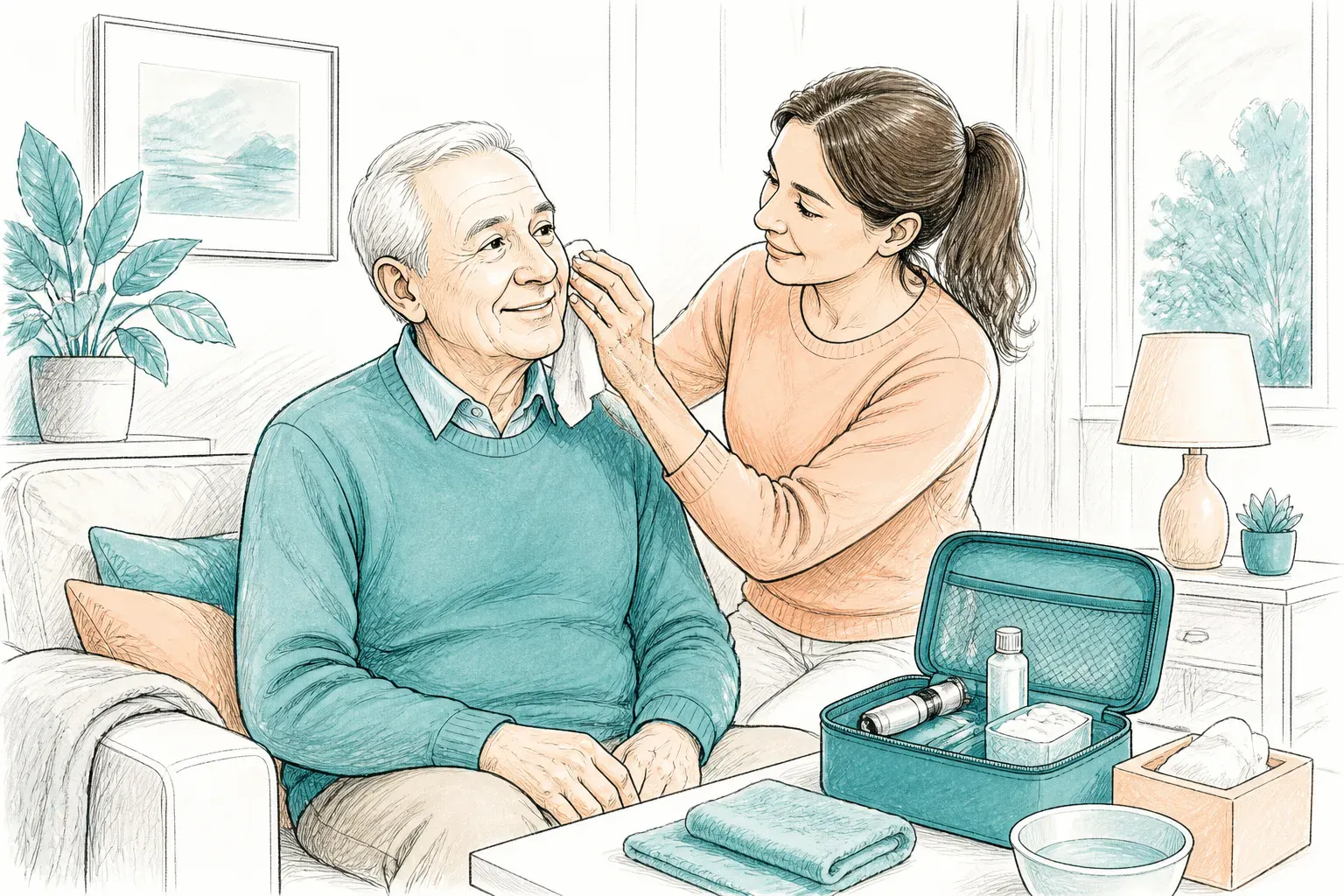
A calm, simple routine is usually best. If a clinician has said softening is appropriate, start with drops and give them time to work. A family member or carer can help with positioning, reminders, and keeping the process comfortable.
A practical approach looks like this:
- Read the instructions on the product or follow a clinician’s advice.
- Warm the bottle in your hand for a few minutes if the drops are stored at room temperature. Cold drops can feel unpleasant.
- Lie on one side or tilt the head so the affected ear faces upward.
- Place the recommended number of drops into the ear.
- Stay in that position for a few minutes so the drops can move in.
- Repeat exactly as directed, usually for several days.
- Stop if you get pain, dizziness, or worsening symptoms.
The ear may feel slightly full or temporarily more blocked at first because the softening fluid and wax move around. That does not always mean the drops are not working. Improvement is often gradual rather than instant, and a blocked ear that remains unchanged after a few days may need professional treatment.
For seniors who find the process fiddly, using a timer or phone reminder can help keep the routine consistent. A carer or relative can also check that the drops are being used safely, especially if balance is poor or vision is limited.
Here is a quick comparison of common at-home options:
Method | Suitable for | Benefit | Caution |
|---|---|---|---|
Olive oil drops | Mild dry wax, when appropriate | Gentle, widely used, easy to apply | Not suitable if there is pain, discharge, or infection |
Medical wax-softening drops | Mild to moderate soft wax | Can loosen wax before examination or removal | Follow the instructions carefully and stop if irritated |
Warm water rinsing at home | Generally not recommended for seniors | May seem convenient | Risk of injury, moisture retention, and worsening blockage |
Cotton buds or tools | Not suitable | None for wax removal | Often push wax deeper and may damage the canal |
If symptoms are mild and there is no red flag, short-term softening is reasonable. If the ear remains blocked, or the person wears hearing aids and relies on clear hearing every day, professional removal is usually the safer next step.
Professional ear wax removal options for seniors
When home care is not enough, the main professional choices are examination first, microsuction, and sometimes irrigation. A good clinician will look into the ear before deciding what is suitable, because the safest method depends on the ear’s condition, the patient’s history, and how tightly packed the wax is.
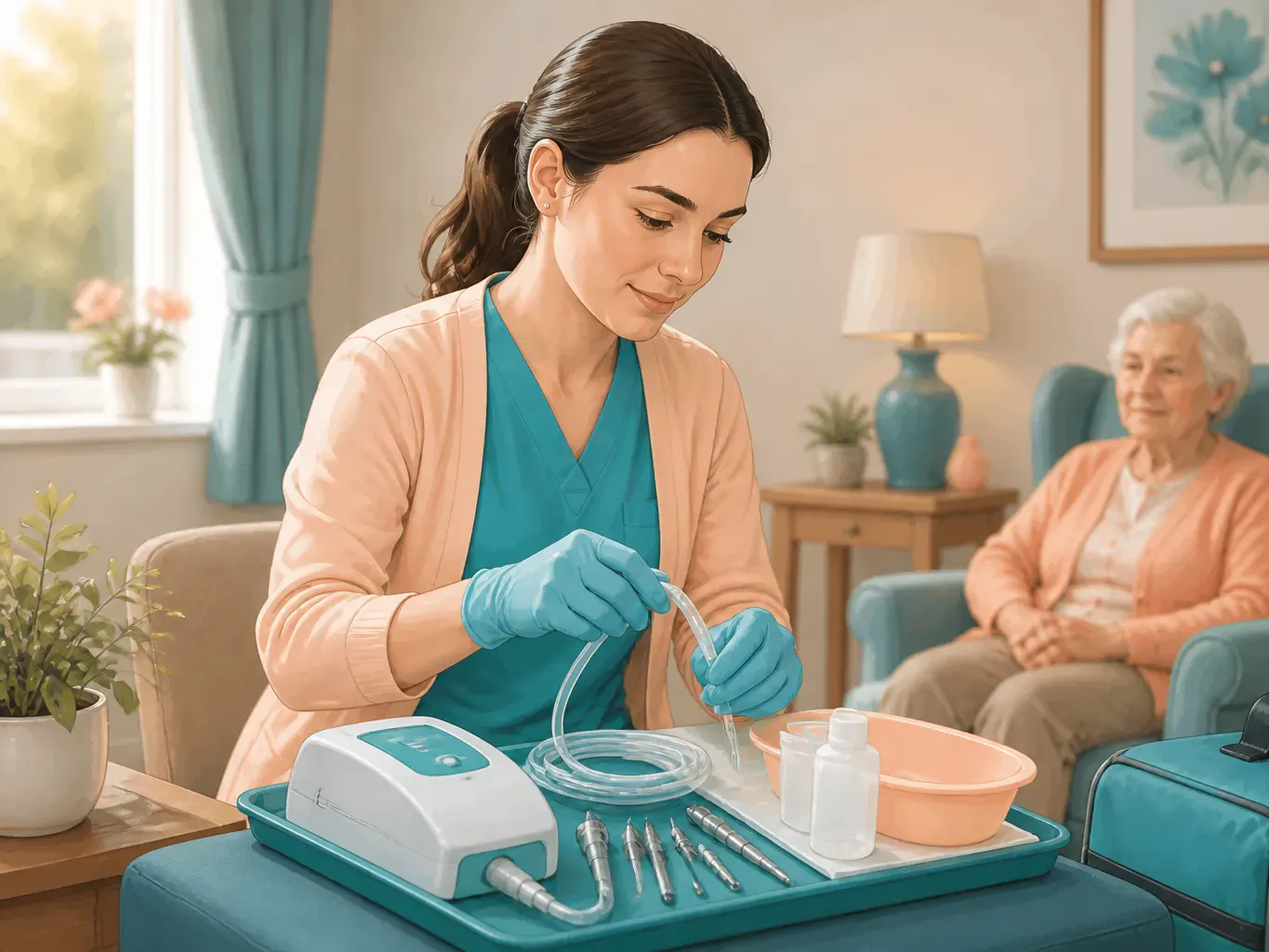
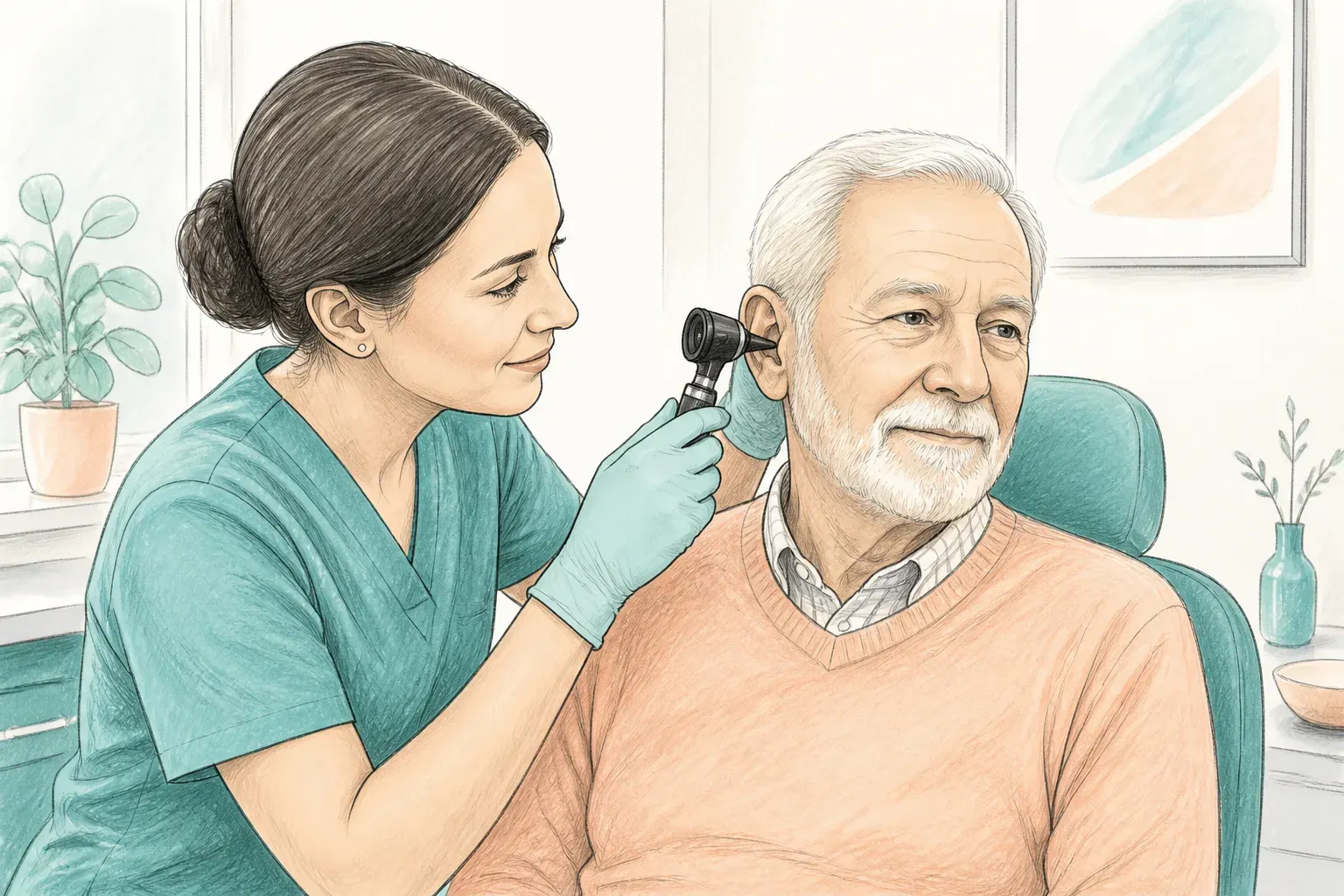
Microsuction uses a small suction device and magnification to remove wax carefully under direct vision. Irrigation uses a controlled flow of water to soften and wash wax out. In some cases, a combination of softening and removal is used.
Here is a concise comparison:
Method | Comfort | Suitability for seniors | Speed | Equipment | Common limitations |
|---|---|---|---|---|---|
Microsuction | Usually very good, especially for anxious patients | Often suitable for fragile ears and hearing aid users | Often quick | Magnification and suction device | Can be noisy, and may not suit every ear shape or every wax type |
Irrigation | Can be comfortable for some people | Not ideal for everyone, especially if there is ear history or sensitivity | May take longer | Controlled water irrigation system | Not suitable with some medical histories or if the ear is too delicate |
Examination first | Essential | Very suitable | Fast | Otoscope or video examination | It is a step before treatment, not a removal method by itself |
For older adults, comfort and control matter as much as effectiveness. Some people have more fragile skin, narrow canals, or a past history of ear disease, so the most effective option is not always the gentlest one. A careful professional assessment helps avoid unnecessary risk.
Why microsuction is often a good choice for older patients
Microsuction is often recommended because it allows the clinician to see exactly what they are doing while removing wax in a controlled way. Instead of adding liquid into the ear canal, it uses suction to lift wax away. For many seniors, that makes the process feel cleaner, quicker, and more predictable.
This can be especially helpful if the person wears hearing aids, because wax can build up around the aid and cause feedback, muffled hearing, or repeated blockage. It is also useful for people with sensitive ears, because there is no need to flood the canal with water.
Another advantage is that microsuction is often reassuring for anxious patients. They can usually hear the clinician explaining what is happening, and the treatment is usually finished within a short appointment. For someone who wants a fast return to clearer hearing, that immediate sense of progress can be a big relief.
If you want a more detailed explanation of the process, see how microsuction works. For a service overview, microsuction ear wax removal is a practical option to consider.
What to expect during an appointment or home visit
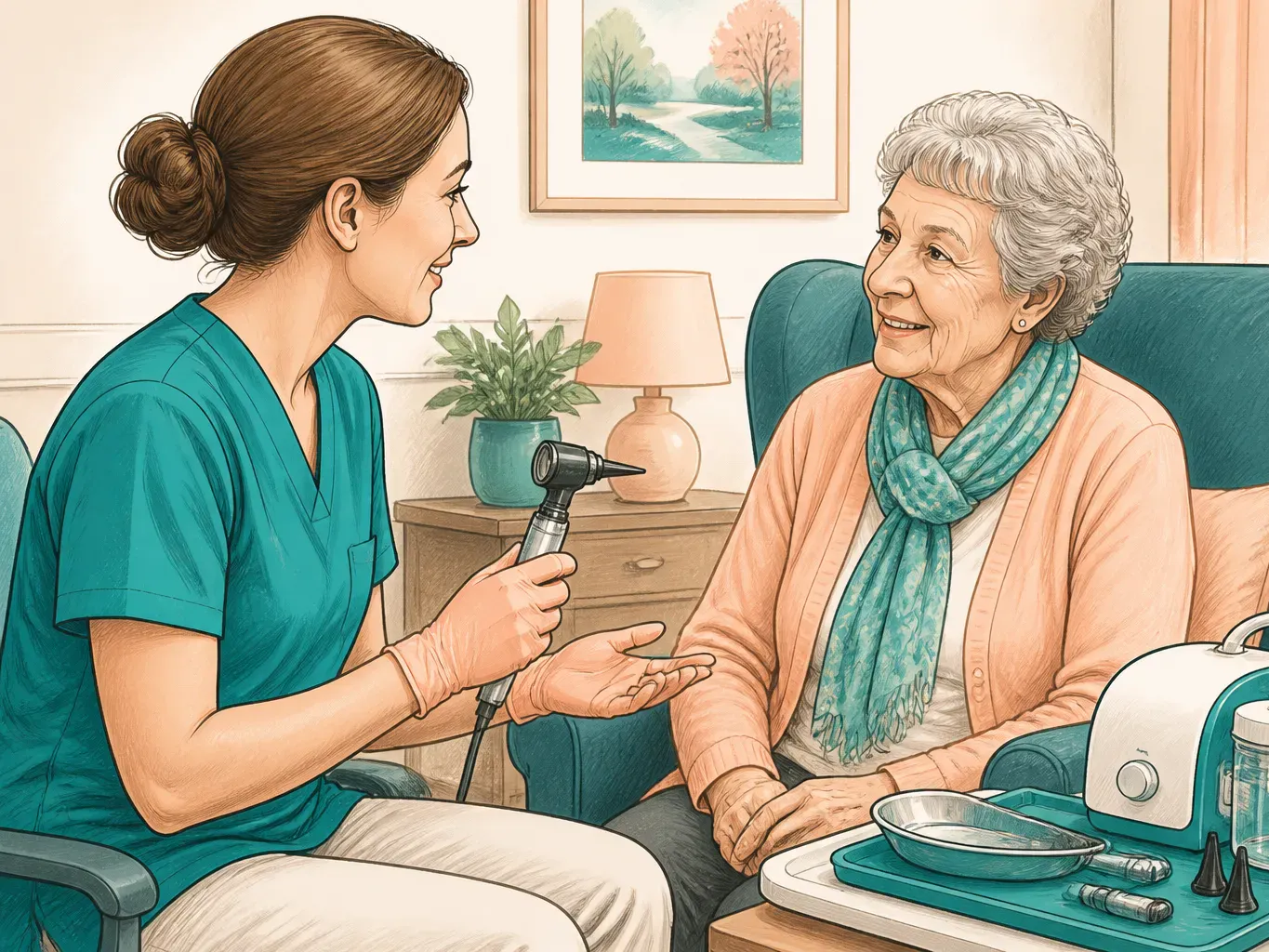
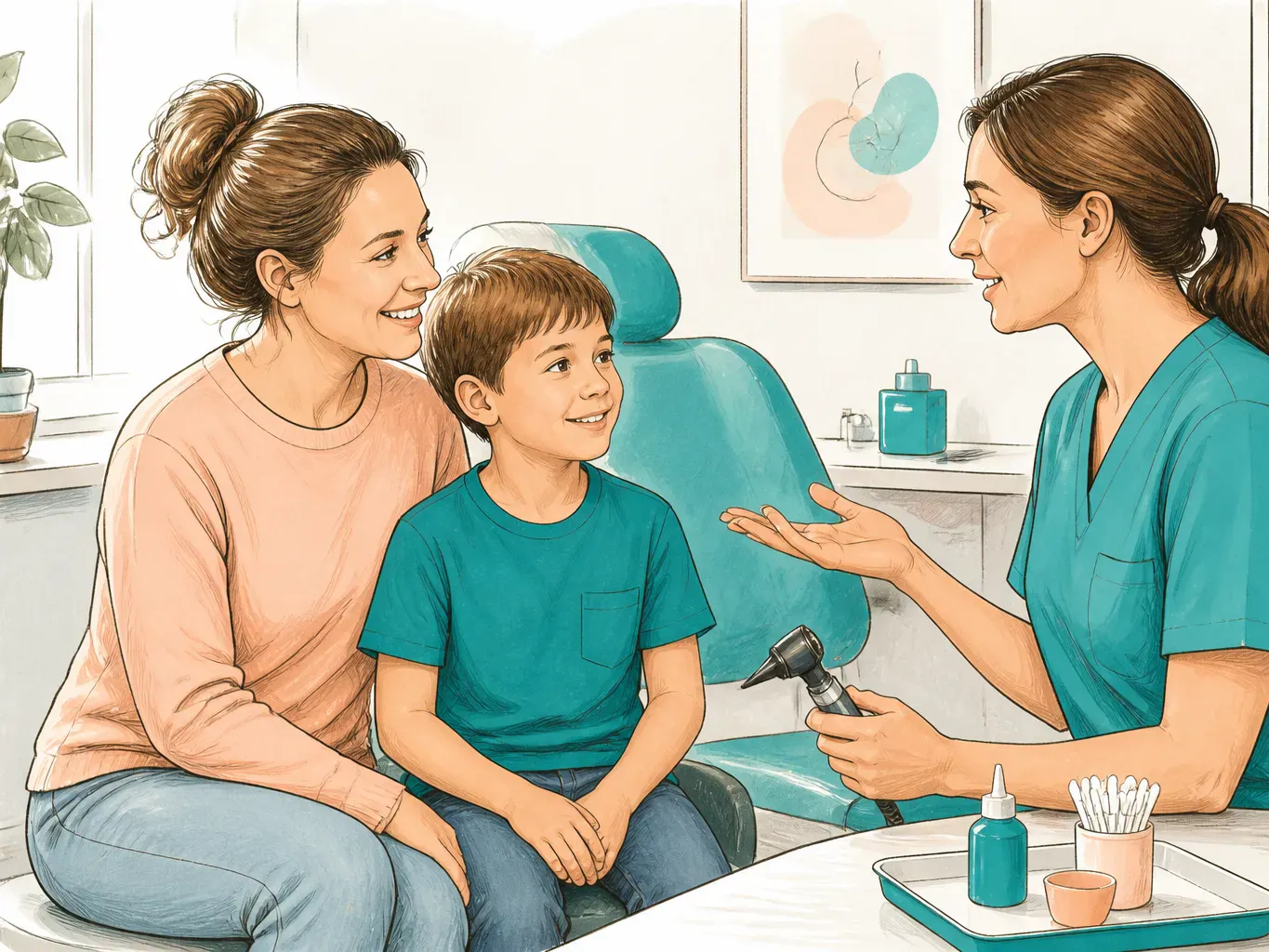
A first appointment should feel calm and straightforward. It usually starts with a conversation about symptoms, medical history, previous ear problems, hearing aids, and any past surgery or infections. The clinician will then look into the ear to confirm whether wax is the cause and whether removal is appropriate.
If removal is needed, the clinician will explain the method and what you may feel during treatment. With microsuction, you may notice a suction noise and some light tugging sensations, but it should not be painful. If anything feels uncomfortable, you should say so straight away. Good ear care is gentle and responsive, not rushed.
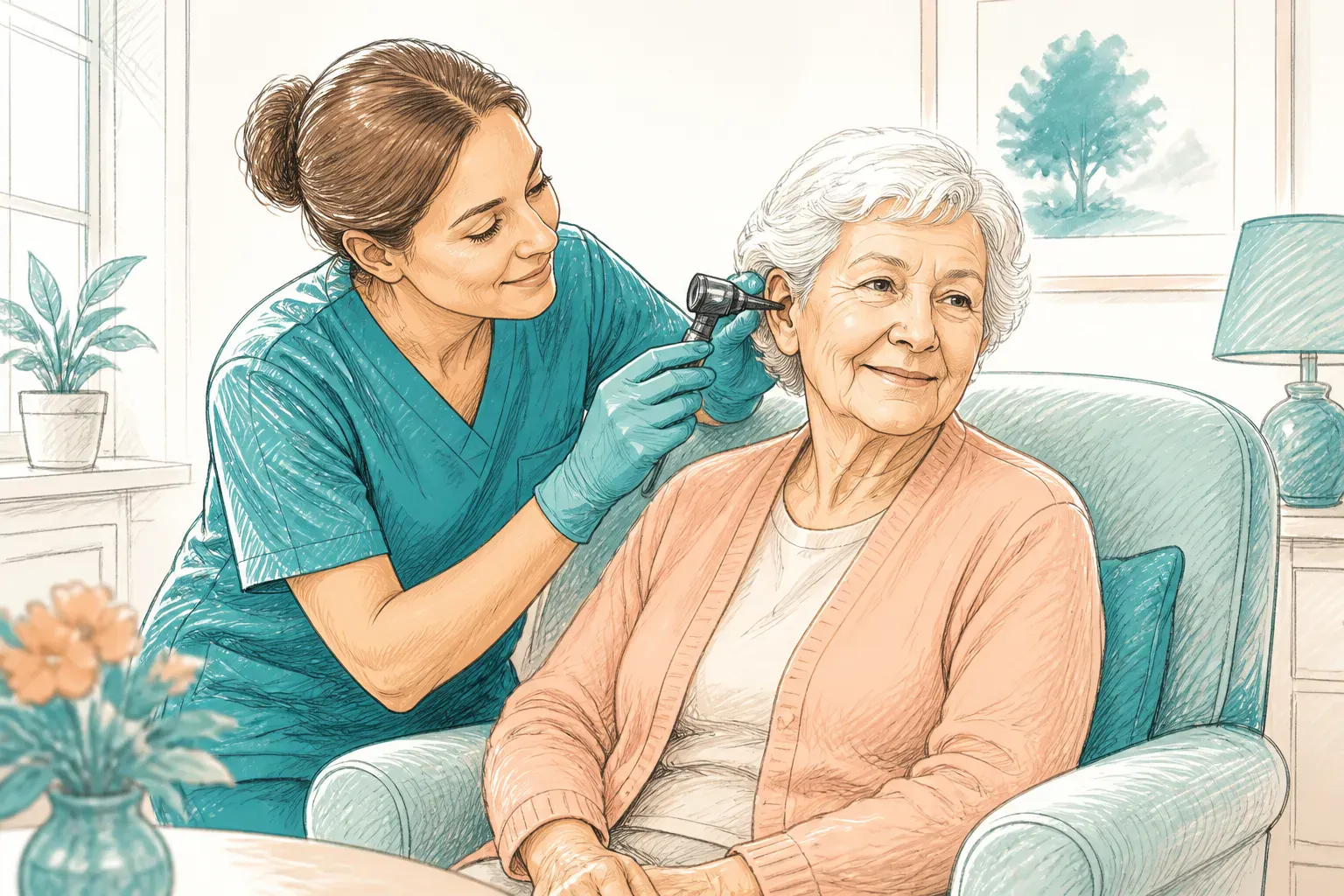
For less mobile clients, a home visit earwax removal appointment can reduce stress and avoid the difficulty of travel. That can be especially useful for care home residents, people with mobility problems, or families supporting an older relative who prefers treatment in familiar surroundings.
Same-day care can also be helpful when blocked hearing is causing immediate problems, such as difficulty using hearing aids, missing important conversations, or feeling unsteady. If urgency matters, same day earwax removal may provide a faster route to relief.
After treatment, the clinician may check that the ear canal is clear and give aftercare advice. In some cases, the ear may feel a little sensitive for a short time, but it should settle quickly. If symptoms persist, a follow-up review may be needed.
Aftercare, hearing aids, and preventing future build-up
After ear wax removal, most people do well with simple aftercare. It is normal for hearing to improve immediately, though some people notice a little sensitivity or awareness of the ear canal for a short period. If the ear feels sore, develops discharge, or becomes more blocked again, you should seek advice rather than trying to clean it yourself.
For hearing aid users, regular cleaning is important. Wax can collect on domes, receivers, and filters, so keeping the device clean reduces blockage and helps the aids work properly. If your hearing aid seems weaker than usual, wax build-up is one of the first things to consider.
Good prevention habits include:
- avoiding cotton buds and similar tools
- using softening drops only when appropriate
- booking routine ear checks if you are prone to blockage
- keeping hearing aids clean and well maintained
- asking for help early if hearing changes
Older adults who have recurring problems may benefit from periodic ear health assessments rather than waiting for symptoms to become severe. That can be particularly helpful for anyone living alone, using hearing aids daily, or relying on clear hearing for safety and communication.
When to seek urgent help
Most wax problems are not emergencies, but some symptoms need prompt assessment because they may signal infection, injury, or another condition that needs treatment. Do not keep trying home remedies if you notice any of the following:
- severe ear pain
- bleeding from the ear
- fluid or pus-like discharge
- sudden hearing loss
- fever with ear symptoms
- marked dizziness or spinning sensation
- swelling around the ear
- a feeling that the ear was damaged during attempted cleaning
These signs should be checked by a professional as soon as possible. Wax may still be involved, but it is not safe to assume wax is the only cause. Quick assessment is especially important for older adults, because balance, hearing, and infection can affect day-to-day wellbeing more quickly than people expect.
If you are unsure, it is safer to pause home treatment and ask for a clinical opinion.
Recommended reads and helpful resources
If you would like to understand ear wax care in more depth, these resources are useful starting points:
- NHS guidance on earwax build-up
- NICE guidance on ear wax management
- British Society of Audiology earwax removal recommendations
- Age UK advice on hearing and ear health
You may also find these helpful on ProEarClinic:
These links can help you compare options before booking and decide whether a clinic visit or a home appointment is the best fit.
FAQ
Is it safe for seniors to remove ear wax at home?
Yes, but only in limited situations. Gentle softening drops may be appropriate if there is no pain, discharge, sudden hearing loss, ear surgery history, or repeated infection. Seniors should avoid tools, cotton buds, and forceful rinsing, because the risk of injury is higher.
What is the gentlest way to soften ear wax in older adults?
For many people, the gentlest approach is a simple wax-softening drop regimen, sometimes with olive oil if suitable and advised. The best option depends on the ear’s condition and the person’s medical history, so it is wise to check before starting if there is any doubt.
Is microsuction better than ear irrigation for seniors?
Microsuction is often preferred for seniors because it gives the clinician direct vision and precise control, and it does not add moisture to the ear canal. That said, the best method depends on the individual ear, so a clinical examination should guide the choice.
How do I know if blocked ear wax needs professional treatment?
If hearing remains muffled after softening, if symptoms keep returning, or if there is pain, discharge, dizziness, or sudden hearing loss, it is time for professional help. Any ear that has had surgery, a perforation, or repeated infection should be assessed rather than treated at home.
Can hearing aids make ear wax build-up worse?
Yes. Hearing aids can trap wax, reduce airflow, and push wax deeper into the canal. They can also make wax more noticeable because sound quality drops when the ear is blocked. Regular checks and careful cleaning can help reduce the problem.
How often should older adults have their ears checked?
There is no one fixed schedule for everyone. People who wear hearing aids, have repeated wax build-up, or have had ear problems before may benefit from regular checks every few months, while others may only need review when symptoms appear. A clinician can suggest a sensible routine based on individual needs.
Author perspective and quick practical takeaway
From a clinical point of view, the safest ear wax plan for most seniors is simple: soften gently if appropriate, avoid inserting anything into the ear, and choose professional removal when symptoms continue or the ear feels blocked. In older adults, a careful approach matters more than a fast one, because comfort, hearing, and safety all depend on using the right method.
If you are helping an older parent, relative, or care home resident, the most useful support is often practical rather than hands-on. Help them arrange an assessment, keep track of symptoms, and avoid repeated DIY attempts that might make the blockage worse. A gentle, evidence-based appointment can usually solve the problem quickly and with far less stress than trying to manage it alone.
If you would like tailored, patient-friendly ear care from Pro Ear Clinic, our team can help you find the most suitable option, whether that is a clinic appointment or a more convenient home visit.