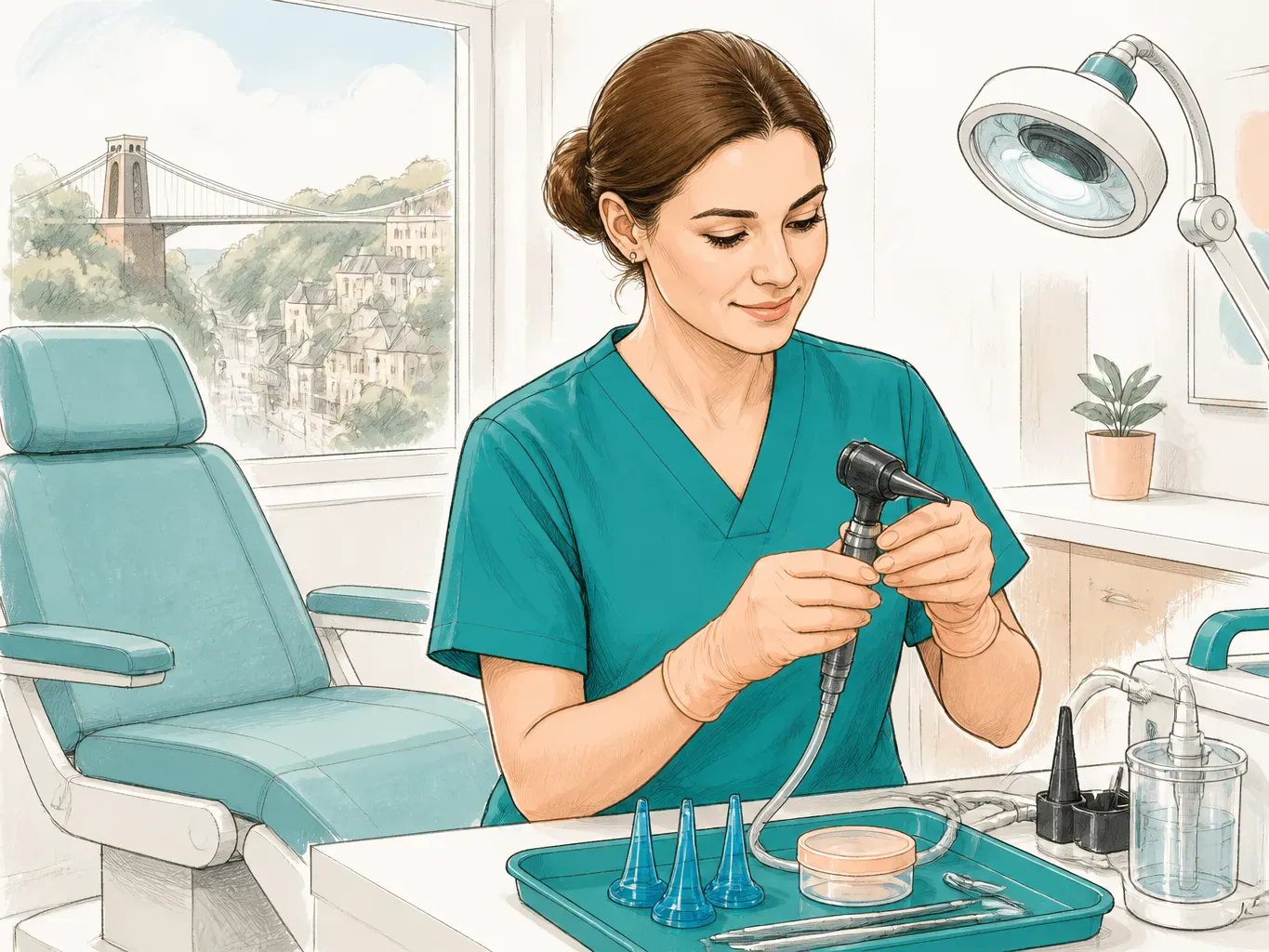
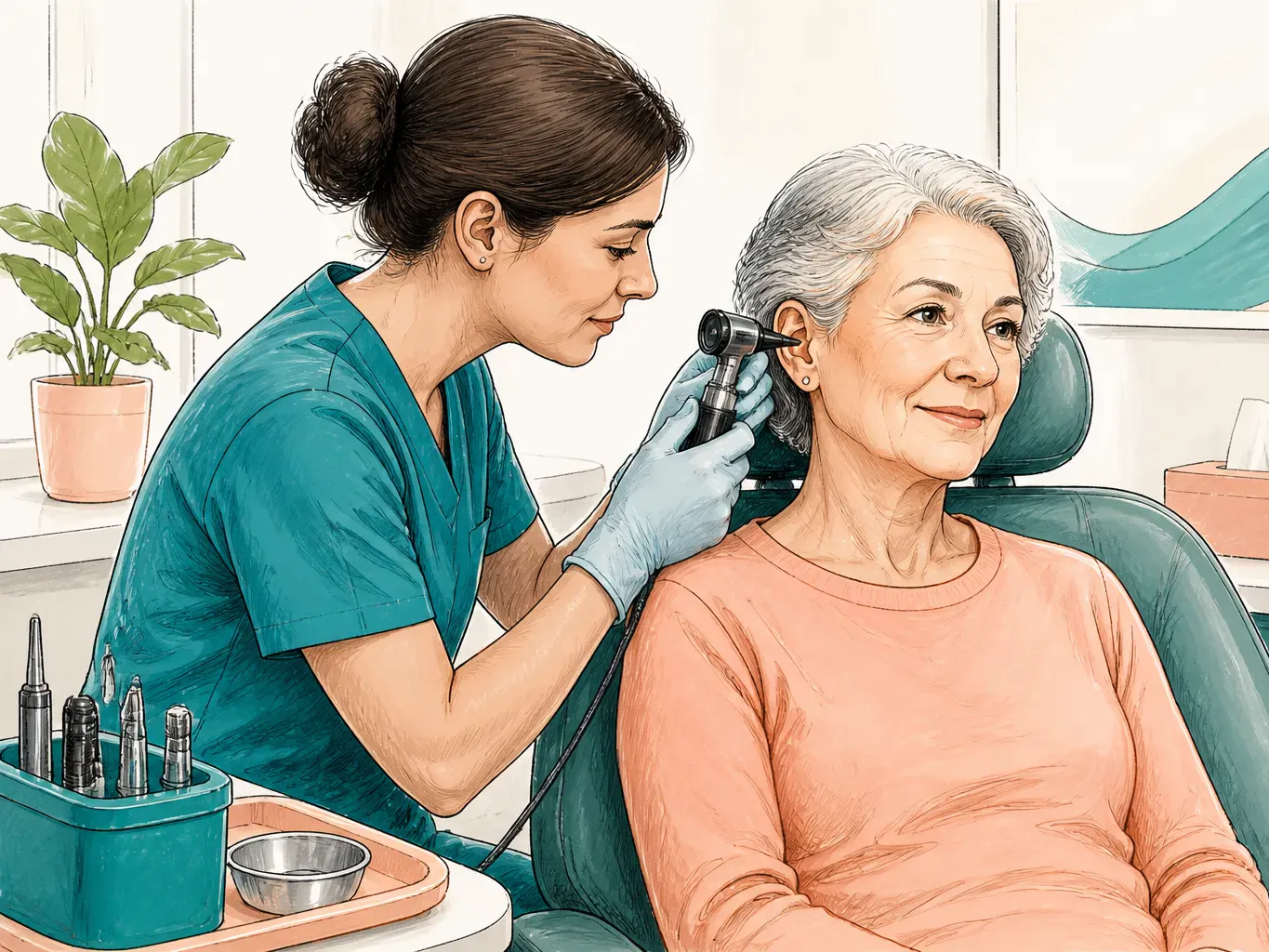
Earwax removal specialists are trained clinicians who assess your ear first, then choose a safe way to clear wax that is causing symptoms. For many people, especially if hearing is reduced, the ear feels blocked, or home remedies have not helped, professional care is the safest and most comfortable option.
They do more than simply remove wax. A good specialist checks whether wax is really the problem, rules out signs of infection or a perforated eardrum, and uses the method most suited to your ears, your symptoms, and your medical history.
Quick summary
If your ears feel blocked, your hearing has changed, or you have pain, dizziness, or tinnitus, a specialist assessment is often the best next step. Qualified earwax removal specialists can examine the ear canal, confirm whether wax is the cause, and then use a suitable treatment such as microsuction or another clinically supervised method.
The main value of specialist care is safety. A proper assessment helps avoid unnecessary treatment, reduces the risk of irritation or injury, and gives you clear aftercare advice. For many patients, that combination of accuracy, reassurance, and prompt relief makes professional ear care well worth booking.
What earwax removal specialists do
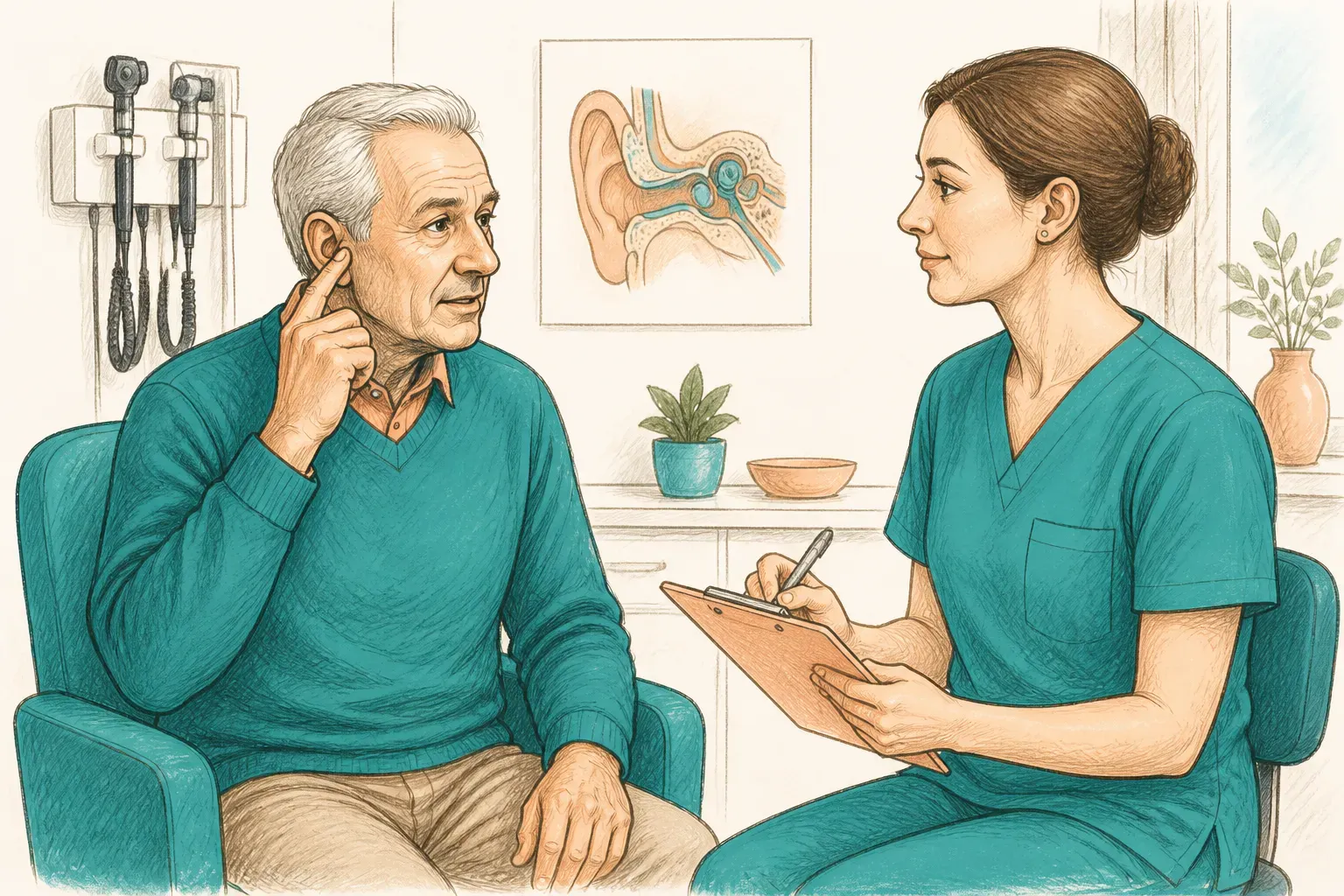
Earwax removal specialists provide a structured clinical service for people whose ears are affected by wax build-up. The process usually starts with a conversation about your symptoms, any pain or hearing changes, previous ear problems, and whether you wear hearing aids or have had ear surgery in the past. That history matters, because it helps the clinician decide what is safe and what is not.
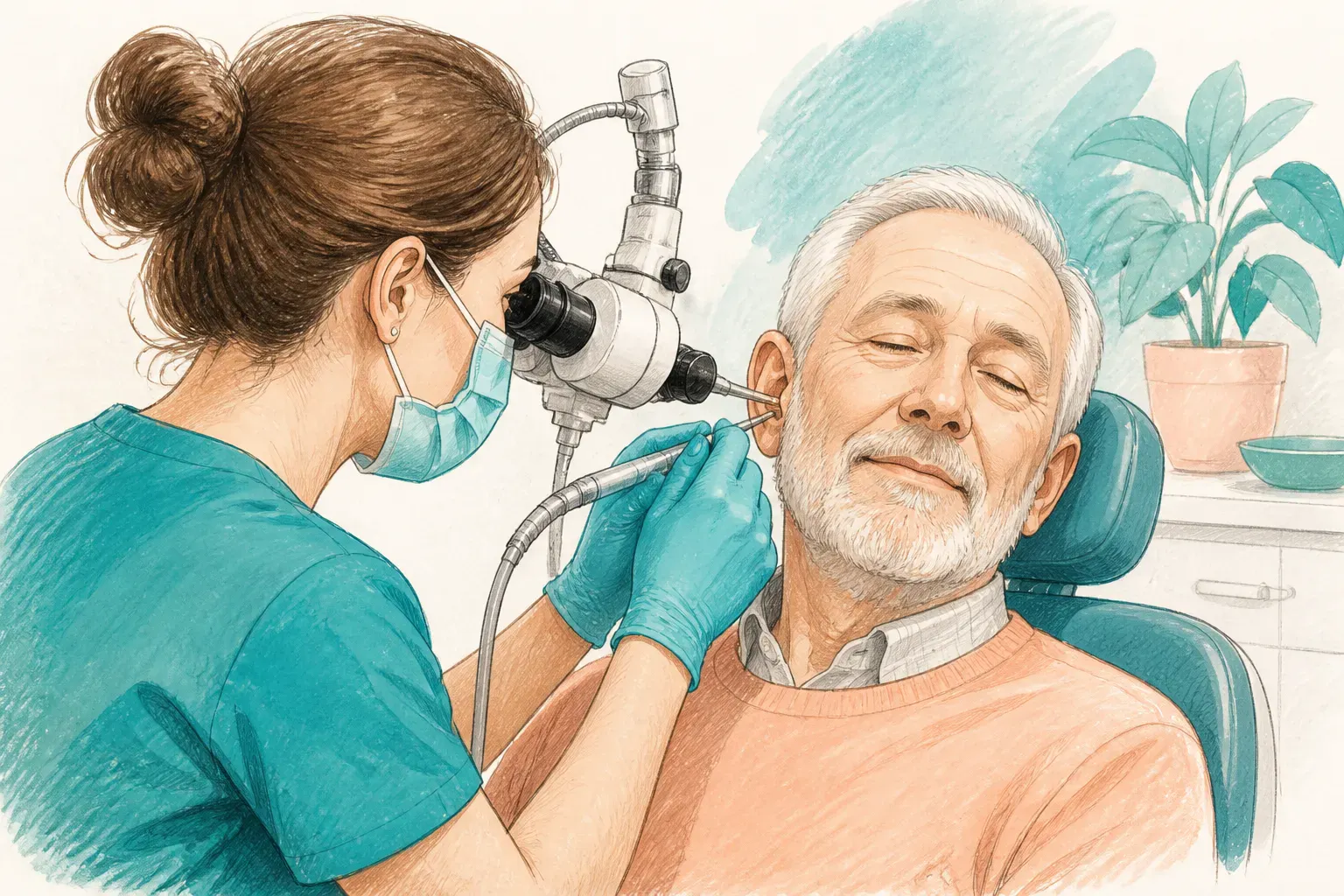
Next comes an examination of the ear canal and eardrum, usually with good lighting and magnification. This is an important step, because a blocked ear is not always caused by wax alone. A specialist may notice redness, infection, inflammation, a foreign body, or a perforation, all of which can change the treatment plan.
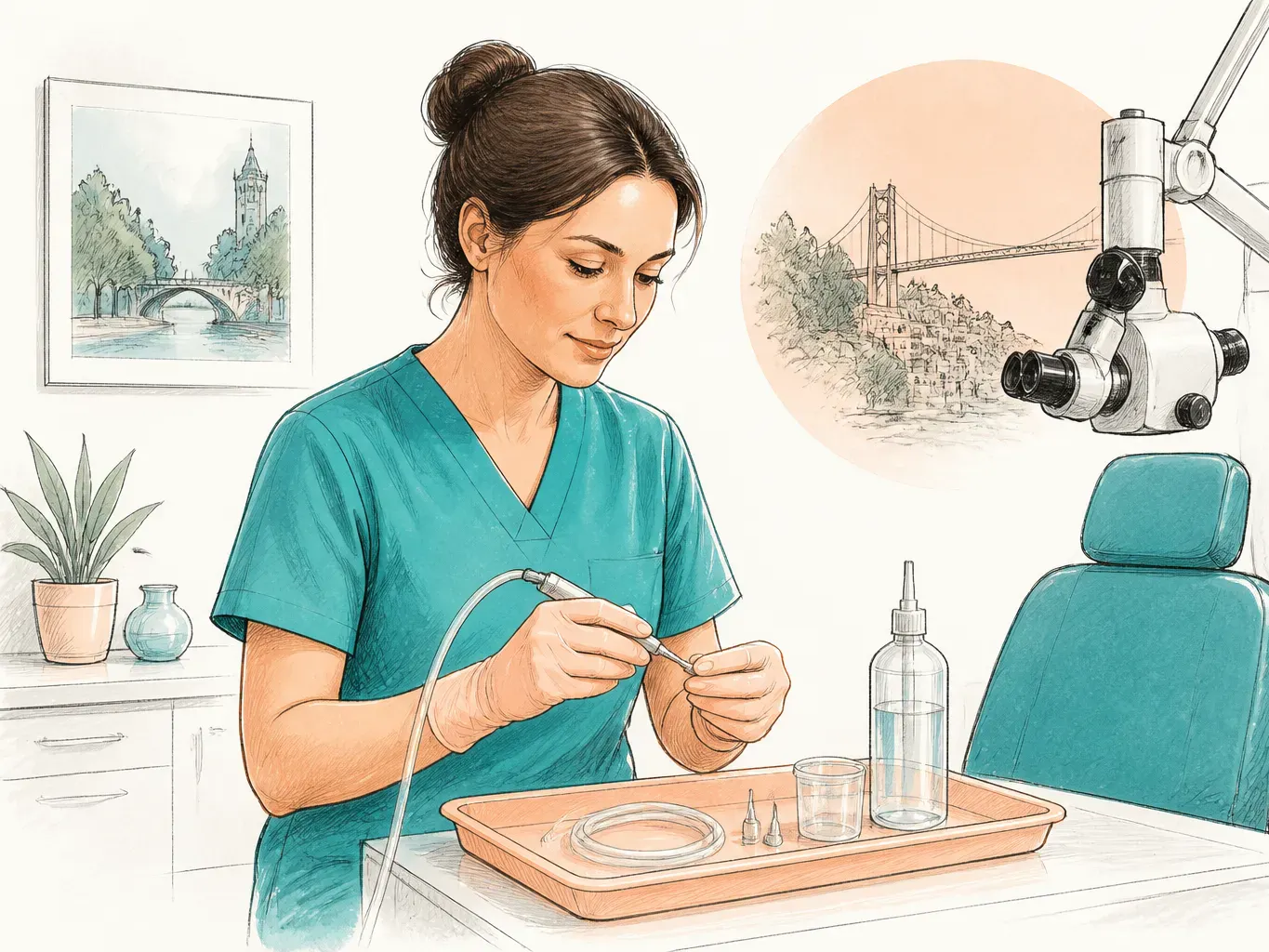
The aim is simple: remove wax while protecting the delicate structures of the ear. In specialist practice, that often means using microsuction, sometimes alongside softening advice or another carefully selected method. The right approach depends on how hard the wax is, how deeply it sits, whether you have narrow canals, and whether there are any medical reasons to avoid one option.
This is one of the main differences between professional care and informal treatment. A specialist is not just trying to get wax out quickly. They are balancing speed with safety, comfort, and suitability.
For many patients, specialist ear care is especially helpful when:
- hearing is suddenly muffled or reduced
- the ear feels full, pressured, or blocked
- tinnitus becomes more noticeable
- you are anxious and want a gentle, explained process
- you rely on hearing aids and wax is affecting fit or sound quality
- you need prompt relief because work, family life, or communication is being affected
At ProEarClinic, the focus is on evidence-based care, careful assessment, and patient comfort. That matters for first-time patients who want clear answers, and for returning patients who want a reliable way to manage recurring earwax problems.
For more on the procedure itself, you may also find our Microsuction treatment page useful.
Signs you should book professional earwax removal
Some people can manage mild wax build-up with advice from a clinician, but there are clear signs that it is time to book a professional appointment. The most common symptom is reduced or muffled hearing, especially if it has appeared gradually and feels like one or both ears are blocked.
Other signs include:
- a feeling of fullness or pressure in the ear
- discomfort, itchiness, or mild pain
- ringing or buzzing in the ear
- dizziness or imbalance
- hearing your own voice loudly or unusually
- difficulty using hearing aids properly
- occasional cough triggered by a blocked ear canal
It is worth seeking help sooner if symptoms are one-sided, sudden, or getting worse. A new loss of hearing should never simply be assumed to be wax, because other causes may need medical attention. If you have severe pain, discharge, fever, or sudden hearing loss, speak to a healthcare professional promptly.
You should also avoid repeated home attempts if they are not helping. Cotton buds, probing tools, and repeated digging often push wax deeper and can irritate the ear canal. Even some over-the-counter approaches are not suitable for every person, particularly if you have a history of ear surgery, a perforated eardrum, or persistent ear problems.
Certain groups may need professional support more often:
- older adults, who may be more prone to wax build-up and dry ear canals
- hearing-aid users, because devices can trap wax and make symptoms more noticeable
- care home residents, where access and mobility can make routine ear care harder
- anxious patients, who benefit from a calm explanation and a gentle approach
- busy families, who need convenient appointments and quick relief
If you are unsure whether your symptoms are due to wax, an Ear health assessment can help clarify what is going on before any treatment is chosen.
For general background, the NHS guidance on earwax build-up is also a sensible starting point.
How to choose a safe earwax removal specialist
Choosing the right provider is about more than convenience. You want someone who can assess your ears properly, explain the options clearly, and use a method that suits your circumstances. A safe earwax removal specialist should be able to show clinical training, follow clean working practices, and refer you onward if they see something that needs medical review.
Here is a practical checklist to use when comparing providers:
What to check | Why it matters | What good care looks like |
|---|---|---|
Clinical training and experience | Reduces the chance of unsafe treatment | The clinician can explain their qualifications and ear care background |
Ear examination before treatment | Confirms wax is the issue and identifies red flags | The appointment includes a visual ear check, not just immediate removal |
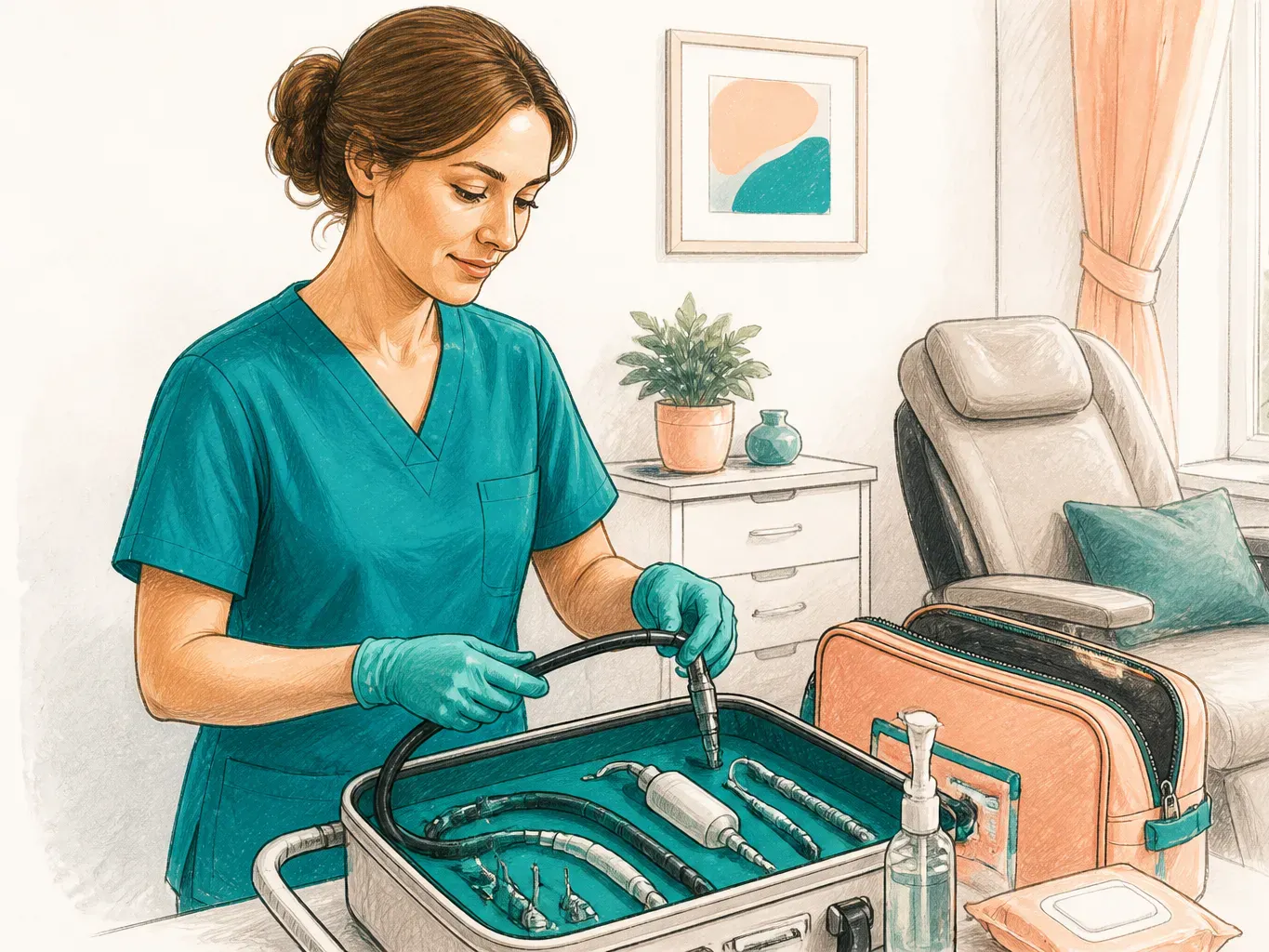
Clean equipment and hygiene standards | Helps reduce infection risk | Instruments and working areas are maintained to a professional standard |
Treatment method options | Different ears need different approaches | The provider explains whether microsuction, irrigation, or softening advice is appropriate |
Suitability for complex ears | Important for narrow canals, surgery history, or fragile ears | The clinician asks about prior problems before starting |
Aftercare advice | Supports recovery and future prevention | You leave with practical guidance in plain language |
Follow up plan | Useful if wax is stubborn or both ears are blocked | The specialist explains what happens if the wax is not removed in one visit |
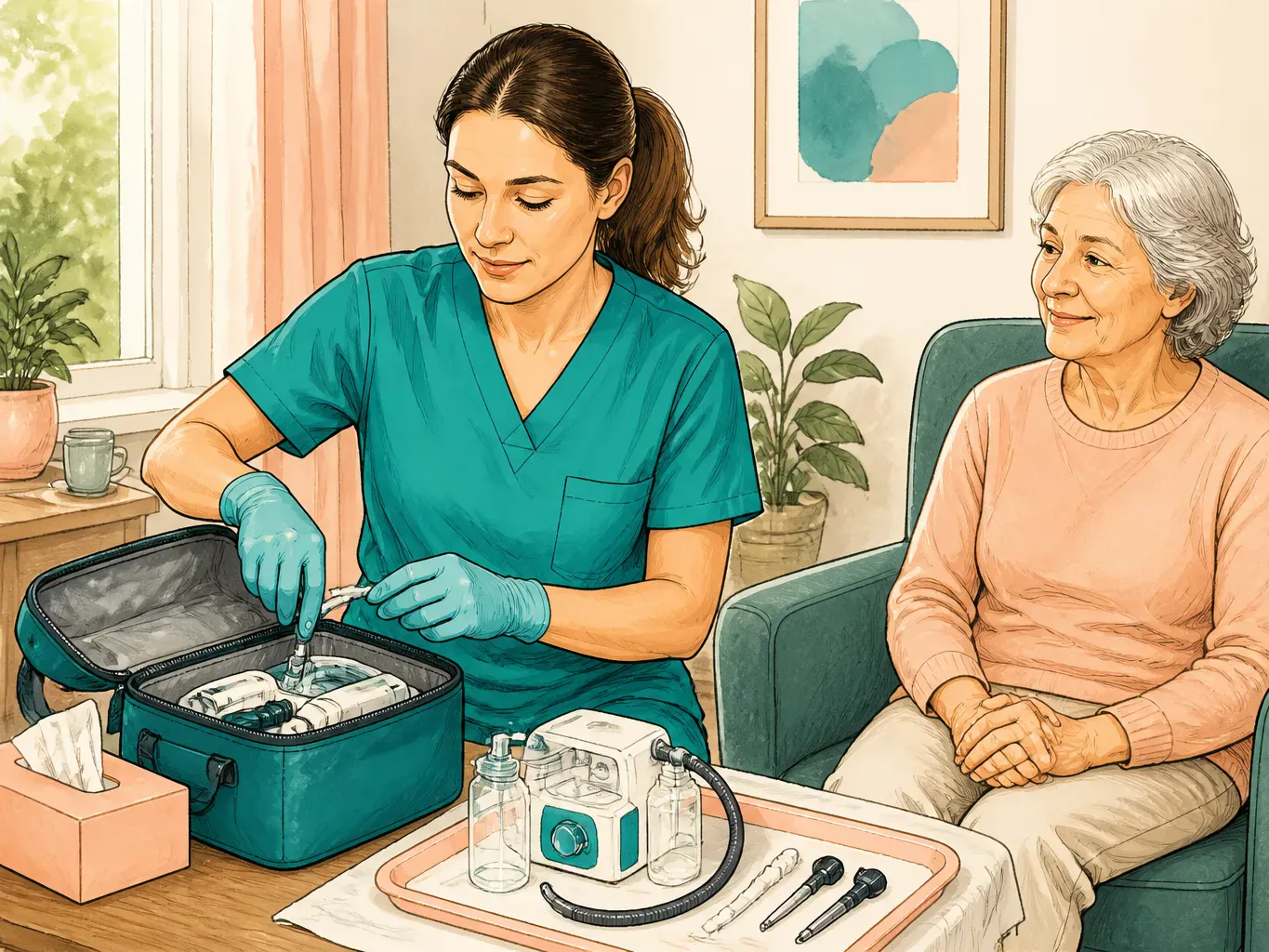
Home visit availability | Helpful for limited mobility or care home residents | A proper clinical setup can be brought to the patient where appropriate |
A good provider should also answer your questions without rushing you. Ask what method they recommend and why, whether they have seen your type of ear issue before, and what they would do if treatment is not suitable on the day. If the answers are vague, that is usually a sign to keep looking.
You should feel that the appointment starts with assessment, not assumption. That is one of the clearest signs you are in the right place.
Treatment methods: what is usually offered and how they compare
Specialist ear care may involve more than one method, but the best option depends on the ear in front of the clinician. A patient-friendly service should explain the choice clearly and avoid presenting one method as right for everyone.
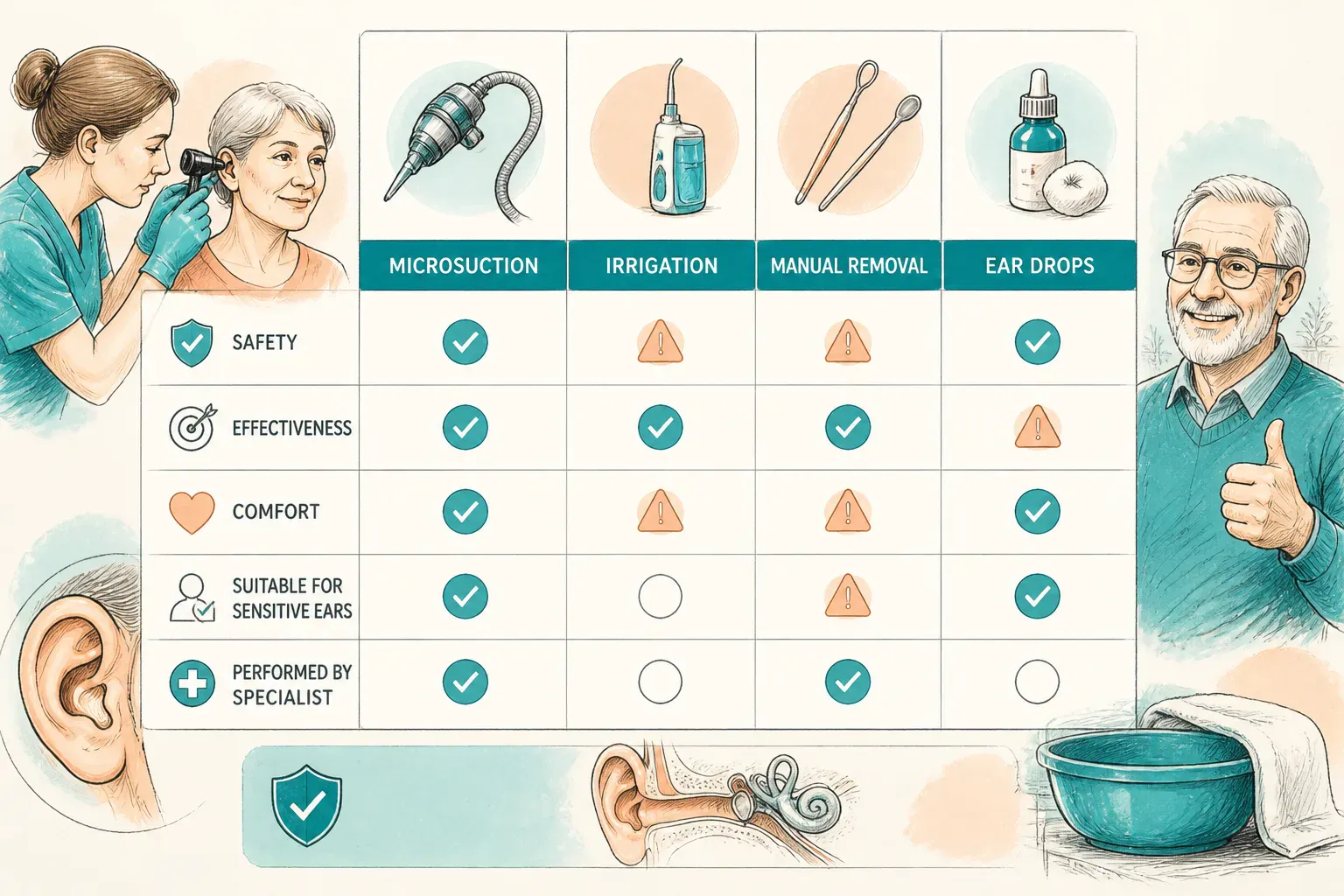
The most common approaches are microsuction, irrigation, and softening drops. Each has its place, but each also has limits.
Method | How it works | Strengths | Limitations | Often suitable for |
|---|---|---|---|---|
Microsuction | A small suction device gently removes wax under direct view | Precise, controlled, often quick, useful for complex ears | Can feel noisy or slightly uncomfortable for some people | Many adults, hearing-aid users, people wanting a clinical approach |
Irrigation | Warm water is used to flush out softened wax | Familiar, can work well for certain wax types | Not suitable for every ear, and may be avoided in some ear conditions | Selected patients after assessment |
Softening drops | Wax is softened before removal or to encourage natural clearing | Simple, low intervention, useful before an appointment | Often not enough on its own if wax is impacted | Mild build-up or preparation for treatment |
Microsuction is often preferred when precision matters. Because the clinician can see what they are doing directly, it can be a good option when wax is hard, close to the eardrum, or sitting in a narrow canal. It is also commonly chosen for patients who want a fast, clinic-led service with immediate feedback.
That said, no single method suits everyone. If the ear canal is inflamed, if there is discharge, if the eardrum may be perforated, or if the anatomy makes a particular method risky, a specialist should change the plan. The safest clinic is not the one that insists on a favourite method, but the one that selects the right method after examination.
If you are comparing options, reading a short guide on how Microsuction treatment works can help you understand why it is so often recommended.
For evidence-based guidance on approach and suitability, the NICE CKS guidance on impacted earwax is a useful professional reference.
What to expect during an appointment
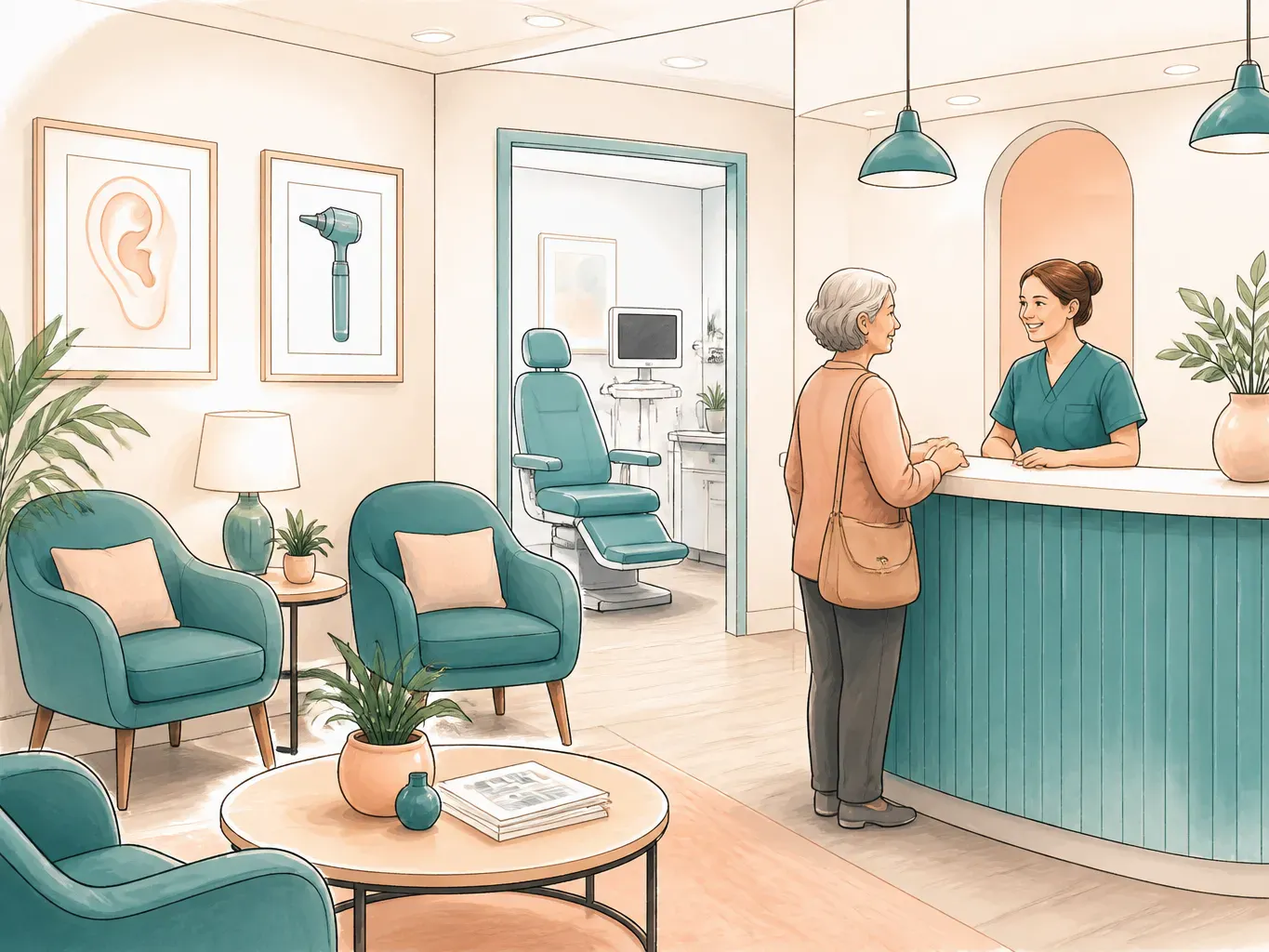
A good earwax removal appointment should feel calm, organised, and easy to follow. Most clinics begin with a short consultation, where you explain your symptoms, any previous treatment, and anything that might affect your ears, such as hearing aids, ear infections, skin conditions, or surgery.
After that, the clinician examines the ear. This may be done with an otoscope or microscope-like equipment so they can see the canal and wax clearly. If wax is present and the ear is suitable, treatment usually follows straight away.
During microsuction, you may hear a loud suction sound and feel gentle pressure or vibration. Most people tolerate this well, although it can feel unusual the first time. If another method is used, you may notice the sensation of water or movement in the ear canal. A professional will explain each step as they go, which is especially helpful if you are nervous.
Appointments are often shorter than people expect, although more complex ears may take longer. Some patients notice improvement immediately, while others need aftercare or a second appointment if the wax is particularly stubborn.
From an author perspective, one thing I always value in specialist ear care is the way calm communication changes the experience. When a clinician explains what they are seeing, what the next step is, and what sensations are normal, anxiety usually drops quickly. For patients who have put off treatment for months because they are worried it will hurt, that reassurance matters as much as the procedure itself.
After treatment, you should be told what your ears look like, whether both ears were cleared, and whether anything needs monitoring. If the clinician thinks further medical assessment is needed, they should say so clearly.
If you need a prompt appointment, a Same-day earwax removal service may be suitable, depending on availability and the safety of treating you on the day.
Safety, risks, and when earwax removal should be delayed
Professional earwax removal is generally safe when done after proper assessment, but it is not appropriate to treat every blocked ear in the same way. A clinician should first check for signs that suggest the appointment should be delayed, modified, or referred onward.
Treatment may need to be delayed if there are signs of:
- ear infection or significant inflammation
- a suspected perforated eardrum
- unexplained ear discharge
- severe pain that is not typical of simple wax build-up
- recent ear surgery or a complex ear history
- foreign body concerns rather than wax alone
Minor side effects can include temporary tenderness, a brief feeling of fullness, or mild irritation of the ear canal. These are usually short lived, but they should be explained before treatment. Professional care helps reduce risk by using direct visual assessment, choosing suitable tools, and stopping if the ear does not look right.
This caution is one reason evidence-based practice matters. The best clinicians do not force treatment if the ear is not ready, and they know when to advise medical review. That approach protects patients and reduces the chance of avoidable complications.
Where appropriate, a specialist may recommend that you see your GP, an audiologist, or another clinician before wax removal is attempted. That is not a failure of service. It is good practice.
The British Society of Audiology guidance on earwax removal and the Royal College of Nursing advice on ear care are useful references for the wider standards around safe ear care.
At-home care before and after treatment
A little preparation can make treatment easier, but home care should support professional advice, not replace it. If a clinician recommends ear softening drops before your appointment, follow their instructions carefully. Softening can sometimes make removal easier, especially if the wax is hard or dry.

Before your appointment, it can help to:
- note which ear is bothering you most
- list any symptoms, including pain, discharge, dizziness, or tinnitus
- bring information about hearing aids or previous ear surgery
- avoid putting anything into the ear canal
- follow any drops advice exactly as given
After treatment, most people can return to normal activities quickly. However, if the clinician advises short-term care, follow it. You may be told to avoid getting water in the ear for a short period, or to watch for signs of ongoing discomfort. If your ears feel different for a little while, that is not unusual, especially if the wax had been present for a long time.
For older adults or care home residents, simple written or verbal instructions are particularly useful. Clear steps are easier to follow when they are brief, practical, and given to the right person responsible for day-to-day care.
If a clinician suggests softening before a future visit, an internal guide on ear preparation may also be helpful for patients who want to understand what to expect. Always make sure any advice is suitable for your ears, particularly if you have had ear problems before.
Choosing the right service for your situation
The best service depends on how soon you need help, how mobile you are, and how comfortable you feel travelling to a clinic. Some patients prefer an in-clinic visit because they want the full equipment setup and a straightforward appointment. Others need a home visit because leaving the house is difficult, or because care is being arranged for a relative in a care setting.
Here is a simple comparison to help you think it through:
Service type | Best for | Advantages | Considerations |
|---|---|---|---|
Clinic visit | Most adults, families, repeat patients | Full clinical environment, efficient treatment, easy access to equipment | Requires travel and time to attend |
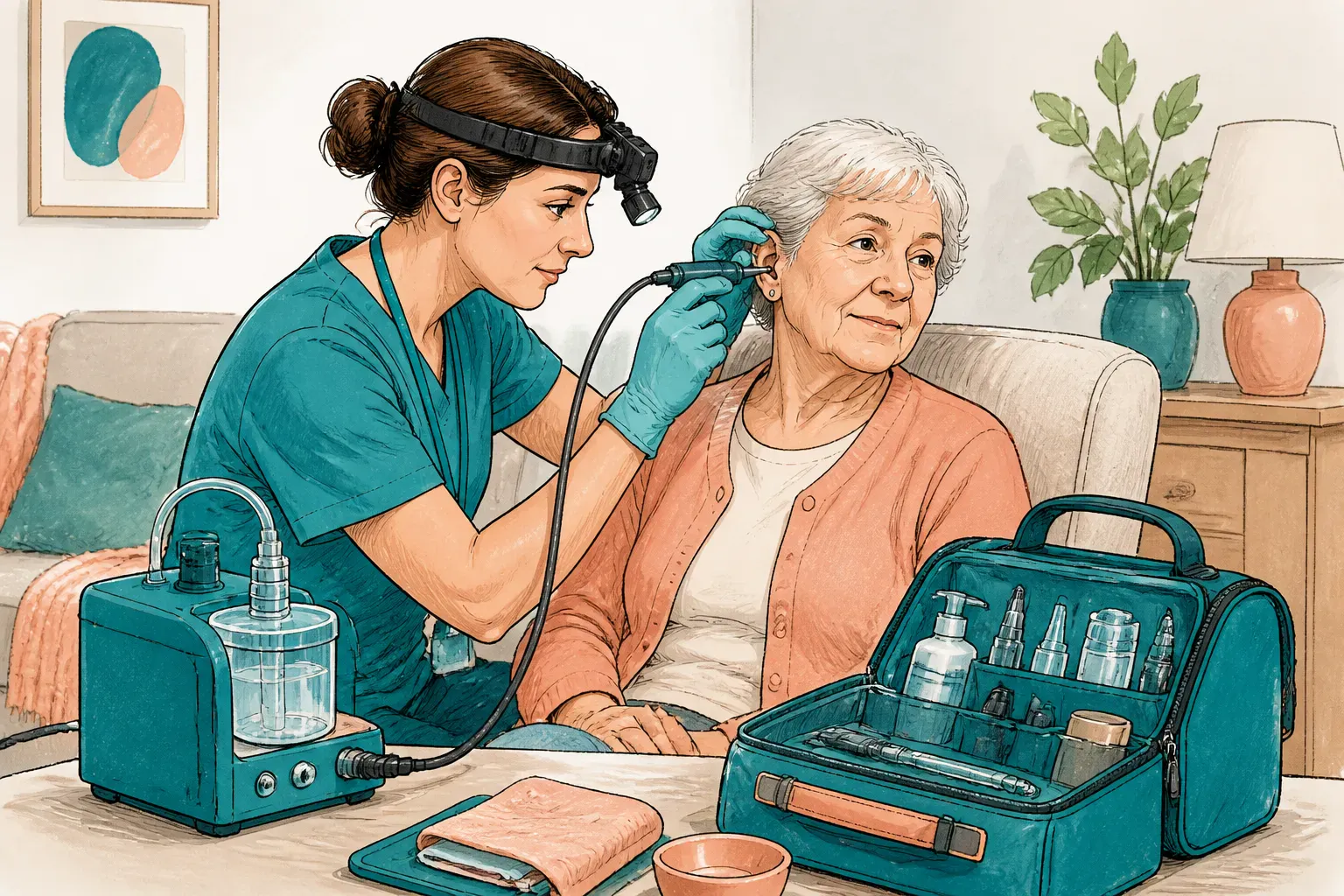
Home visit | Elderly clients, limited mobility, care home residents | Convenient, comfortable, reduces travel stress | Needs good scheduling and the right setup |
Same-day service | Patients needing quick relief, urgent work or family needs | Fast access, reduced waiting, often reassuring | Availability may vary, and suitability still depends on assessment |
Busy families often value convenience and speed. An anxious patient may prefer a calm clinic room with time to ask questions. Care home residents may benefit most from an on-site visit, particularly if transport is difficult or distressing. Someone with sudden blocked-ear symptoms may want same-day support, but it is still important to have an assessment first so the treatment is safe.
If you are not sure which route is best, booking an assessment is usually the smartest starting point. It is better to choose the service after proper ear examination than to guess based only on convenience.
For people who need support at home, Home visit earwax removal may be an appropriate option. If speed is your main concern, Same-day earwax removal can be worth checking first.
Recommended reads and next steps
If you are researching earwax removal specialists because your ears feel blocked, the next best step is usually a professional assessment. That gives you a clear answer on whether wax is the issue, whether treatment is safe, and which method is most appropriate.
Useful next reads include:
- Microsuction treatment, for a closer look at the most commonly recommended specialist method
- Home visit earwax removal, for patients who need convenient care at home
- Same-day earwax removal, for people wanting faster access to relief
- Ear health assessment, for a careful first step when symptoms are not clearly due to wax
If you want wider background reading, the NHS pages on earwax and the clinical guidance from NICE are sensible resources. They are especially useful if you like to understand why clinicians recommend one approach over another.
At ProEarClinic, the goal is to make ear care feel straightforward, safe, and reassuring, especially for first-time patients. If your symptoms are ongoing, uncomfortable, or affecting day-to-day life, booking a professional ear assessment is the most reliable way to move forward.
FAQ
What do earwax removal specialists do?
Earwax removal specialists assess your ears, confirm whether wax is causing your symptoms, and use a suitable treatment to remove it safely. They also look for signs that the ear needs medical review instead of treatment.
Is microsuction safer than ear syringing?
Microsuction is often preferred in specialist practice because it allows direct visual control and can be suitable for a wider range of ears. Whether it is safer for you depends on your ear health, anatomy, and medical history, so a proper assessment is important.
How do I know if I need professional earwax removal?
If you have muffled hearing, blocked-ear sensation, discomfort, tinnitus, dizziness, or trouble with hearing aids, it is sensible to seek professional advice. Sudden hearing loss, one-sided symptoms, or ear discharge should be checked promptly.
Can I have earwax removed if I wear hearing aids?
Yes, many hearing-aid users benefit from professional earwax removal. Hearing aids can make wax build-up more noticeable and can also be affected by it, so regular checks are often helpful.
What should I expect at my first earwax removal appointment?
Expect a short consultation, ear examination, treatment if suitable, and aftercare advice. The clinician should explain what they are doing, what sensations are normal, and what to do if symptoms continue.
When should earwax removal be avoided or delayed?
It should be delayed if there are signs of infection, a suspected perforated eardrum, significant ear pain, discharge, or a complex ear history that makes immediate treatment unsafe. A clinician may refer you for medical review first.