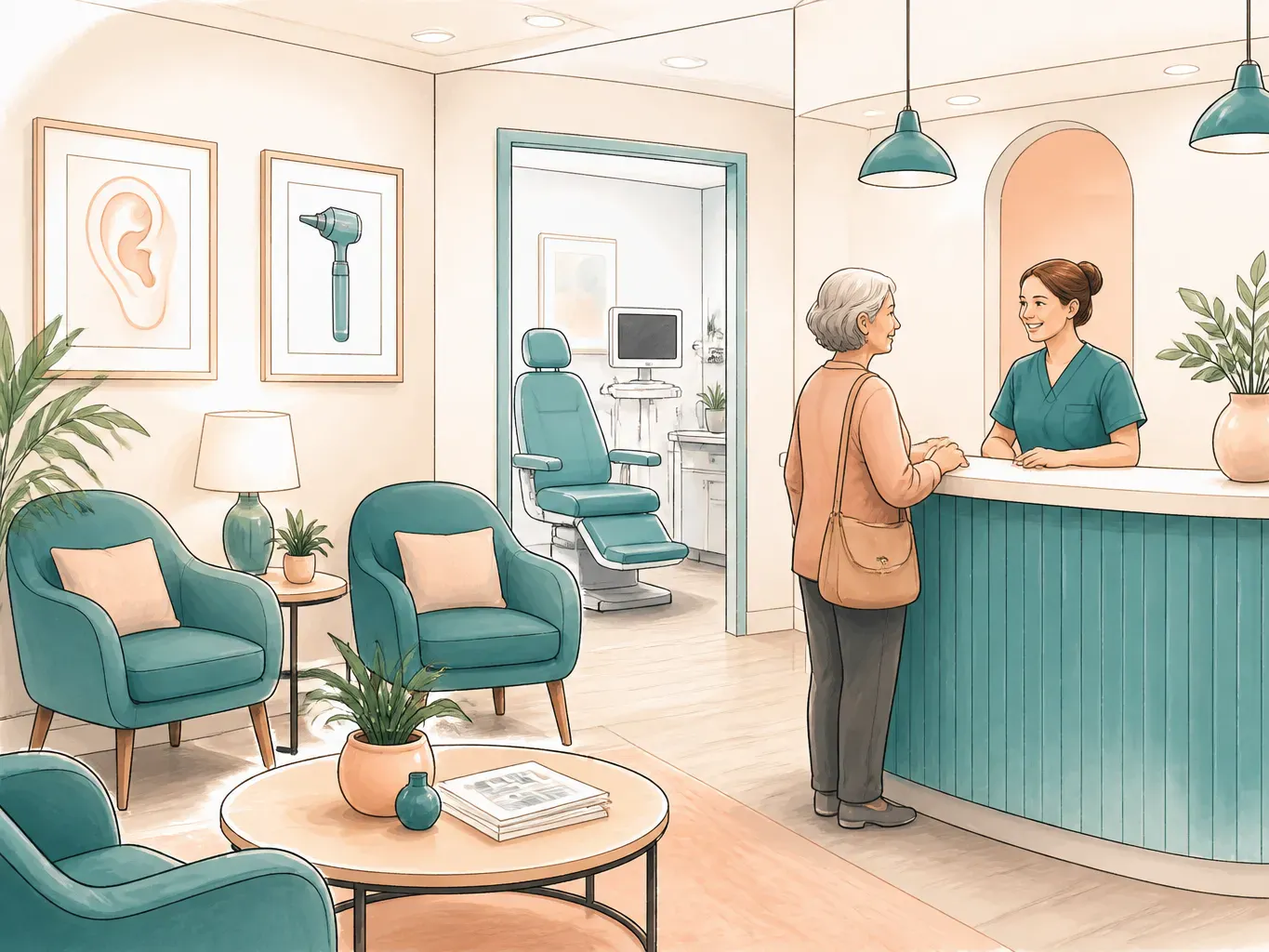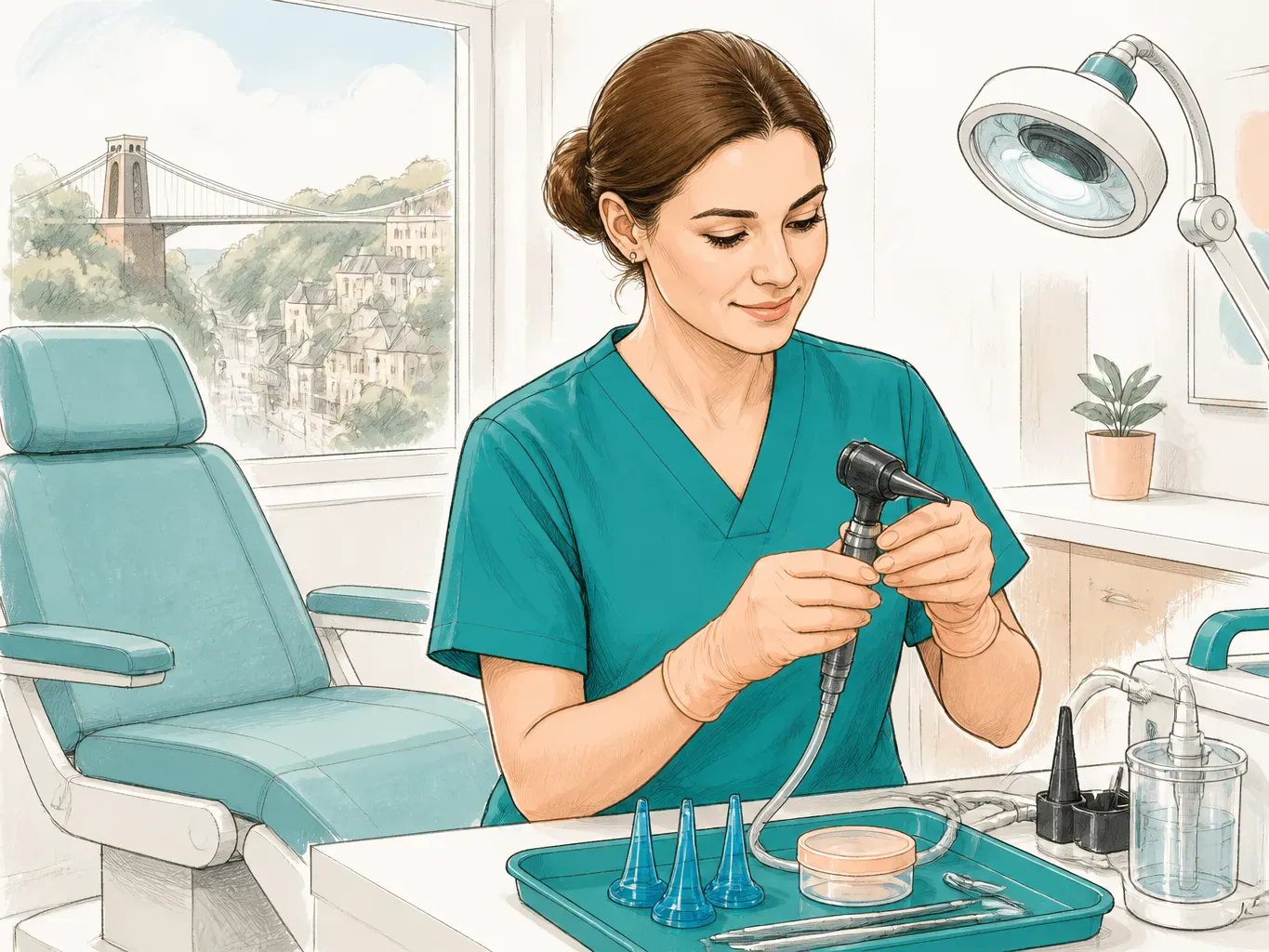
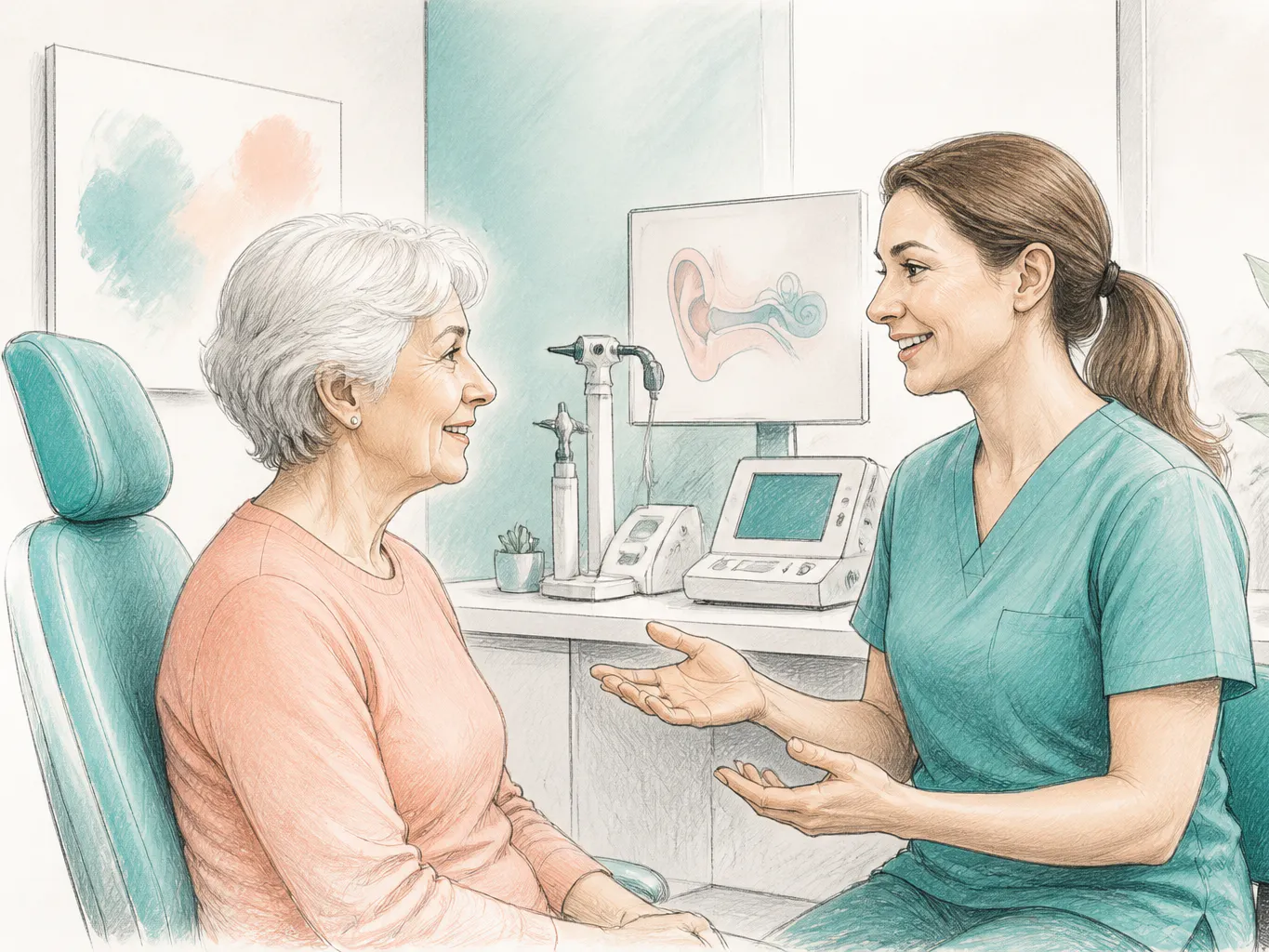
Earwax removal at a specialist clinic usually starts with a short ear health assessment, followed by the safest suitable treatment for your ears. Most appointments are quick, gentle, and designed to relieve blocked hearing, fullness, or discomfort with as little fuss as possible.
Quick summary of what to expect
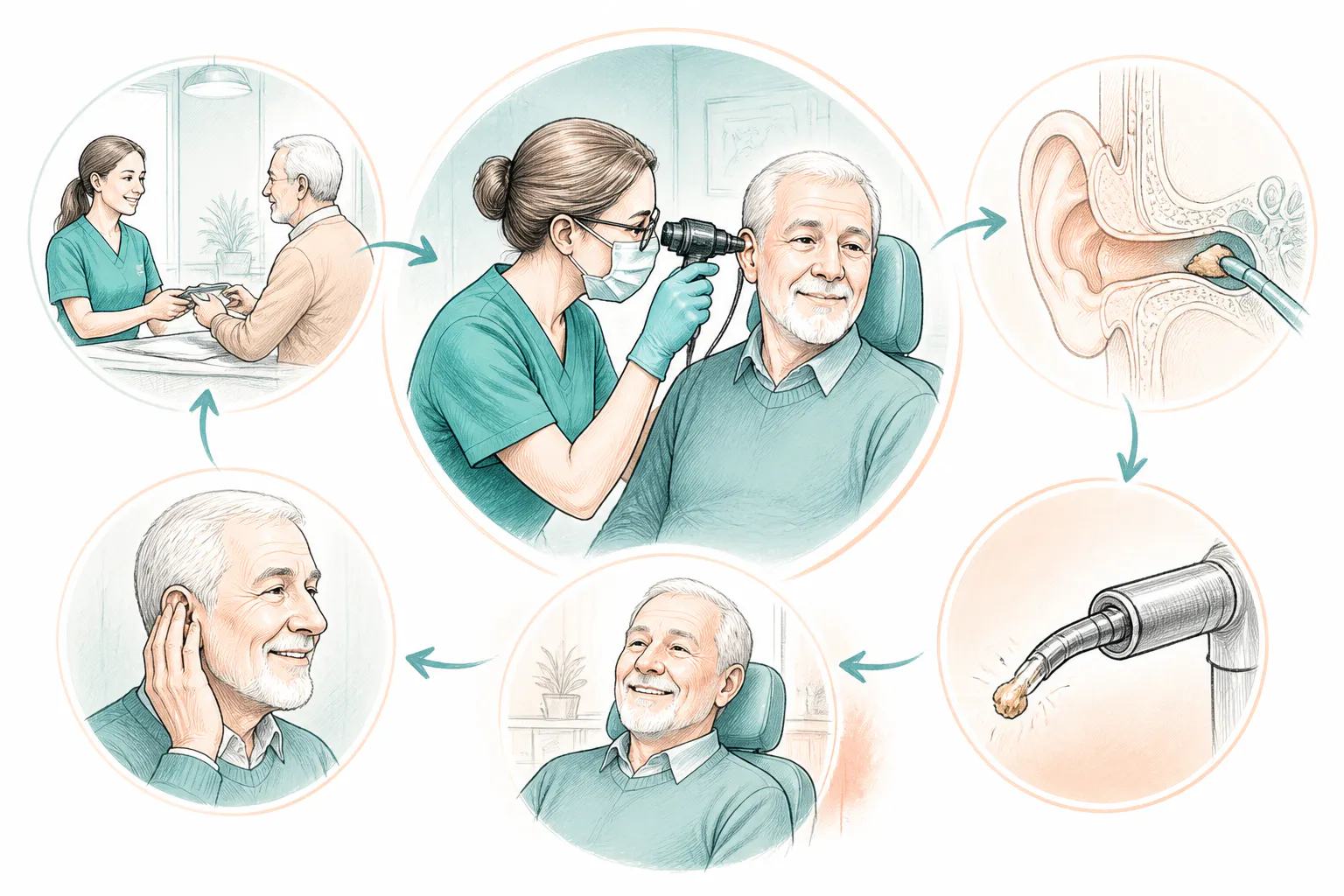
At an earwax removal clinic, the clinician will first look in your ears, ask about your symptoms, and check that it is safe to proceed. If wax is the issue, they will recommend the most appropriate removal method, often microsuction, and explain each step before treatment begins.
For many people, the appointment feels straightforward and reassuring. If the wax is very hard, if there are signs of infection, or if your ear needs a different approach, the clinician may pause treatment, soften the wax first, or advise medical review.
Table of contents
- Why people visit an earwax removal clinic
- Before your appointment: how to prepare
- What happens during the ear assessment
- Earwax removal methods you may be offered
- What the treatment feels like
- Aftercare and recovery
- Costs, appointment options, and choosing the right service
- When earwax is not the real problem
- Recommended reads and next steps
- FAQ
Why people visit an earwax removal clinic
People book an appointment for earwax removal for a wide range of reasons, but the common thread is usually a change in hearing, comfort, or day to day function. Earwax is normal and helpful, but when it builds up it can block the ear canal and cause symptoms that affect work, sleep, conversations, and safety.
Typical reasons include:
- Muffled hearing or a feeling that sounds are dulled
- A blocked, full, or pressured sensation in one or both ears
- Ringing or buzzing in the ears
- Mild discomfort, itching, or irritation
- Difficulty using hearing aids because of wax build-up
- Wax visible at the ear canal entrance or repeated blockage
- An urgent need for relief before travel, work, or an important event
Older adults often visit because earwax becomes drier and harder with age, and that can make it more likely to build up. Care home residents may need on site support because travelling is difficult. Busy families may want a fast, professional appointment that avoids weeks of waiting and repeated home remedies. People who are anxious about ear treatment often prefer a clinic because they want a calm explanation and a controlled environment.
Here is a simple guide to help you tell earwax symptoms apart from signs that may need a different kind of assessment.
Symptom pattern | Likely cause | When to seek urgent help |
|---|---|---|
Gradual blocked hearing, fullness, wax visible | Earwax build-up | If symptoms are persistent or affecting daily life, book assessment |
Itching, muffled sound, hearing aid feedback | Earwax or canal irritation | If it continues after wax removal, seek review |
Pain, discharge, fever, or worsening tenderness | Possible infection | Prompt clinical review is needed |
Sudden hearing loss, severe dizziness, or facial weakness | May be another ear or neurological issue | Seek urgent medical assessment |
If you want to understand the treatment itself before booking, our guide on How microsuction works explains the process in plain English.
Before your appointment: how to prepare
Most people do not need much preparation, but a little planning can make the visit smoother and reduce the chance that treatment has to be delayed. If you are unsure what to do before the appointment, it is always better to ask the clinic directly rather than guess.
Some clinicians may suggest softening drops before your visit, especially if the wax looks hard or dry. These drops are not always needed, and they are not suitable for everyone. For example, if you have had a perforated eardrum, ear surgery, or recurring ear infections, you should check first before placing anything in the ear.
A useful checklist for your appointment includes:
- A short list of symptoms, including when they started
- Details of any hearing aids or ear moulds you use
- Any past ear problems, infections, surgery, or perforations
- A note of pain, dizziness, discharge, or previous treatment difficulties
- Questions you want to ask, especially if you are nervous
For elderly patients or people attending with a carer, it helps to bring glasses, hearing aids, medication information, and any relevant medical paperwork. Family carers arranging treatment for a relative may also want to note whether the person has dementia, mobility issues, or communication needs so the clinic can support them properly.
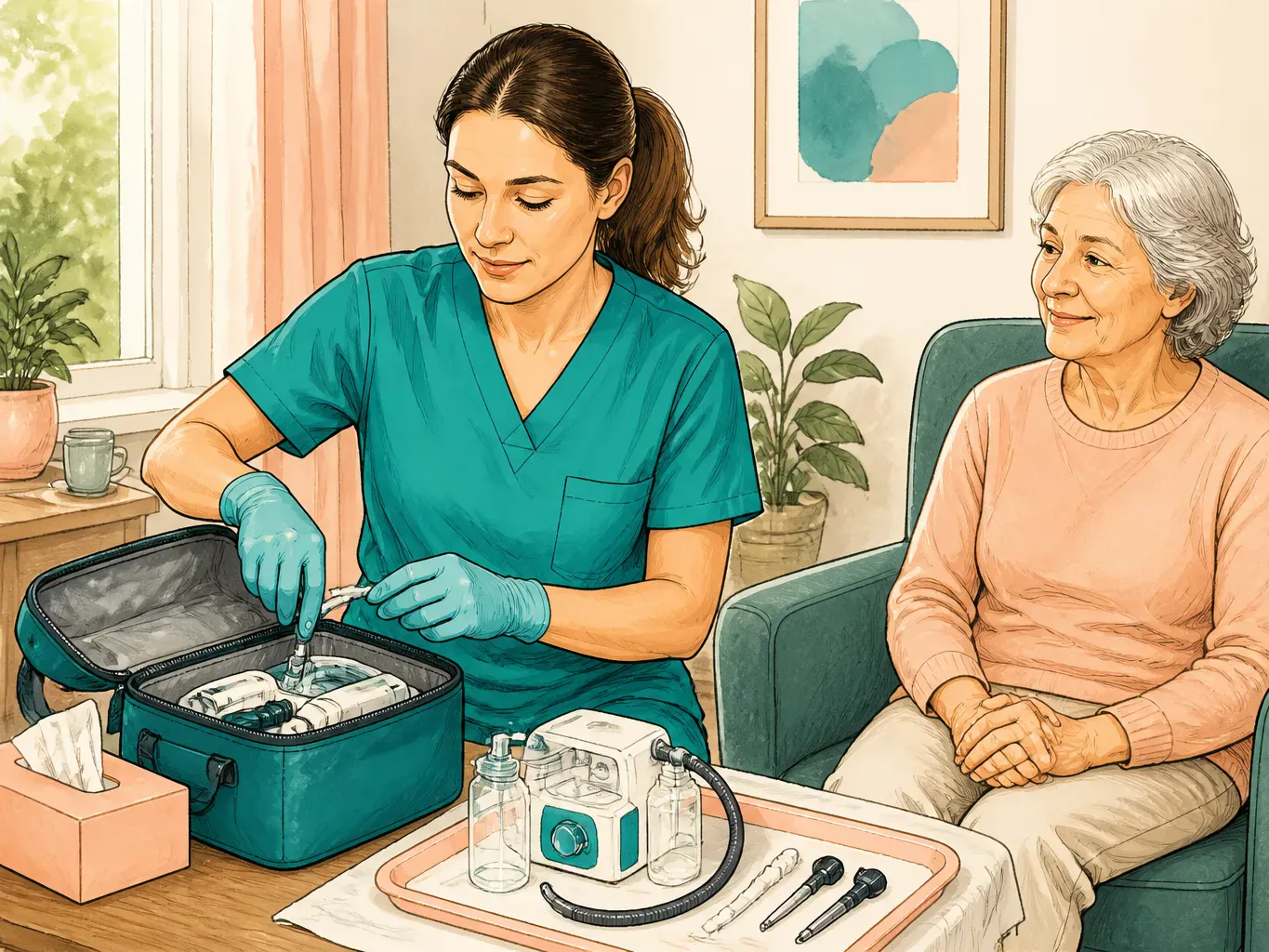
If you are arranging a home visit, make sure the space is well lit, safe to access, and quiet enough for the clinician to examine the ears comfortably. For same day care, have your calendar and transport plan ready so you can attend without rushing.
You may also find these service pages useful if you are comparing appointment types: Microsuction ear wax removal, Home visit earwax removal in Bristol, and Same day earwax removal.
What happens during the ear assessment
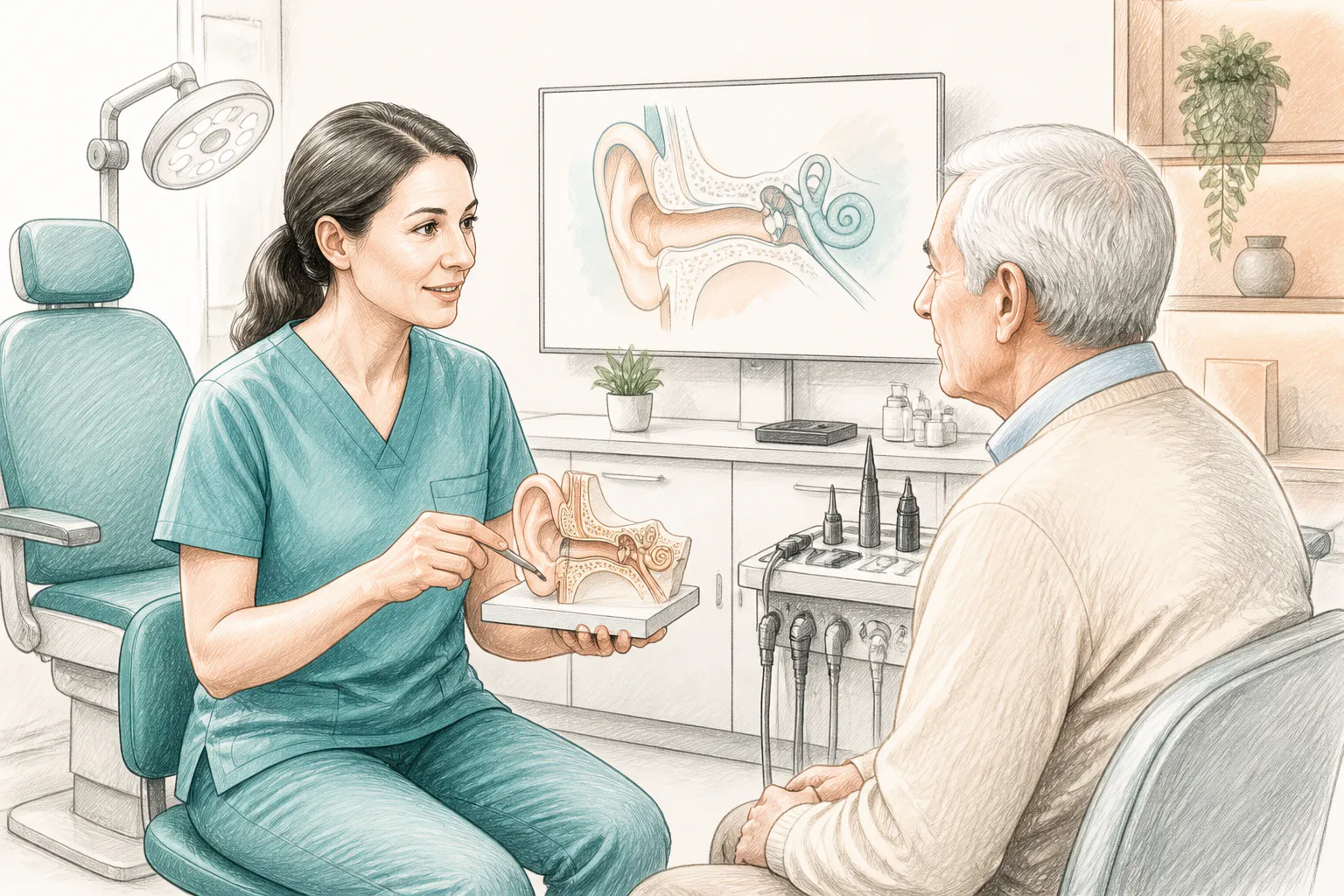
The first part of the visit is about safety, not treatment. A good earwax removal clinic will take a careful history before using any equipment, because not every blocked ear is suitable for immediate removal.
The clinician will usually ask questions such as:
- What symptoms are you having?
- Is the blockage in one ear or both?
- Have you had any recent ear infections?
- Do you have pain, discharge, dizziness, or reduced balance?
- Have you ever had a perforated eardrum or ear surgery?
- Do you use hearing aids, earplugs, or ear moulds?
- Have you tried softening drops already?
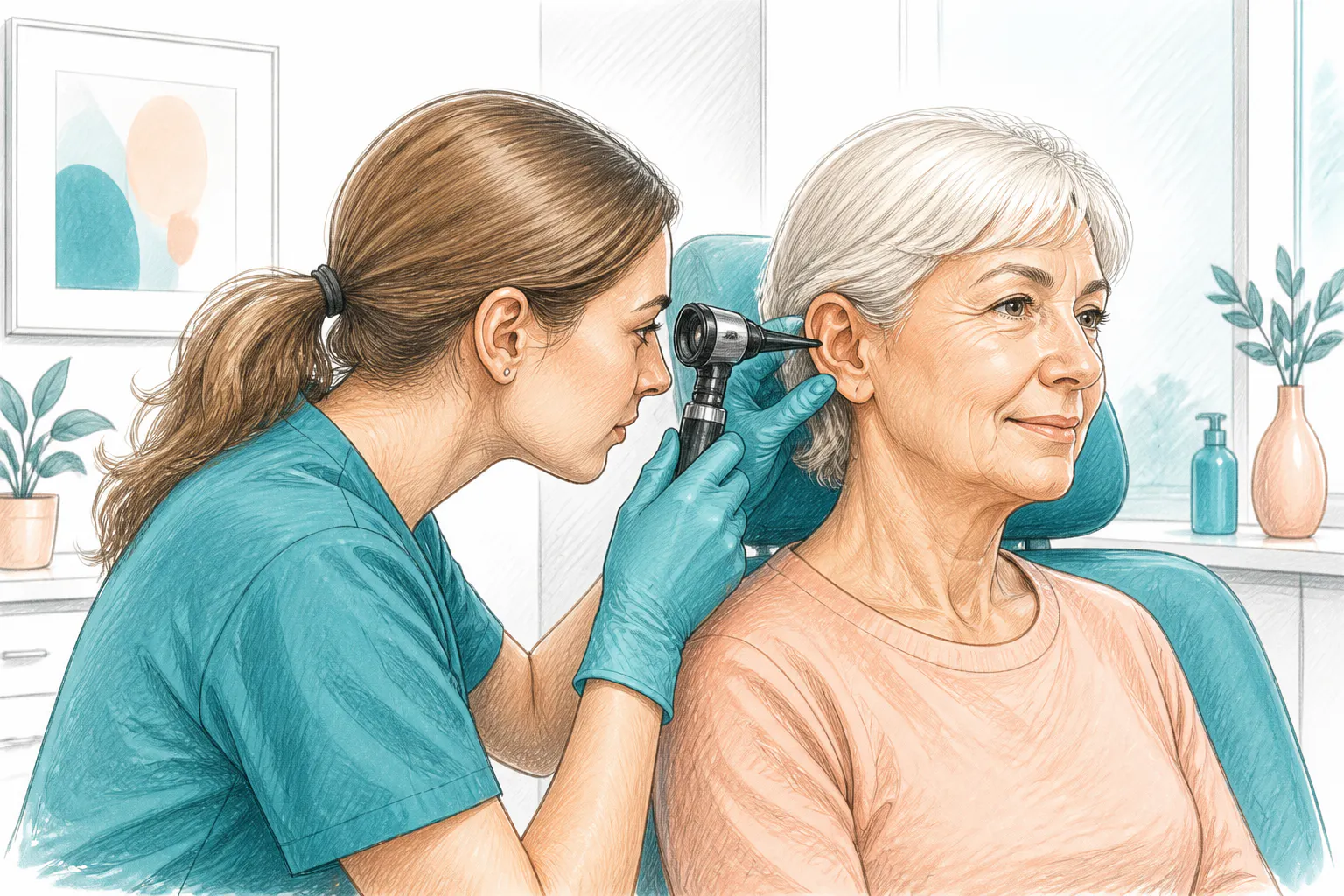
After that, the clinician will look into the ear using an otoscope or a microscope. This lets them see the ear canal and the earwax more clearly. The exam is usually quick, and while the bright light or close examination can feel a little unusual, it should not be painful.
The purpose of the assessment is to answer three questions:
- Is wax actually causing the problem?
- Is it safe to remove today?
- Which method is likely to be the gentlest and most effective?
If the canal is narrow, very inflamed, or full of hard wax, the clinician may choose a slower approach or ask you to use softening drops first. If they see signs of infection, an eardrum problem, or something else that needs medical attention, they should not simply carry on as if it were routine wax.
This cautious approach is one reason specialist clinics are often helpful. Rather than jumping straight to a procedure, the clinician matches the method to the ear in front of them.
Earwax removal methods you may be offered
There are a few different ways to remove wax, and the right choice depends on your ears, your symptoms, and the clinic’s clinical judgement. A specialist earwax removal clinic will explain the options clearly so you know what to expect.
The most common methods are microsuction, irrigation, and manual removal.
Method | Comfort | Suitability | Speed | Risks and considerations | Best for |
|---|---|---|---|---|---|
Microsuction | Usually very well tolerated, though the suction sound can feel strange | Suitable for many patients, including those with a perforation history or who should avoid water | Often quick once the wax is visible | Can cause brief noise sensitivity or mild irritation | Hard wax, sensitive ears, many specialist clinic cases |
Irrigation | Can feel warm or wet, and some people find it less comfortable | Not suitable for everyone, especially with certain ear conditions | Can be effective, but may take more preparation | Water use may not be appropriate in all cases | Selected patients with suitable ear health |
Manual removal | Usually done with fine instruments under good visualisation | Useful when wax is near the opening or when precise removal is needed | Can be efficient in experienced hands | Requires steady technique and suitable access | Small amounts of accessible wax |
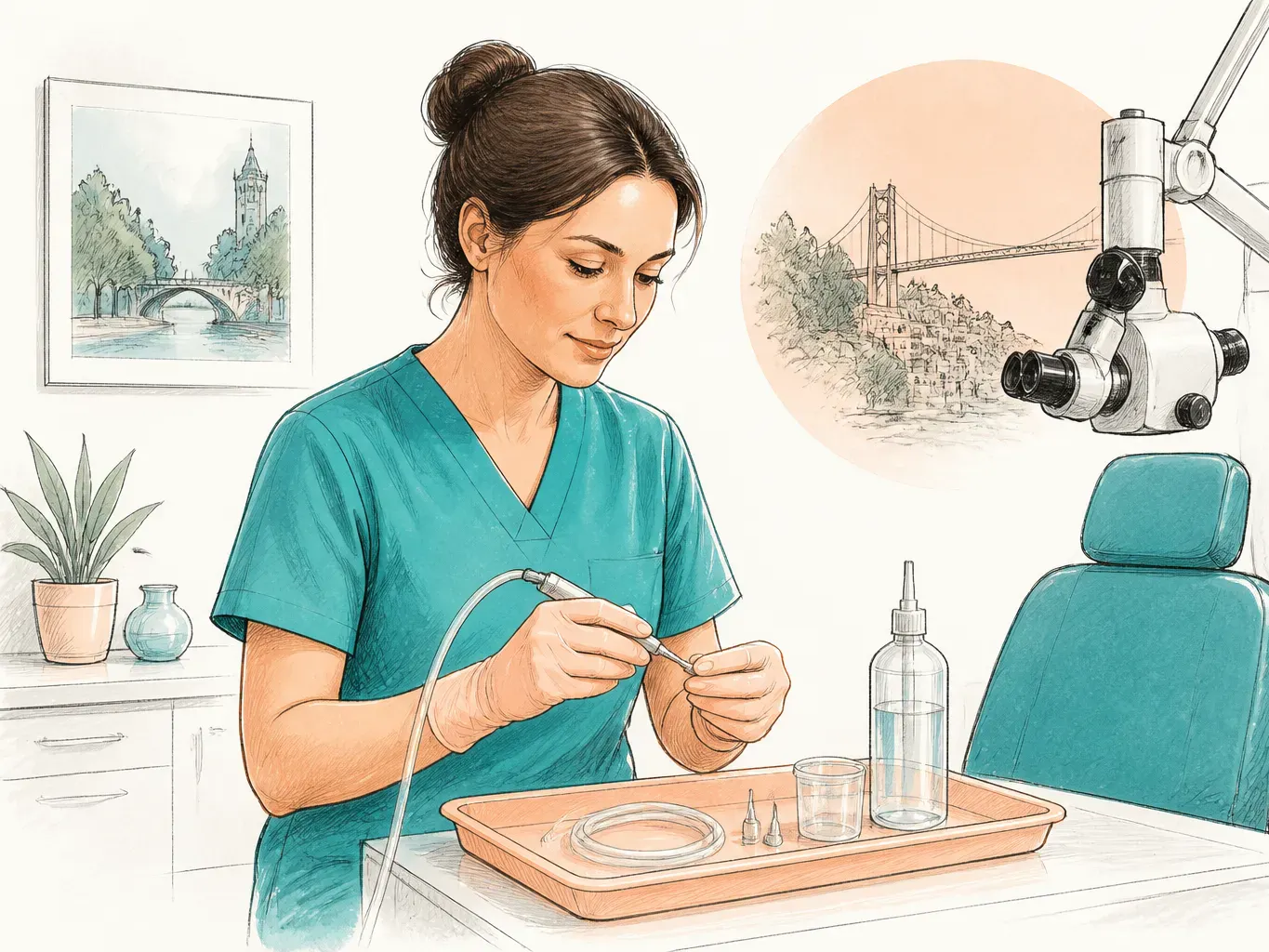
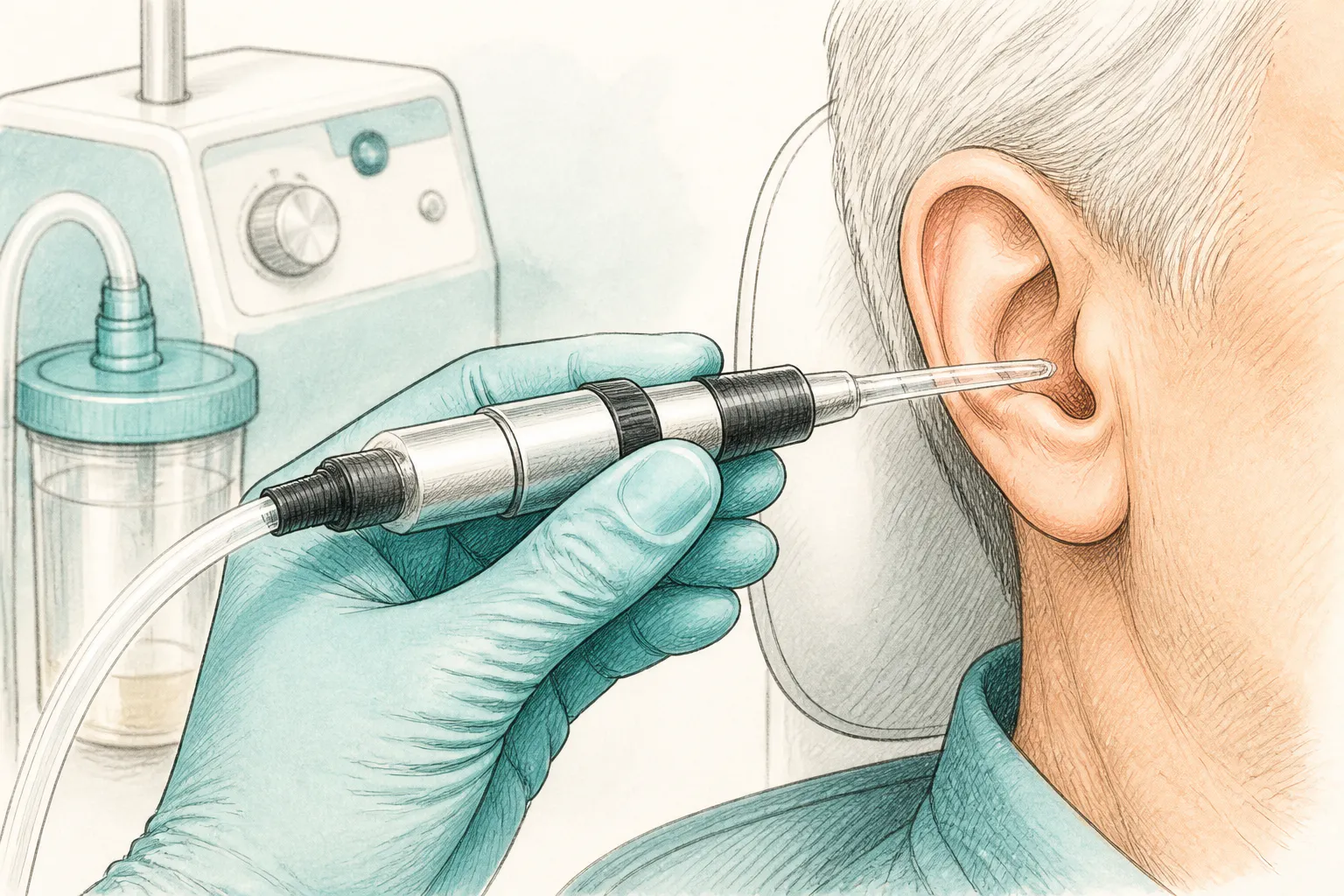
Microsuction is commonly used in specialist clinics because it allows the clinician to see the ear canal throughout the procedure. That visibility is valuable when the ear is delicate, when the wax is hard, or when the clinician wants to avoid introducing water. It is also a practical option for many first time patients who want a clean, controlled approach.
Irrigation may still be appropriate for some people, but it is not automatically the best choice. Factors such as a perforated eardrum, previous ear surgery, active infection, or certain skin conditions can make water based treatment less suitable. If you want to understand the technique in more detail, see How microsuction works.
What the treatment feels like
Many first time patients worry that earwax removal will hurt. In reality, the experience is usually more odd than painful. Knowing what the sensations may feel like can make the appointment much easier to handle.
With microsuction, you may hear a suction noise close to the ear. Some people describe it as a light rushing sound. You might feel gentle pressure changes, a tickling sensation, or the vibration of the device nearby. If the wax is close to the eardrum or the ear canal is sensitive, you might notice brief moments of discomfort, but the clinician should be able to pause and adjust.
If another method is used, the sensations will differ. Irrigation can feel like warm water moving through the ear, while manual removal may create a sense of gentle touch or movement. In every case, the appointment should be explained as it goes, particularly if you are anxious.
A good clinician will:
- Tell you what they are doing before they start
- Check whether you are comfortable as they work
- Pause if you feel pain or dizziness
- Stop if the ear looks too inflamed or unsafe to continue
The treatment itself is usually quite quick. Some patients notice an immediate improvement in hearing once the wax clears, while others feel slightly blocked for a short time because the canal is a little irritated or because there is residual debris. Both can be normal for a short period.
For anxious patients, it can help to know that you are not expected to keep still without communication. You can ask questions, request a pause, or say if the sensation feels too much. Specialist care should feel reassuring, not rushed.
Aftercare and recovery
After treatment, the goal is to let the ear settle and to make sure no other issue is hiding behind the wax. Most people can go back to normal activities quickly, but it is still sensible to follow the clinician’s advice carefully.
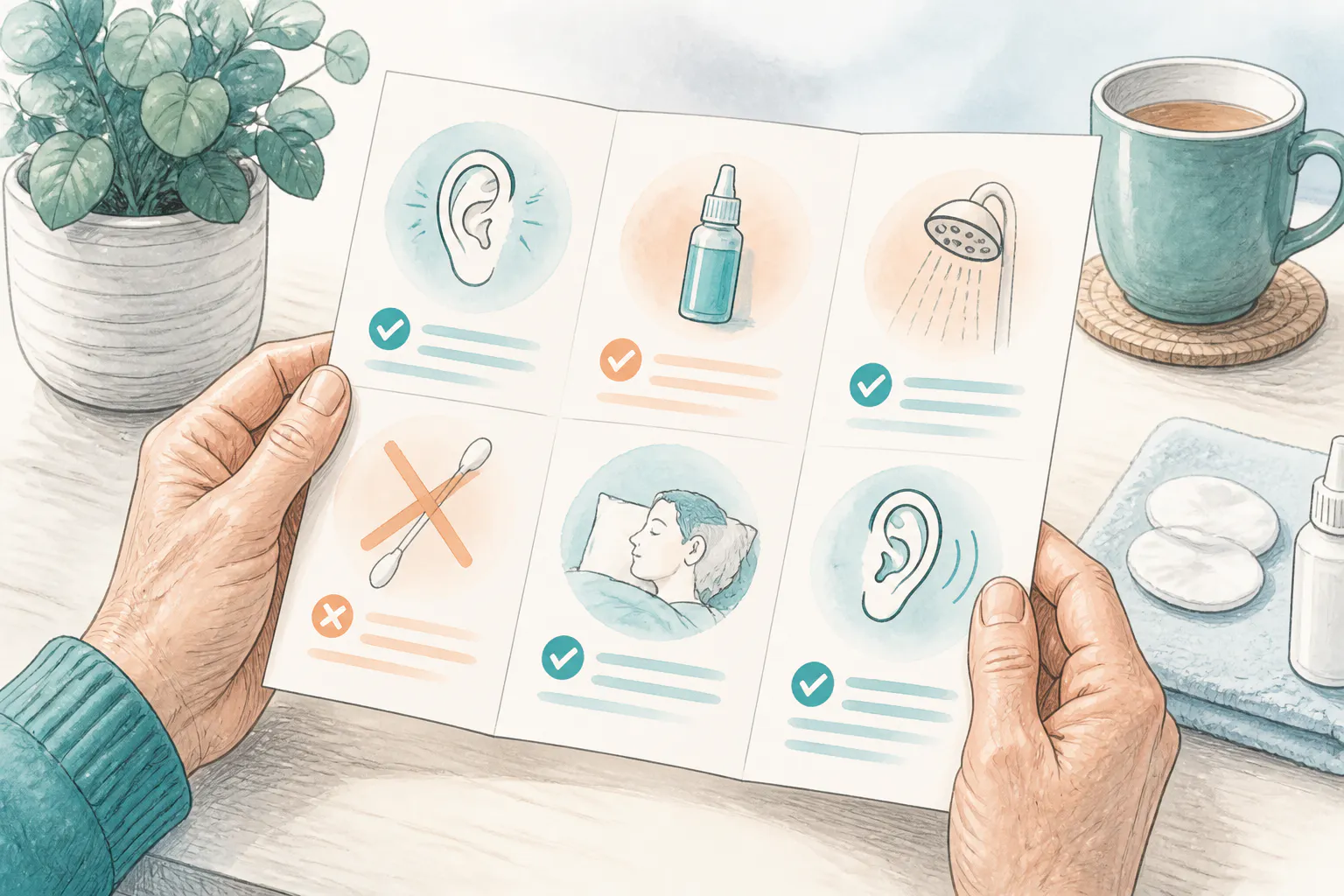
Common aftercare advice includes:
- Keep the ears dry if you are told to do so
- Avoid putting cotton buds or other objects into the ear canal
- Use any recommended drops exactly as directed
- Monitor for lingering soreness or a slightly full feeling
- Return for review if symptoms do not improve as expected
Many people hear better straight away, especially if the blockage was the main cause of their symptoms. Others need a little longer because the ear canal has been irritated or because the wax had been pressing against the skin for a while. A short period of sensitivity does not always mean something is wrong.
However, there are some signs that should not be ignored:
- Persistent pain that is getting worse
- Ongoing discharge or bleeding
- Marked dizziness or balance problems
- No improvement in hearing after the ear has been cleared
- Fever or signs of infection
If any of these occur, it is sensible to contact the clinic or seek medical advice promptly. If you have been asked to use softening drops before a future visit, do so only as advised and only if it is safe for your ears.
For many patients, especially those who have struggled with blocked ears for weeks, the relief after treatment can be surprisingly immediate. That can be particularly helpful for hearing aid users, people who need to hear clearly at work, and older adults who have felt isolated by muffled hearing.
Costs, appointment options, and choosing the right service
People often want to know what affects the price of earwax removal and whether a clinic appointment, home visit, or same day service is best. The answer depends on the level of care needed, how quickly you want treatment, and how easy it is for you to travel.
Pricing can vary depending on:
- Whether you need one ear or both ears treated
- The appointment type, such as in clinic or at home
- Whether the wax is straightforward or more complex to remove
- Extra time needed for assessment or aftercare guidance
- Accessibility needs or travel requirements
For many people, an in clinic appointment is the simplest option. Clinics are usually well equipped, allow better lighting and access, and can be ideal when the patient is comfortable travelling.
A home visit can be especially useful for:
- Elderly clients who find travel tiring
- Care home residents who need on site support
- People with mobility limitations
- Patients who prefer treatment in a familiar environment
Same day access can be valuable if you need immediate relief because of blocked hearing, work demands, or an upcoming event. It can also be useful when a hearing aid user suddenly loses sound quality and needs fast support.
The table below gives a practical comparison of service types.
Service option | Convenience | Best for | Typical advantage | Things to consider |
|---|---|---|---|---|
In clinic | High for those who can travel | General adult patients, first time visits | Best equipment and controlled setting | Requires travel and appointment planning |
Home visit | Very high for those with mobility or care needs | Elderly clients, care home residents, anxious patients | Treatment in familiar surroundings | Needs suitable space and access |
Same day appointment | High when symptoms are urgent | People needing immediate relief | Fast access and reduced waiting | Availability may vary |
If you are not sure which route to choose, think about who needs the appointment most, how quickly you want relief, and whether the ear problem is affecting hearing, safety, or daily care. A specialist team should be able to help you decide.
When earwax is not the real problem
Blocked ears are often caused by earwax, but not always. This is one reason a proper assessment matters. If symptoms suggest another issue, removing wax without checking first could delay the right treatment.
Symptoms that may point to something else include:
- Sudden hearing loss, especially if it came on quickly
- Severe ear pain or tenderness
- Discharge that looks pus like or smells unpleasant
- Fever, feeling unwell, or swelling around the ear
- Persistent dizziness or spinning sensations
- Eczema like itching and flaking in the ear canal
- A known perforated eardrum or recent ear surgery
In some cases, the ear canal may be inflamed rather than blocked, or the symptoms may come from the middle or inner ear. That is why trusted resources such as the NHS guidance on earwax build-up and NICE guidance on hearing loss in adults are useful starting points for understanding when professional assessment is important.
The British Society of Audiology guidance on earwax management also supports careful, evidence based care, and the Royal College of General Practitioners information on ear care is helpful when thinking about broader ear health.
If symptoms feel severe, unusual, or sudden, do not assume wax is the whole story. A proper assessment protects you from having the wrong treatment at the wrong time.
Recommended reads and next steps
If you are still deciding what to do, the best next step is usually to read a little more about the treatment method and the type of appointment that suits your situation. A calm, informed choice tends to reduce anxiety and makes the visit feel easier.
You may find these articles and service pages useful:
- How microsuction works
- Microsuction ear wax removal
- Home visit earwax removal in Bristol
- Same day earwax removal
Other helpful reading topics include whether earwax removal hurts, how to spot blocked ear symptoms, and what to expect if you wear hearing aids. Those subjects often come up together because earwax, hearing comfort, and daily communication are closely linked.
From my perspective, the most reassuring part of specialist earwax care is that the appointment is usually more straightforward than patients expect. With the right assessment, a gentle technique, and clear aftercare advice, many people leave feeling lighter, clearer, and more confident about their hearing.
FAQ
What happens at an earwax removal clinic appointment?
The clinician usually starts with a short discussion about your symptoms and medical history, then examines your ears to confirm that wax is the problem and that removal is safe. If treatment is suitable, they will remove the wax using the most appropriate method and explain aftercare before you leave.
Is earwax removal painful?
It should not be painful, although it can feel unusual. Some people notice suction sounds, pressure changes, or brief sensitivity, especially if the wax is hard or the canal is tender. The clinician should stop or adjust the treatment if you feel pain.
How long does an earwax removal appointment take?
Many appointments take only a short time, often around 15 to 30 minutes, although this can vary depending on how much wax is present, whether both ears need treatment, and how complex the assessment is. Home visits or more difficult cases may take longer.
Which earwax removal method is best: microsuction or irrigation?
Neither method is automatically best for everyone. Microsuction is often preferred in specialist clinics because it allows good visibility and does not use water, while irrigation may suit some patients with healthy ears. The safest choice depends on your ear health, history, and symptoms.
Do I need to soften my earwax before the appointment?
Sometimes softening drops help, but not always. A clinician may advise them if the wax is hard or dry, but they are not suitable for every ear condition. Always check first if you have had surgery, a perforation, recurring infections, or discharge.
When should I avoid earwax removal and see a clinician first?
You should seek assessment before removal if you have severe pain, discharge, sudden hearing loss, dizziness, a perforated eardrum, recent ear surgery, or signs of infection. In those cases, wax may not be the main problem, and removing it without review could be unsafe.