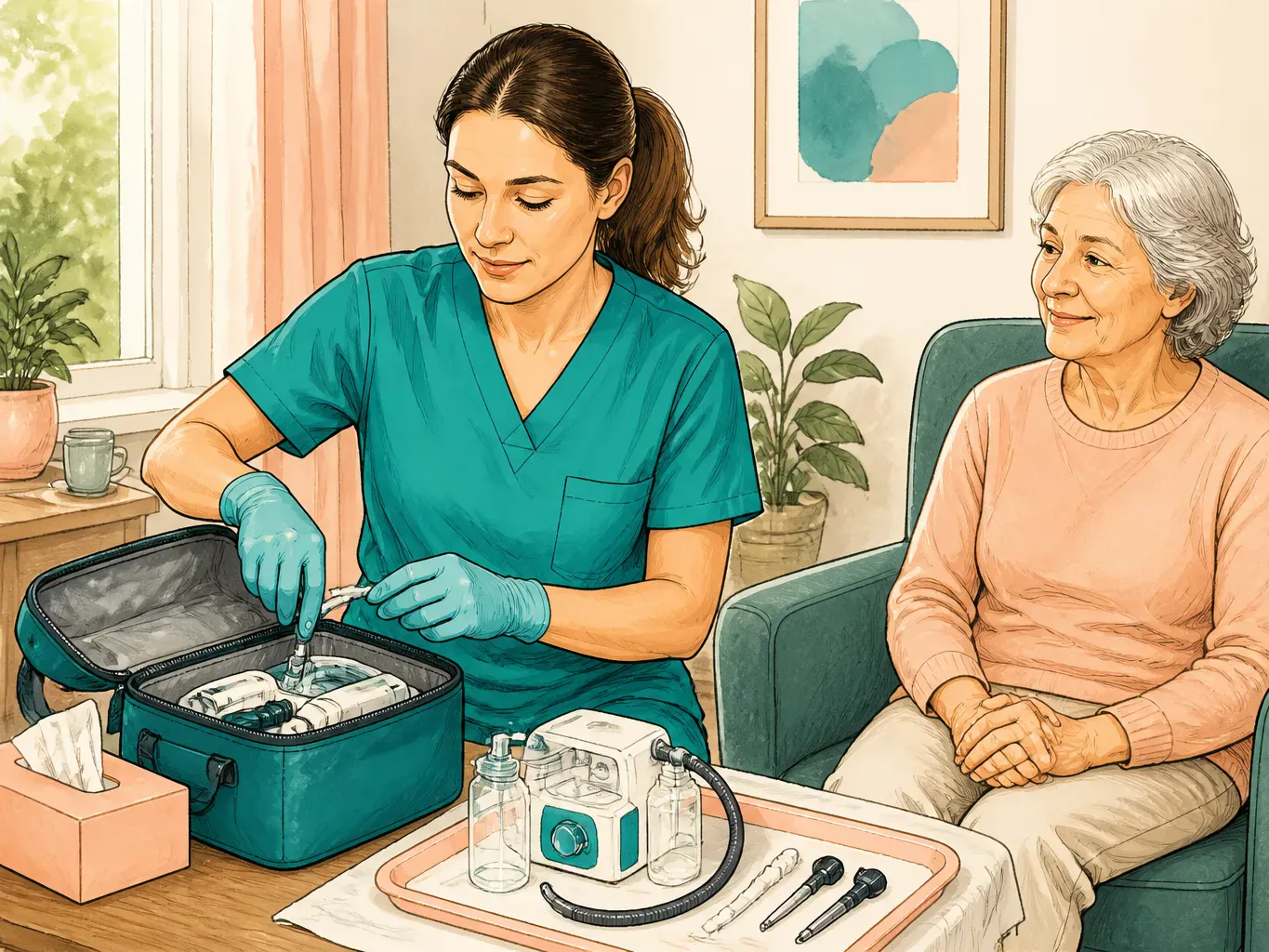
A home visit ear wax removal appointment is a clinician-led service carried out in your own home, care home room, or another suitable private setting. It usually includes an ear assessment, discussion of symptoms, safe wax removal where appropriate, and clear aftercare advice, making it a practical option for older adults, people with limited mobility, busy families, and anyone who feels more comfortable being treated at home.
Quick summary
If you have been searching for home visit ear wax removal near me, the main thing to know is that the appointment is designed to bring safe, professional ear care to you. A clinician comes equipped to assess your ears, remove wax if it is suitable to do so, and explain what to expect afterwards.
For many people, the appeal is simple: less travel, less stress, and care delivered in a familiar environment. That is especially helpful for elderly clients, care home residents, patients who are anxious about treatment, and anyone who needs a more convenient route to relief.
What a home visit ear wax removal appointment is
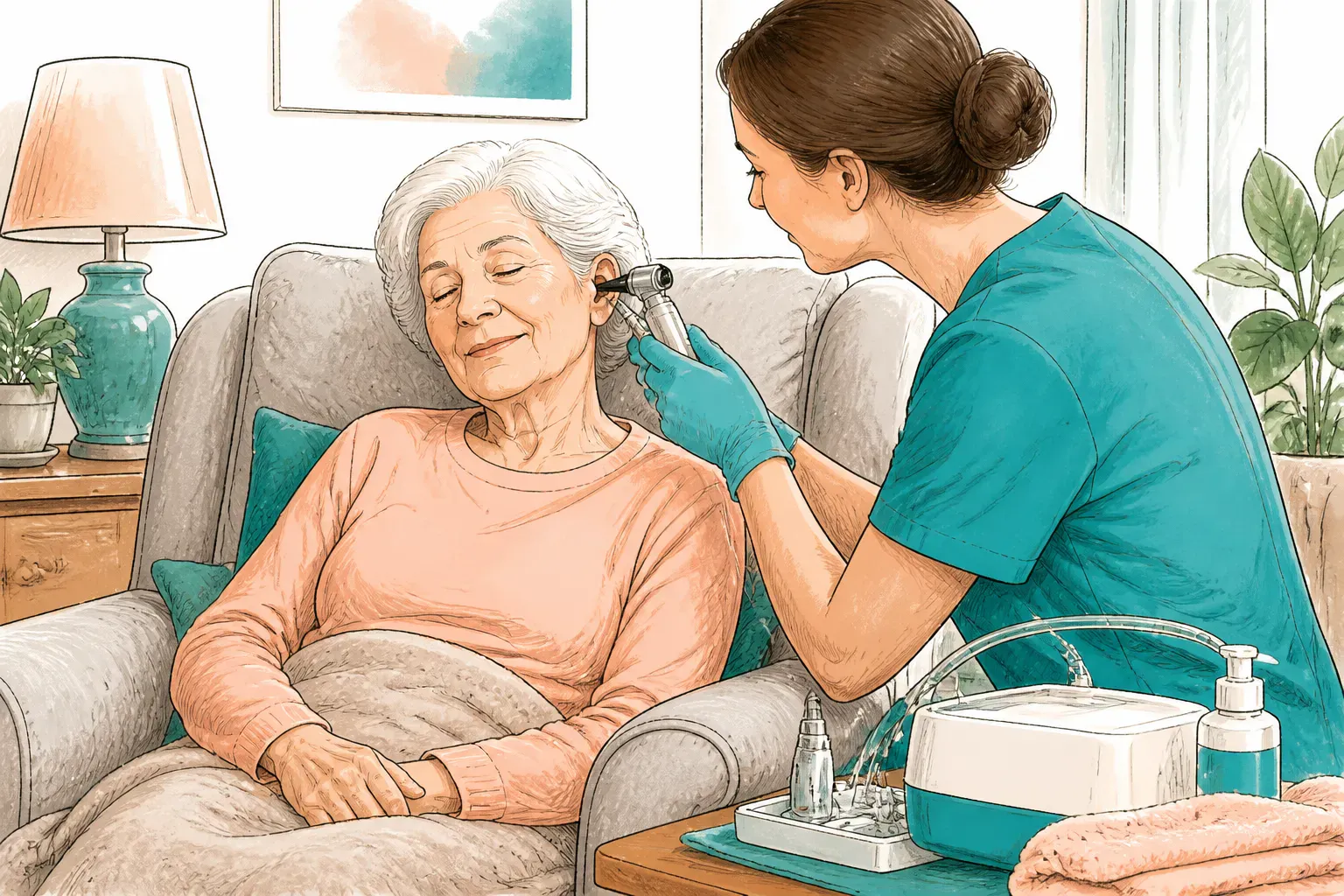
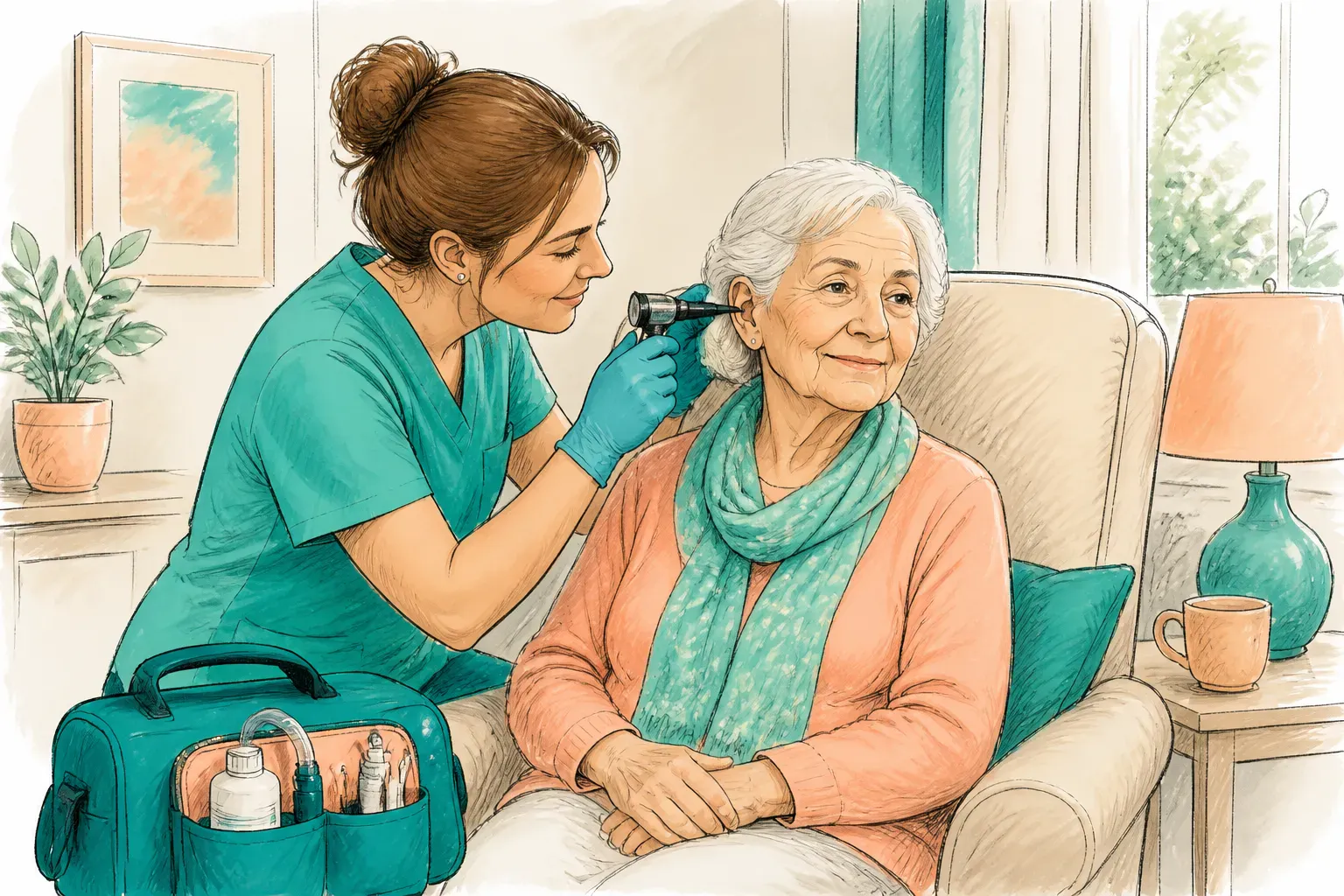
A home visit ear wax removal appointment is a private ear care service carried out outside a clinic setting. Instead of travelling to a practice, you are seen in your own home or in another appropriate location, such as a care home room or private bedroom space.
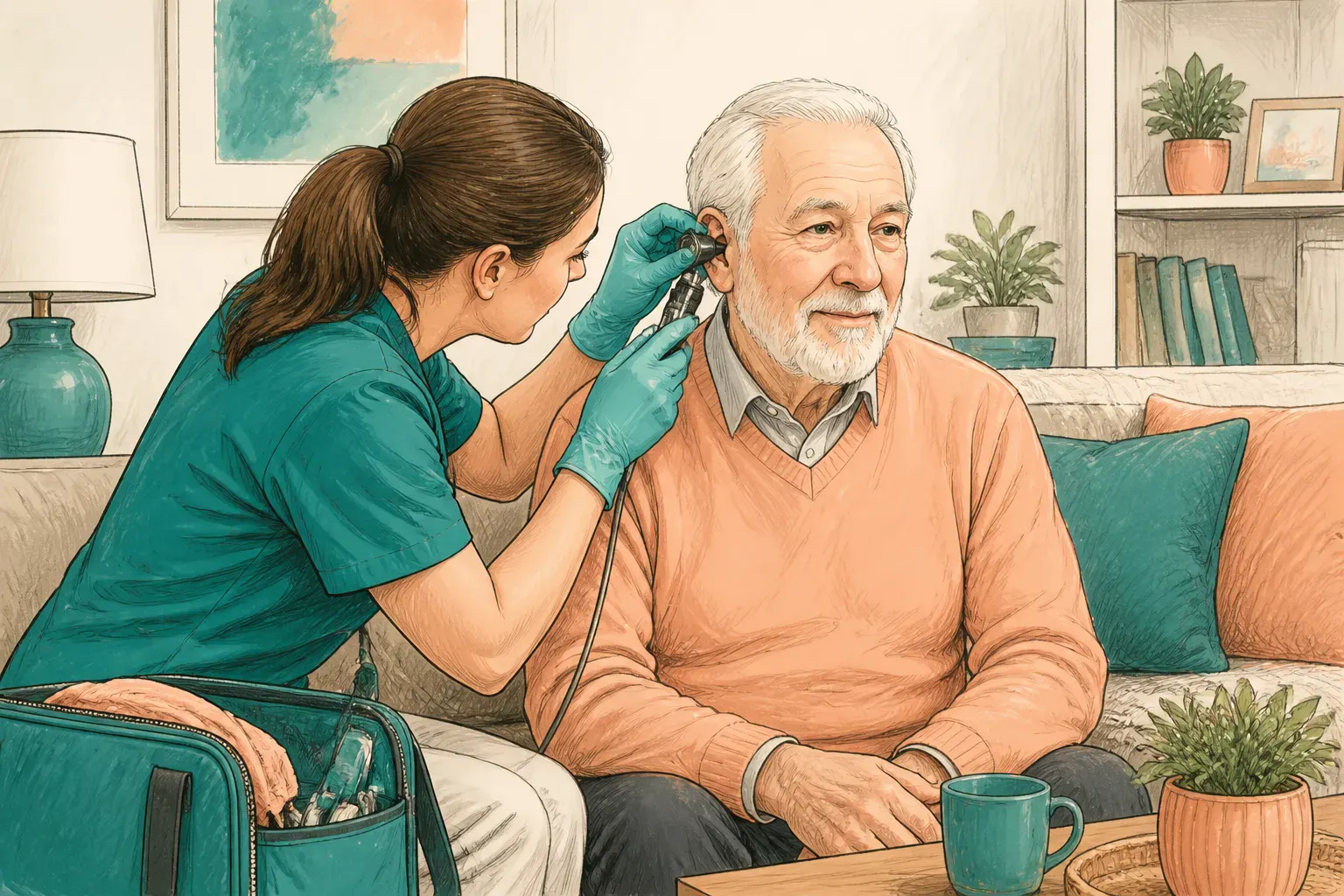
The principle is the same as a clinic appointment. The clinician assesses your ears, checks your symptoms, explains the likely cause of the problem, and decides whether wax removal is the right next step. The difference is the setting. With a home visit, the clinician brings the equipment, sets up safely, and works around your comfort and surroundings.
For many people, that setting makes a real difference. Some patients find clinics busy or difficult to access. Others prefer being treated in familiar surroundings where they can sit comfortably, take breaks if needed, and avoid the stress of transport or waiting rooms. For people with hearing loss, mobility issues, dementia, anxiety, or reduced stamina, that reassurance can be just as important as the treatment itself.
At Pro Ear Clinic, the focus is on careful, evidence based ear care delivered in a calm and respectful way. The goal is not only to remove wax, but also to make sure the patient understands what is happening and feels supported throughout the appointment.
Who is this service suitable for
Home visit ear wax removal is often a good fit for people who would benefit from care being brought to them. That includes older adults, people with mobility difficulties, busy households, residents of care homes, and patients who need a gentler experience than they would feel in a busy clinic.
It can be especially helpful for:
- Elderly clients who find travel tiring or difficult
- Care home residents who need on site treatment
- People with limited transport options or no easy access to a clinic
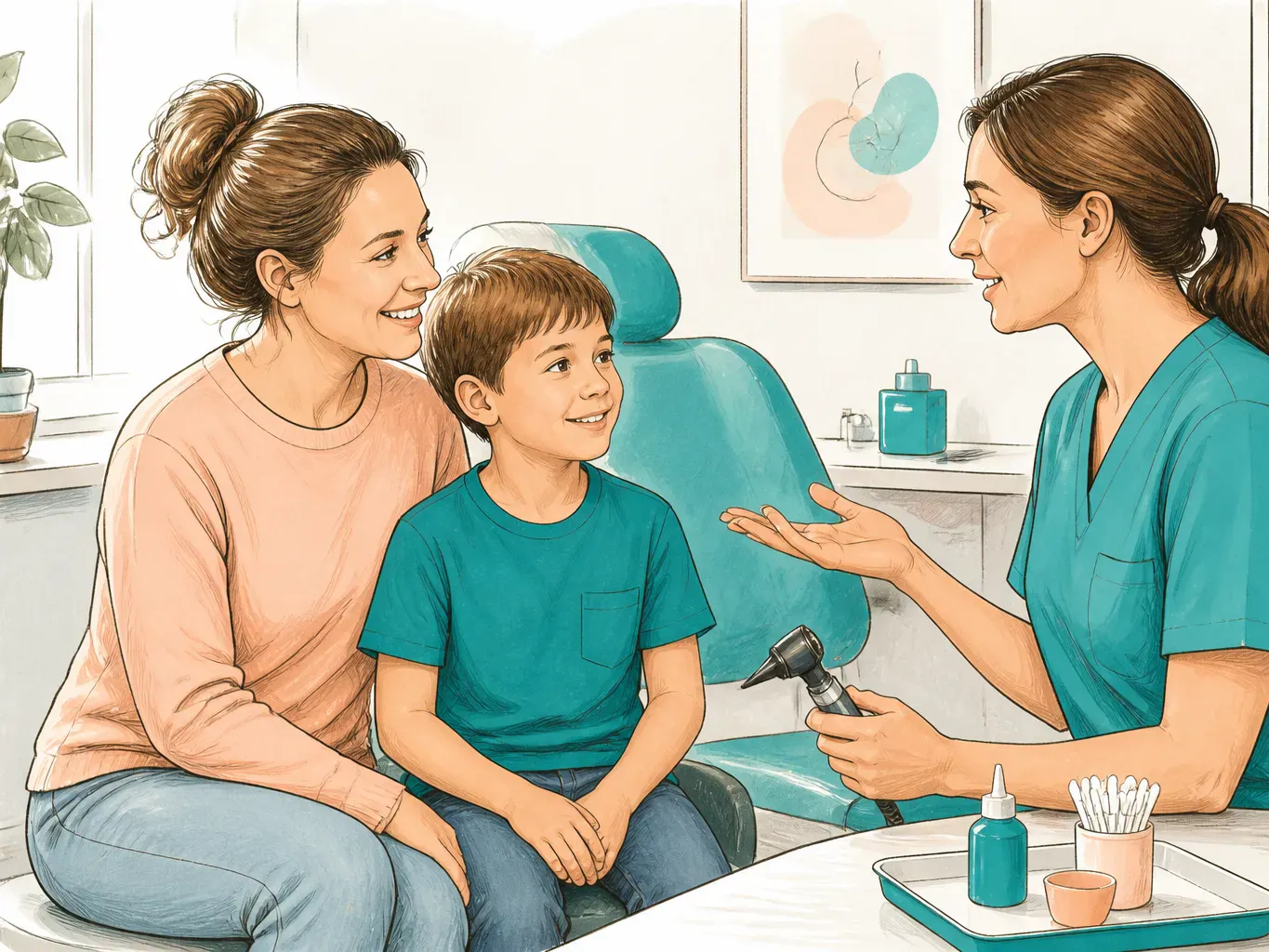
- Busy families who want a convenient appointment without taking time out for travel
- Anxious patients who feel more relaxed in a familiar environment
- Patients who need prompt relief from blocked ears and want a straightforward appointment
That said, suitability is not only about convenience. It also depends on the ear symptoms, your medical history, and whether a home environment is appropriate for safe treatment. Some ear problems need a closer assessment before wax removal can begin. In those situations, the clinician may recommend a different approach or advise that you attend a full ear health assessment first.
This is where professional judgement matters. A good home visit service should never treat wax removal as automatic. It should always begin with a proper check of the ears and a careful conversation about what is going on.
What happens before the appointment
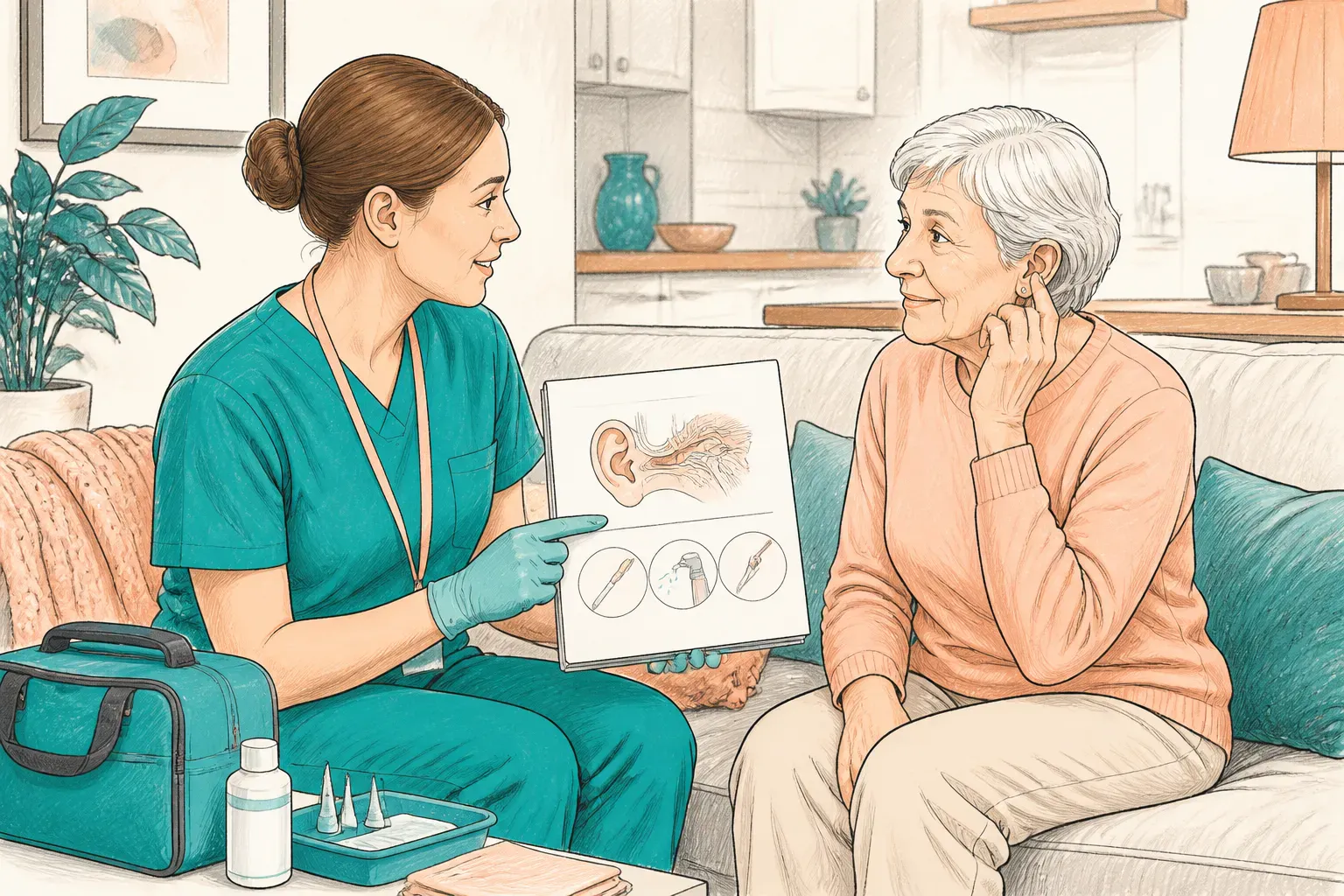
The booking process usually starts with a short discussion about your symptoms, general ear health, and where the appointment will take place. You may be asked whether you have pain, discharge, dizziness, hearing changes, previous ear surgery, a perforated eardrum, or hearing aids. These details help the clinician decide whether a home visit is suitable and what equipment may be needed.
If earwax softening is appropriate, you may be given advice on how to prepare before the visit. This is not always needed, and it depends on the individual case. The aim is to make removal easier and more comfortable if the clinician feels it is clinically sensible.
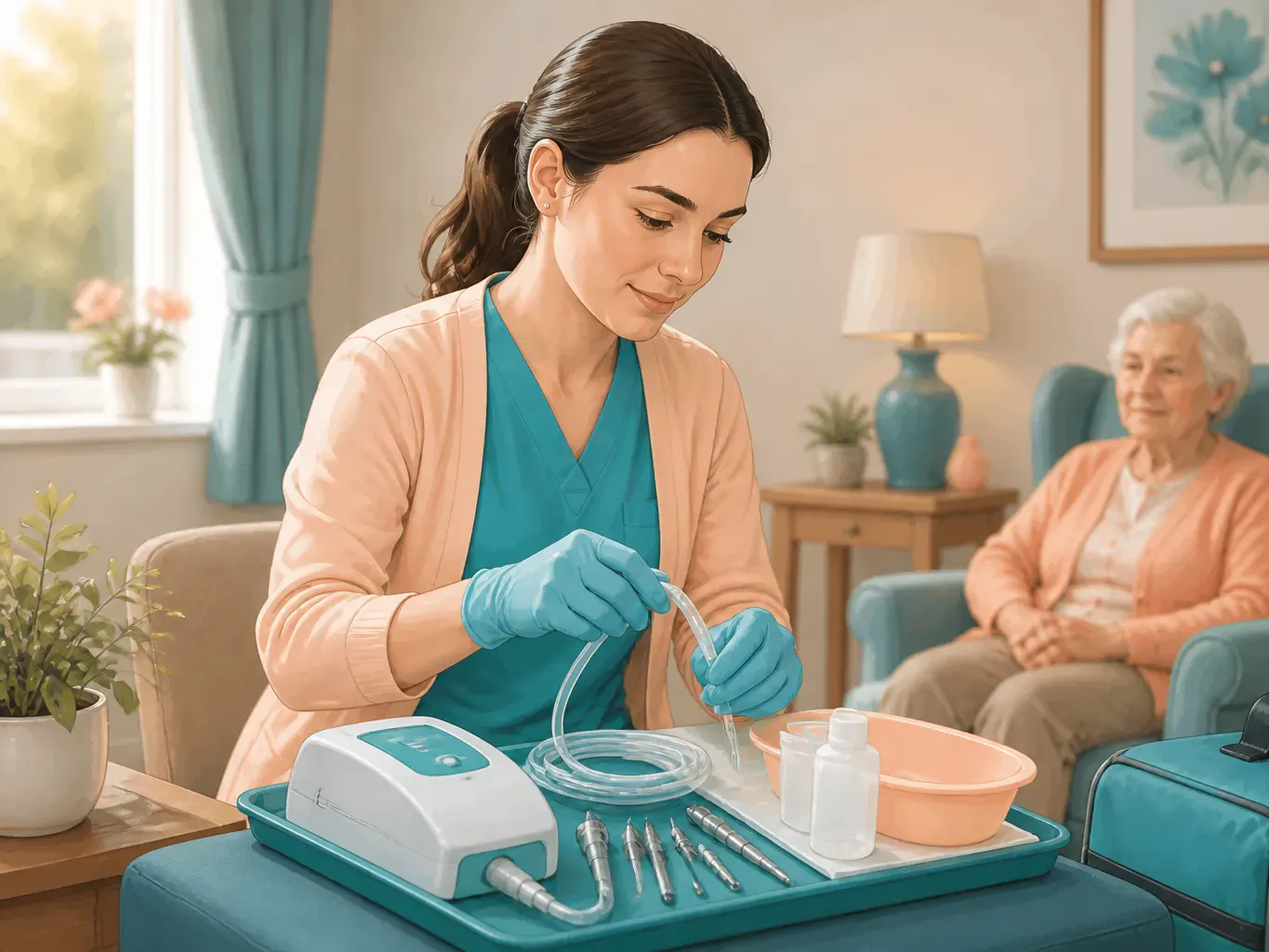
A little preparation at home can help the appointment run smoothly. A quiet, well lit room is useful, along with a sturdy chair and a small table or surface for equipment. If the patient is in a care home, staff can help by making sure the room is ready and the patient is comfortable.
From my perspective, the best home visits are the ones where everyone knows what will happen before the clinician arrives. When a patient and family member understand the steps in advance, the atmosphere tends to be calmer, the appointment feels more personal, and there is less worry on the day.
What to expect during the home visit
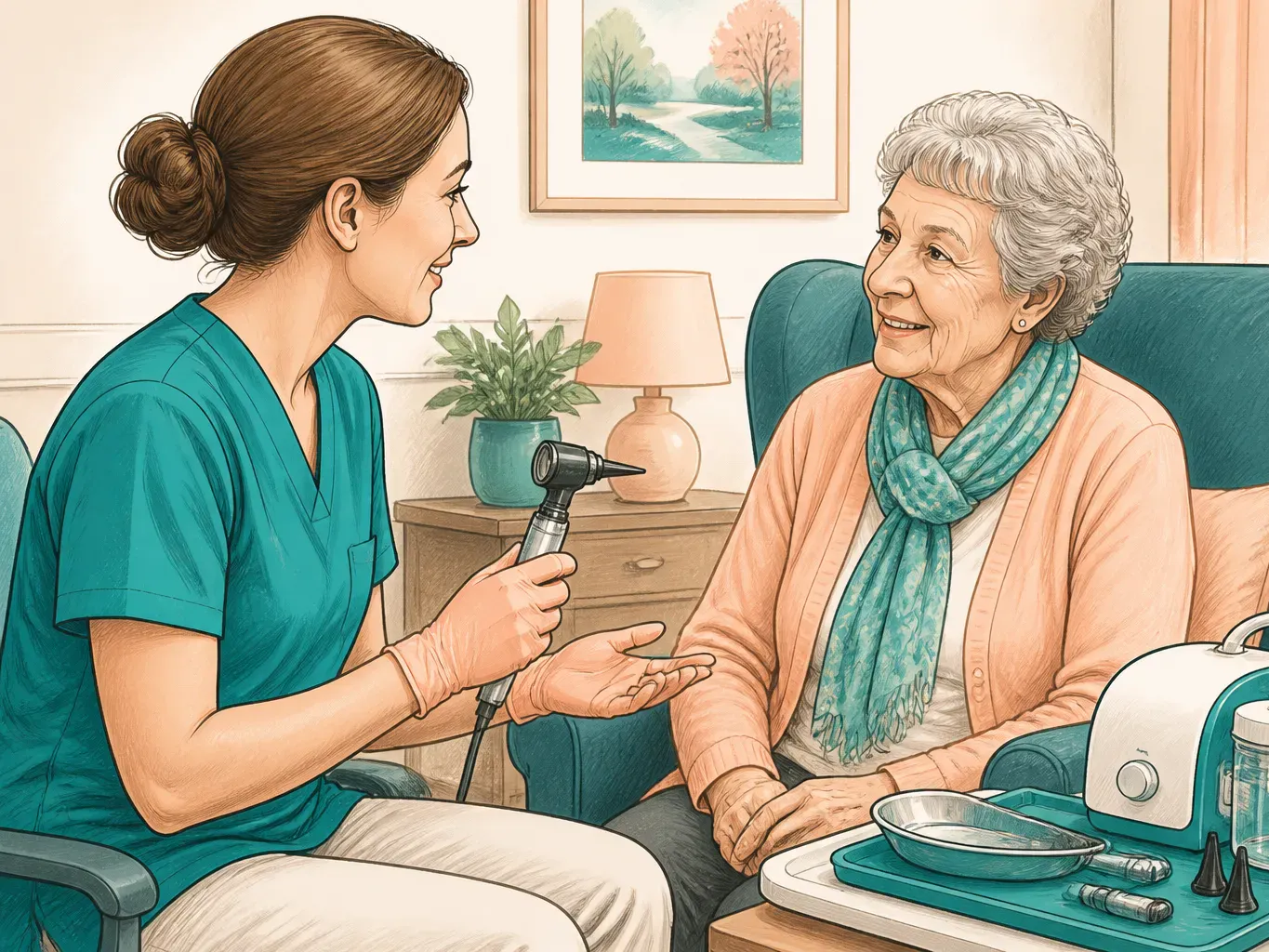
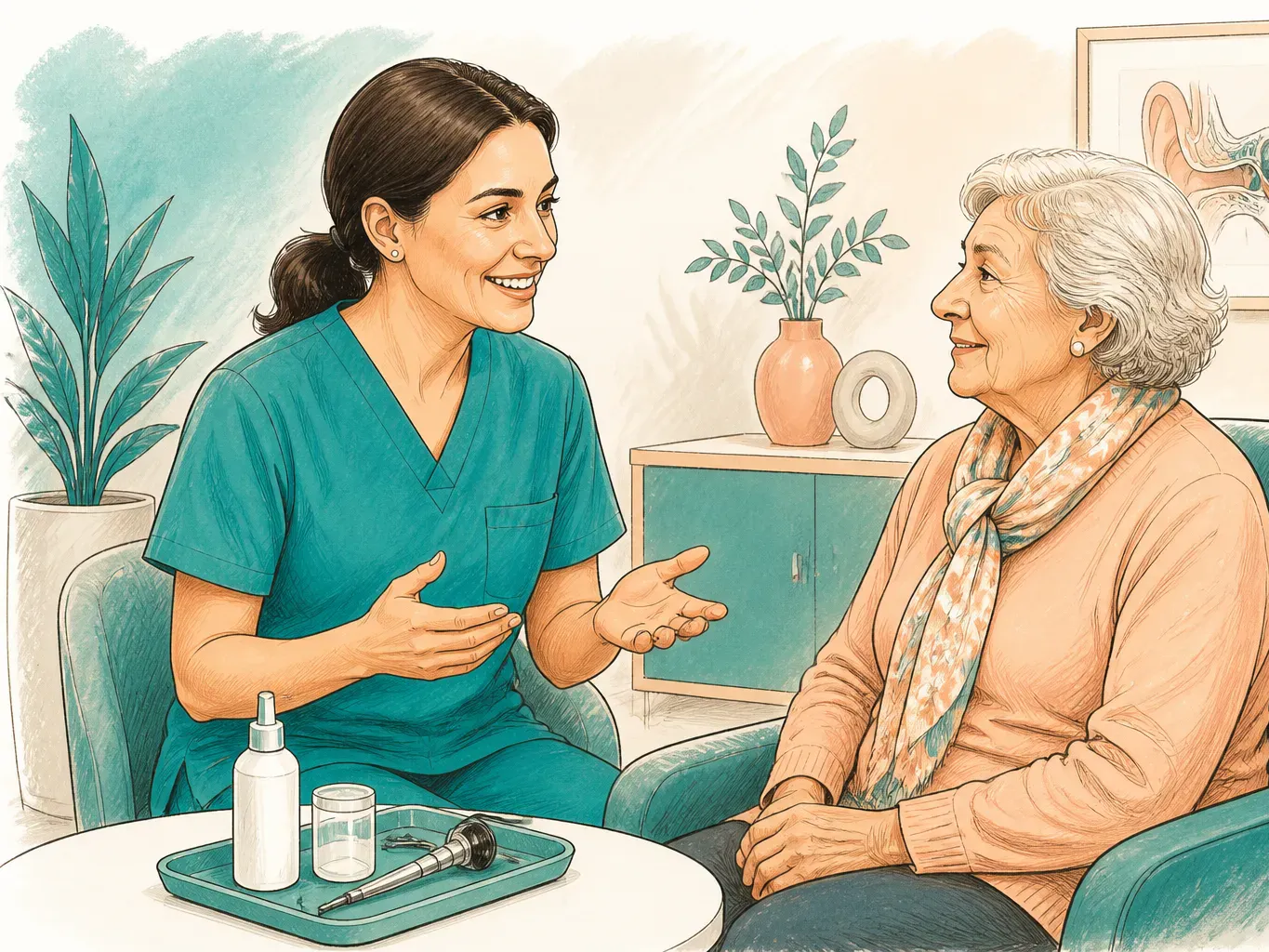
When the clinician arrives, they should begin with a polite introduction, confirmation of your details, and a discussion about your symptoms. This is also the point at which consent is confirmed. You should feel able to ask questions before anything starts.
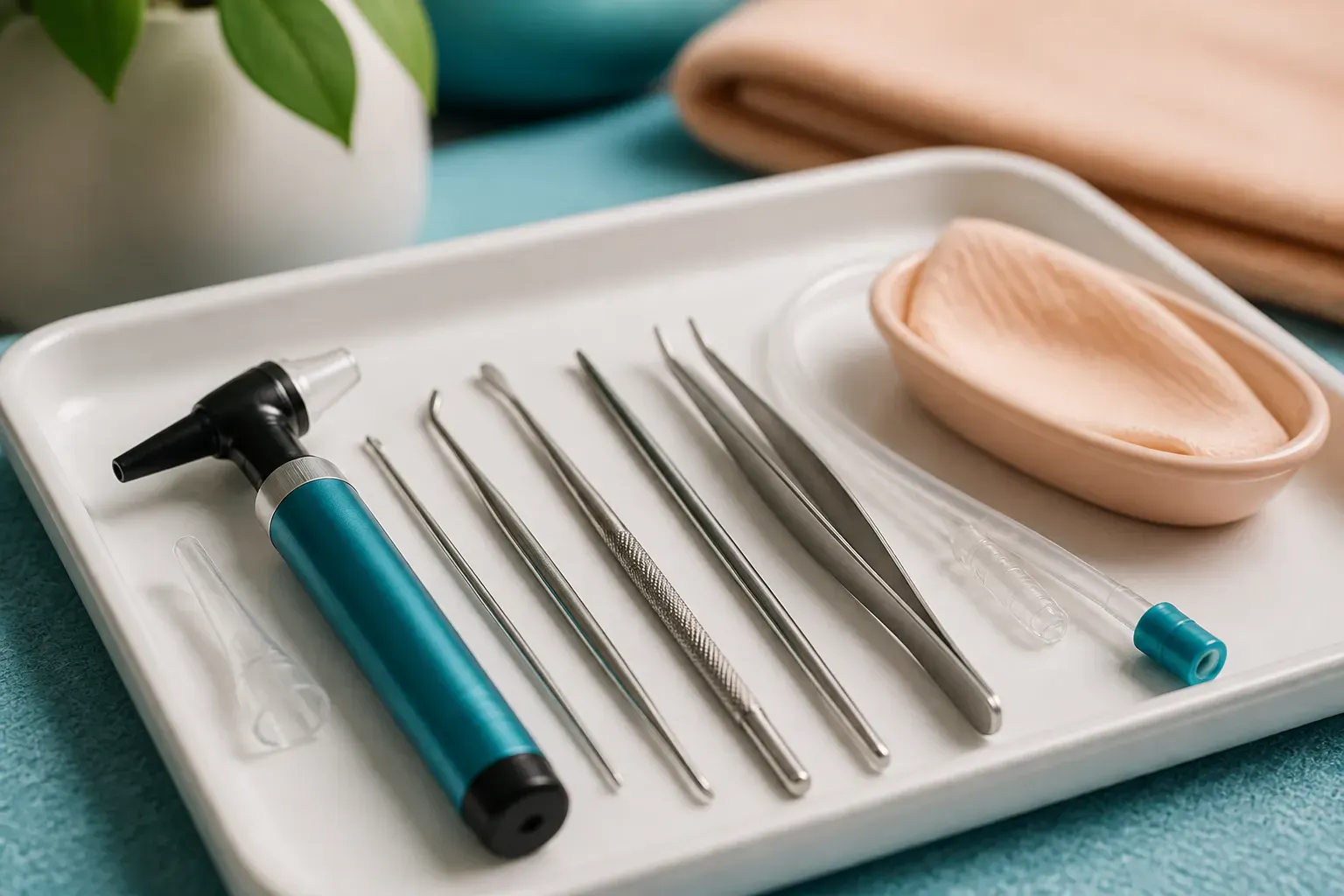
Next comes an ear examination. This is usually done with an otoscope or similar instrument that lets the clinician look inside the ear canal. The purpose of the examination is to see how much wax is present, whether it is actually causing the symptoms, and whether there are any signs that mean treatment should be delayed.
If the wax looks suitable for removal, the clinician will explain the method they recommend and why. They should also tell you what sensations to expect. Some patients feel mild pressure, a sense of noise, or slight movement in the ear canal during treatment. Others feel very little beyond the awareness that something is being done.
A good appointment should feel calm and unhurried. The clinician may stop to check comfort, adjust position, or explain what they are doing. This is particularly important for patients who are anxious, elderly, or sensitive to touch. Home care works best when the treatment is adapted to the person, not forced into a rigid routine.
Treatment methods and why microsuction is often used
Microsuction is one of the most commonly used specialist methods for earwax removal. It uses a small suction device and magnification so the clinician can see clearly while removing wax from the ear canal. Because it is performed under direct vision, it allows precise control and is often well suited to patients who need careful, targeted treatment.
In some cases, another method may be more appropriate. The choice depends on the condition of the ear, the type of wax, the patient’s symptoms, and the clinician’s assessment. If the ear looks inflamed, if there is a suspicion of infection, or if there are other concerns about safety, the clinician may advise against immediate removal and recommend further assessment instead.
The table below gives a simple overview of common options.
Method | Best use case | Benefits | Key cautions |
|---|---|---|---|
Microsuction | Most routine wax removal cases, especially where direct control is helpful | Precise, visible, usually quick, suitable for many patients | May be noisy, can feel a little strange, not suitable if the ear needs further assessment first |
Irrigation | Selected cases where the clinician considers water based removal appropriate | Familiar method, can work well for softer wax | Not suitable for everyone, may be avoided with some ear conditions or histories |
Assessment only | When symptoms suggest something other than wax, or treatment is not yet safe | Helps avoid inappropriate treatment, supports correct next steps | Requires follow up rather than immediate relief |
For many home visits, microsuction is favoured because it gives the clinician strong visual control and can be adapted carefully to the patient’s comfort. It is not always the right answer, but it is often a practical and professional option when wax removal is appropriate.
Safety, comfort, and what the clinician looks for
Safety is the foundation of any ear wax removal appointment, especially in the home where the clinician needs to work within a different environment. Before treatment begins, a professional should consider several factors that affect whether it is sensible to continue.
These include:
- Your hearing history and current symptoms
- Ear pain, discharge, or signs of infection
- Whether there is any risk of a perforated eardrum
- Previous ear surgery or known ear conditions
- Whether you use hearing aids, and how the wax may be affecting them
- Any dizziness, sudden hearing change, or other warning signs
These checks matter because not every blocked ear is simply a wax problem. Some symptoms overlap with other conditions, and treating the wrong issue without assessment can make matters worse. That is why a proper screening step is essential before any wax is removed.
UK guidance is clear that earwax should only be treated when it is causing symptoms or preventing examination, and that clinicians should take a careful approach to diagnosis and management. If you want to read more, the NHS guidance on earwax build-up gives a useful overview of common symptoms and treatment options. The NICE guidance on hearing loss in adults is also helpful for understanding when hearing concerns need broader assessment. For people who use hearing aids, the Royal College of Speech and Language Therapists advice on earwax and hearing aids is a useful reference point for why wax matters so much to device performance.
Comfort is just as important as safety. A thoughtful clinician should work at your pace, explain each stage, and respond if you want to pause. This is particularly valuable for nervous patients, people with dementia, and anyone who has had a painful experience in the past. The best outcome is not just cleared wax, but a patient who felt respected and reassured throughout the appointment.
Aftercare and what to do after wax removal
After wax removal, many people notice clearer hearing straight away. Others feel a mild sense of fullness has gone, but the ear may still feel slightly sensitive for a short while. That can be normal, especially if the ear had been blocked for some time.
Aftercare advice usually focuses on keeping the ear comfortable and avoiding unnecessary irritation. You may be told to avoid putting anything into the ear canal, to keep an eye on any recurring symptoms, and to follow specific advice if you have been given drops or other instructions. If you use hearing aids, it may be a good time to check that they are clean and working properly once the ear is clear.
For families and care settings, a few practical steps help after treatment:
- Make sure the patient has a quiet moment to settle after the visit
- Check that hearing aids are reinserted correctly if they are used
- Watch for any ongoing pain, discharge, or dizziness
- Note whether hearing has improved, stayed the same, or changed unexpectedly
- Arrange follow up if symptoms return or if wax build up happens frequently
Some people need further treatment in future, especially if they produce wax regularly or use hearing aids. That does not mean the appointment has failed. It usually means the ears need periodic maintenance, just like any other part of ongoing healthcare.
Cost, convenience, and choosing the right option
When people search for home visit ear wax removal near me, they are often weighing convenience against the practical details of booking and access. A home visit can save time, reduce travel stress, and make treatment possible for people who would otherwise struggle to get to a clinic.

The right option depends on more than location. You may want to consider who is having the appointment, how easy it is to travel, whether a care home environment is involved, and whether the patient feels calmer at home. In some cases, a home visit is the clearest choice. In others, a clinic appointment may offer a more extensive setup or be easier to schedule.
Costs can vary depending on location, the method used, the complexity of the case, and whether a follow up visit is needed. It is sensible to ask what is included before booking so you understand the full picture.
Factor | Home visit | Clinic visit |
|---|---|---|
Convenience | High, treatment comes to you | Requires travel and planning |
Comfort | Familiar environment, often reassuring | Professional clinical setting |
Setup needs | Requires a quiet, suitable room at home | Clinic provides the environment and equipment space |
Suitability | Excellent for mobility issues, care homes, or anxiety | Often suitable for patients who can attend easily |
Planning | May need coordination with family or carers | Usually simpler if travel is straightforward |
For many patients, the decision is not really about which option is better in general. It is about which option is better for the person at that moment. If travel is hard or anxiety is high, a home visit may be the most sensible route. If the patient is comfortable attending, a clinic may also be perfectly appropriate.
When to book a professional ear assessment instead
Wax is common, but not every blocked ear should be treated as wax first. If you have severe pain, discharge, bleeding, sudden hearing loss, marked dizziness, facial weakness, or a recent injury to the ear, you should seek a professional assessment rather than assuming the problem is simple wax.
The same applies if your symptoms do not match typical wax build up. For example, persistent one sided hearing loss, repeated infections, or significant tinnitus may need a different type of evaluation. A clinician should be able to recognise when further assessment is safer than immediate removal.
If you are unsure, booking an Ear health assessment is a sensible first step. That allows the cause of your symptoms to be checked properly before deciding on treatment.
If home treatment is being considered, you may also find these pages useful:
These resources can help you compare options and decide which approach suits your circumstances best.
Recommended reads
If you are still deciding what to do next, these related articles and service pages are a good place to continue:
- Microsuction ear wax removal, for a closer look at the most common specialist method
- Home visit earwax removal, for practical details about at home appointments
- Earwax removal at home vs clinic, for help weighing convenience and setting
- Ear health assessment, if you are not sure whether wax is the real cause of your symptoms
For broader background, the NHS earwax page remains a sensible starting point, especially if you want a general explanation before booking treatment.
FAQ
How long does a home visit ear wax removal appointment usually take?
Most appointments are designed to be efficient, but the exact length depends on how much wax is present, whether one or both ears need treatment, and whether an assessment is needed first. A simple case may be fairly quick, while a more complex appointment may take longer because the clinician will work carefully and prioritise comfort.
Is home visit ear wax removal suitable for older adults or care home residents?
Yes, often it is. Home visits are particularly useful for older adults, care home residents, and people with mobility limitations because the treatment comes to them. The clinician will still need to check that the ears are suitable for treatment and that the home or care setting is appropriate for safe practice.
What should I do before the clinician arrives?
Try to have a quiet, well lit space ready, along with a comfortable chair and enough room for the clinician to work. If you have been given any pre appointment instructions, follow them carefully. It also helps to have your health history, hearing aid details, and any current symptoms ready to discuss.
Does microsuction hurt during a home visit appointment?
Microsuction is usually well tolerated, though some people find it noisy or a little unusual. It should not be painful if the ear is suitable for treatment and the clinician works carefully. If you feel discomfort, you should say so straight away so the clinician can pause and reassess.
When should I avoid ear wax removal at home and ask for an assessment instead?
You should seek assessment if you have severe pain, discharge, sudden hearing loss, dizziness, bleeding, a recent injury, or any other symptom that does not seem like simple wax. In those cases, a clinician needs to check the ear first to make sure the right treatment is chosen.
Will I need follow-up treatment after the wax is removed?
Not always, but some people do need repeat treatment if they naturally build up wax over time, especially if they wear hearing aids or have a history of recurrent blockage. The clinician may give you advice on monitoring symptoms and deciding when to book again.